Promotional price valid on web orders only. Your contract pricing may differ. Interested in signing up for a dedicated account number?
Learn More
Learn More
Invitrogen™ B7-H4 Recombinant Rabbit Monoclonal Antibody (PSH03-65)


Description
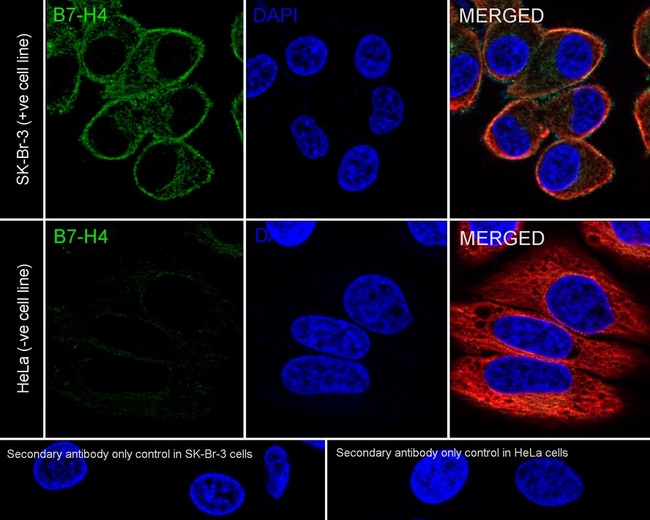
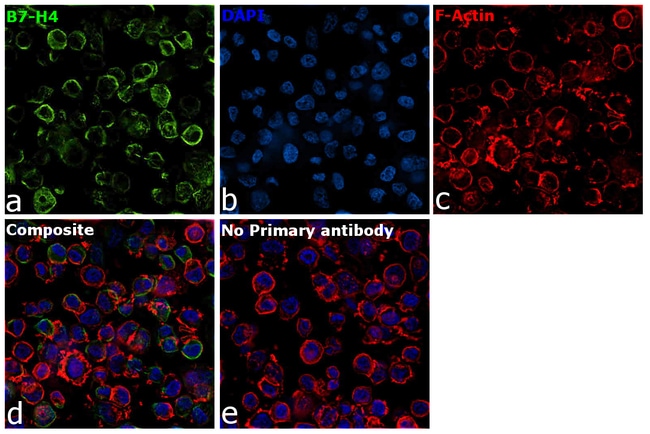
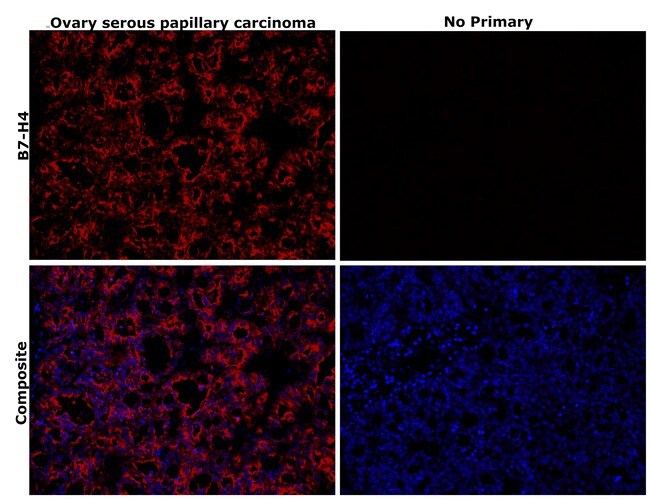
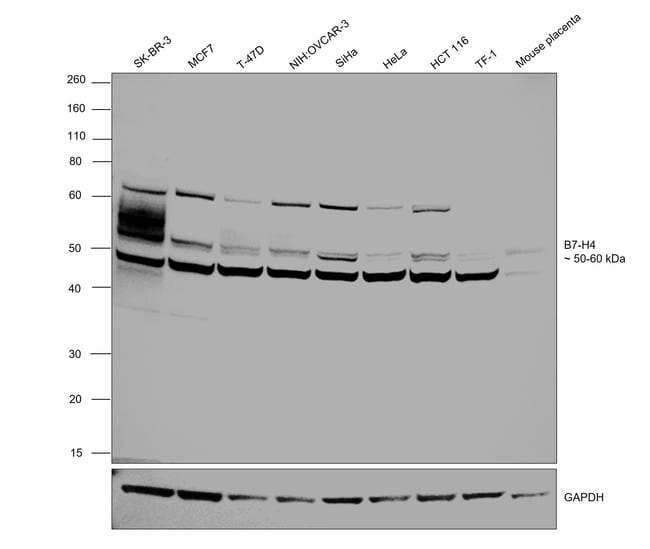
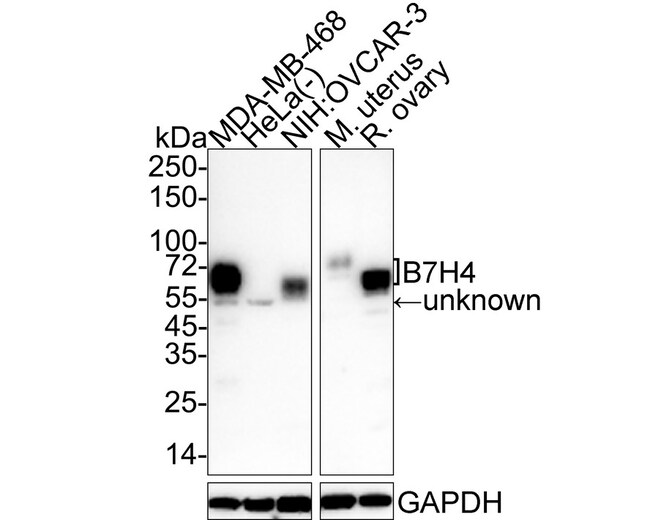
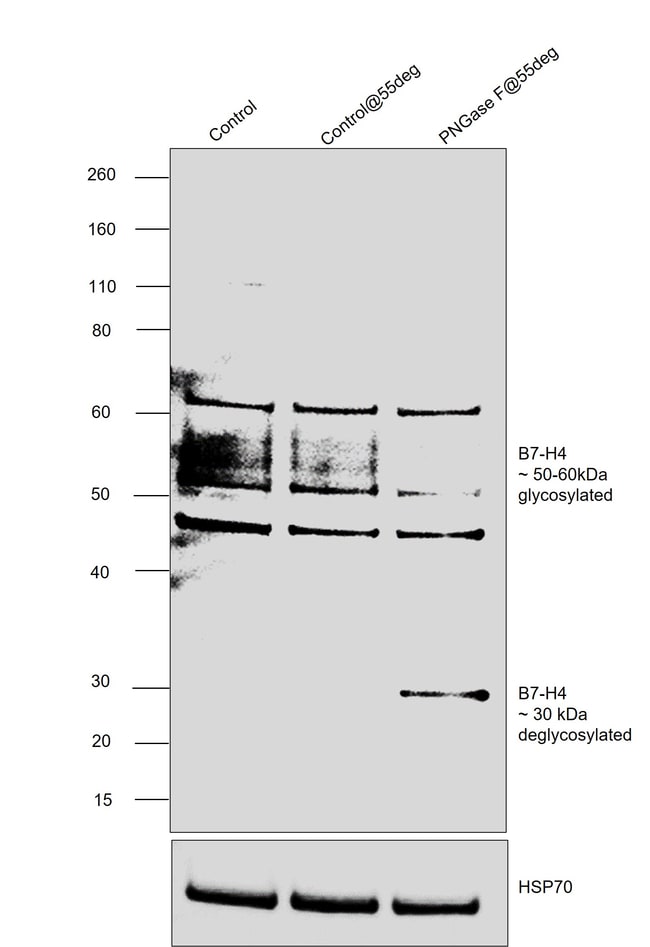
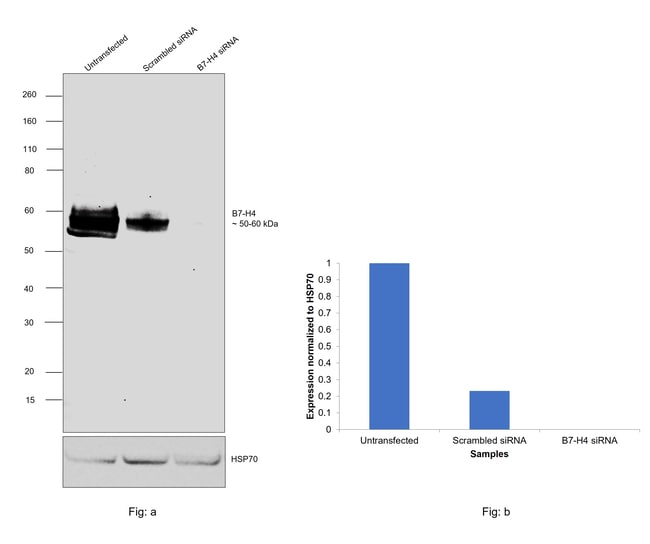
Positive Control: MDA-MB-468 cell lysate, NIH:OVCAR-3 cell lysate, mouse uterus tissue lysate, rat ovary tissue lysate, SK-Br-3. Tissue Specificity: Tissue enhanced (breast, fallopian tube, pancreas). Subcellular Location: Cell membrane. Sequence Similarities: 100% Mouse. Predicted band size: 31 kDa.
B7-H4 (B7x, VTCN1) a costimulatory protein which is reported to function as a negative regulator of T-cell mediated immunity. Although B7-H4 binds an unknown receptor, it is thought to deliver an inhibitory signal to T-cells preventing their proliferation, cell cycle progression and interleukin-2 production. B7-H4 deficient mice are only minimally affected; suggesting B7-H4 is important in the fine tuning of the T-cell mediated immune response. B7-H4 is expressed on activated T-cells, B-cells, monocytes and dendritic cells. Aberrant expression has been associated with cancers of the lung, breast and ovary in humans. B7-H4 is expressed primarily on the membrane of lymphoid cells, and as an immunoinhibitory protein that interacts with receptors on the surface of T lymphocytes, it is involved in mediating cellular and humoral immune responses. Overexpression of B7-H4 is associated with certain malignancies, including ovarian and breast cancer, which may be a mechanism by which tumor cells suppress T cell immunity and facilitate tumor progression. Further, VTCN1 may be a useful biomarker for the early detection of ovarian cancer and Renal Cell Carcinoma (RCC).

Specifications
Specifications
| Antigen | B7-H4 |
| Applications | Immunocytochemistry, Immunohistochemistry (Paraffin), Western Blot |
| Classification | Recombinant Monoclonal |
| Clone | PSH03-65 |
| Concentration | 0.95 mg/mL |
| Conjugate | Unconjugated |
| Formulation | PBS with 0.1% BSA, 40% glycerol and 0.05% sodium azide; pH 7.4 |
| Gene | Vtcn1 |
| Gene Accession No. | Q501W4, Q7TSP5, Q7Z7D3 |
| Gene Alias | B7 family member, H4; B7 homolog 4; B7 superfamily member 1; B7h.5; B7H4; B7-H4; B7s1; B7x; BC032925; EMBL:AAH95842.1}; FLJ22418; immune costimulatory protein B7-H4; PRO1291; Protein B7S1; RGD1311204; RP11-229A19.4; t cell costimulatory molecule B7x; T-cell costimulatory molecule B7x; UNQ659/PRO1291; VCTN1; V-set domain containing T cell activation inhibitor 1; V-set domain containing T-cell activation inhibitor 1; V-set domain-containing T-cell activation inhibitor 1; Vtcn1; vtcn1 {ECO:0000312 |
| Show More |
Product Title
By clicking Submit, you acknowledge that you may be contacted by Fisher Scientific in regards to the feedback you have provided in this form. We will not share your information for any other purposes. All contact information provided shall also be maintained in accordance with our Privacy Policy.
Spot an opportunity for improvement?