Learn More
Invitrogen™ CD196 (CCR6) Monoclonal Antibody (R6H1), eBioscience™, Invitrogen™


Description
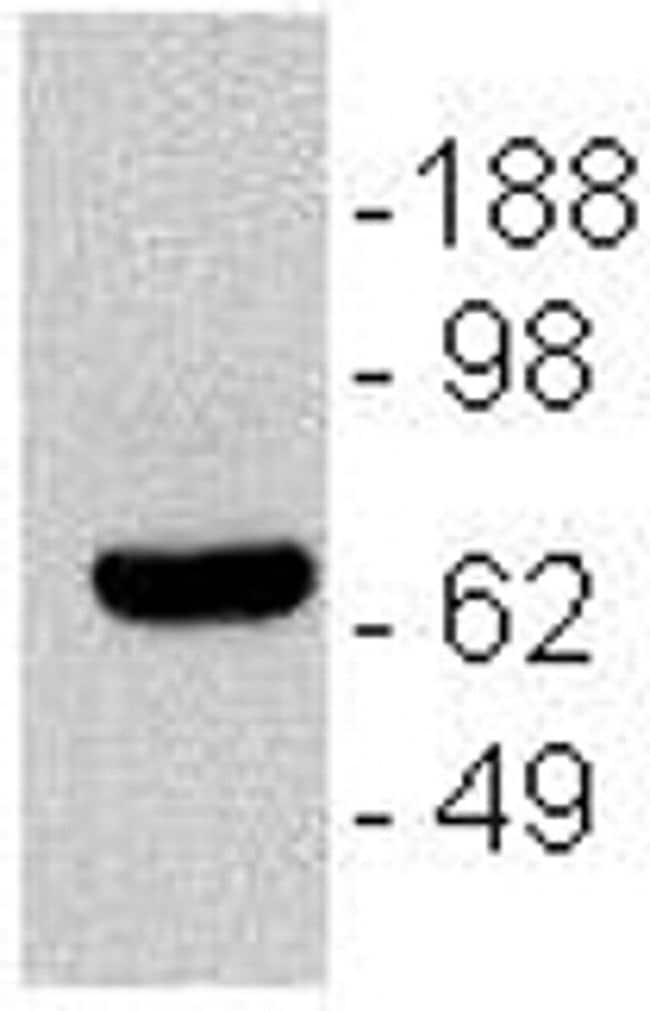
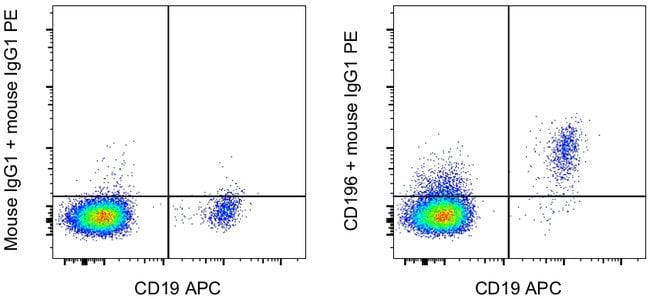
Description: This R6H1 monoclonal antibody reacts with CD196 (also known as CCR6), a seven transmembrane G protein-coupled receptor expressed on T, B, dendritic, natural killer, and Langerhans cells. This CC chemokine receptor uniquely binds MIP-3a/CCL20, a chemoattractant for dendritic cells, effector/memory T cells, and B cells. CD196 is also involved in host defense and inflammation at epithelial sites. Furthermore, this receptor has been implicated in Th17 differentiation and CD4+FoxP3+ regulatory T cell development. Applications Reported: This R6H1 antibody has been reported for use in flow cytometric analysis, immunoblotting (WB), and immunoprecipitation. Applications Tested: This R6H1 antibody has been tested by western blot on lysates prepared from normal human peripheral blood cells. This antibody can be used at less than or equal to 5 μg/mL. Purity: Greater than 90%, as determined by SDS-PAGE. Aggregation: Less than 10%, as determined by HPLC. Filtration: 0.2 μm post-manufacturing filtered.

Specifications
Specifications
| Antigen | CD196 (CCR6) |
| Applications | Flow Cytometry, Immunoprecipitation, Western Blot |
| Classification | Monoclonal |
| Clone | R6H1 |
| Concentration | 0.5 mg/mL |
| Conjugate | Unconjugated |
| Formulation | PBS with 0.09% sodium azide; pH 7.2 |
| Gene | CCR6 |
| Gene Accession No. | P51684 |
| Gene Alias | BN-1; CC chemokine receptor 6; C-C chemokine receptor type 6; C-C CKR-6; C-C motif chemokine receptor 6; CC-CKR-6; CCR6; CCR-6; CD196; chemokine (C-C motif) receptor 6; chemokine (C-C) receptor 6; chemokine receptor-like 3; CKR6; CKRL3; CKR-L3; Cmkbr6; DCR2; DRY6; DRY-6; G protein-coupled receptor 29; GPR29; GPRCY4; GPR-CY4; G-protein coupled receptor 29; KY411; LARC receptor; seven-transmembrane receptor, lymphocyte, 22; STRL22 |
| Show More |
Safety and Handling
For Research Use Only.
By clicking Submit, you acknowledge that you may be contacted by Fisher Scientific in regards to the feedback you have provided in this form. We will not share your information for any other purposes. All contact information provided shall also be maintained in accordance with our Privacy Policy.