Learn More
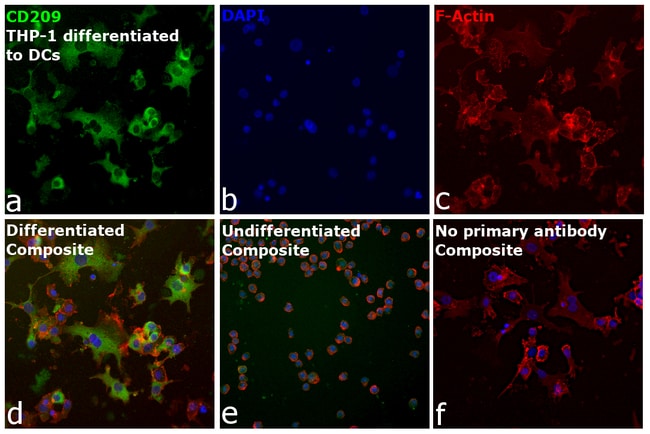
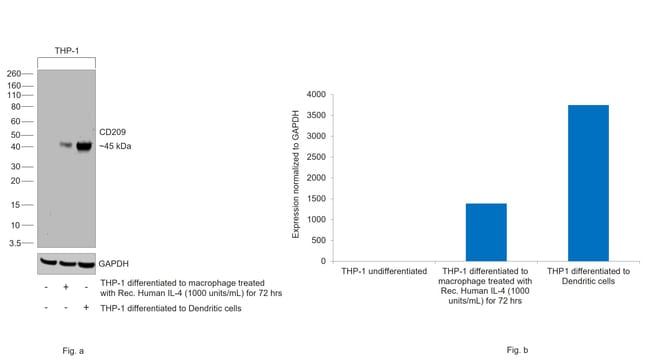
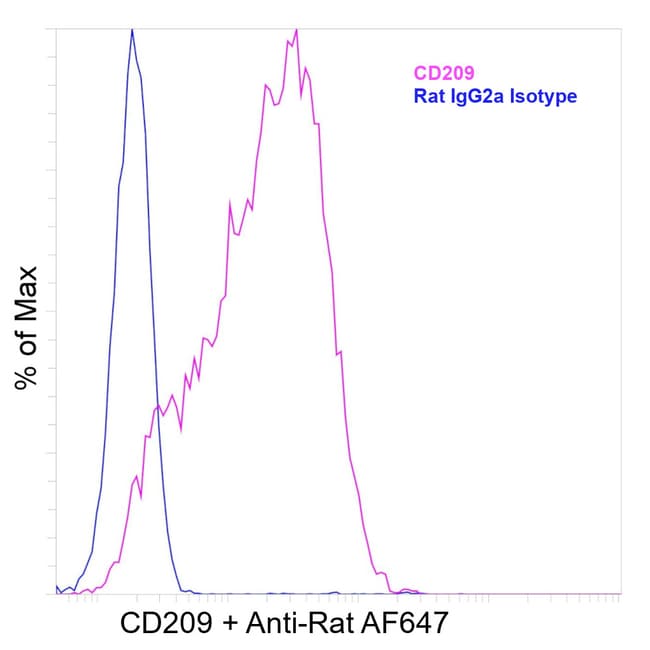
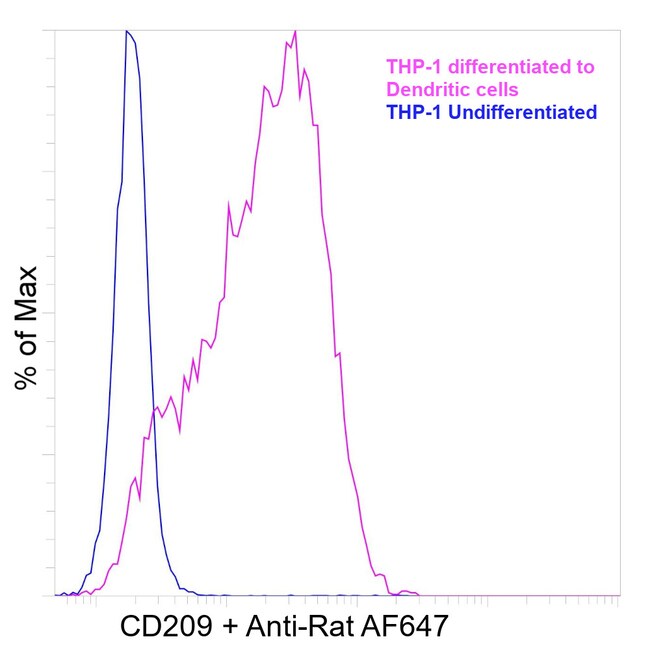
Invitrogen™ CD209 (DC-SIGN) Recombinant Rat Monoclonal Antibody (eB-h209)


Description
Recombinant rat monoclonal antibodies are produced using in vitro expression systems. Recombinant antibodies are produced using specific genes that code for the desired antibodies. These genes are cloned into an expression vector and expressed in vitro. The advantages of recombinant antibodies include better specificity and lot-to-lot consistency. It is recommended that the antibody be carefully titrated for optimal performance in the assay of interest.

Specifications
Specifications
| Antigen | CD209 (DC-SIGN) |
| Applications | Flow Cytometry, Western Blot, Immunocytochemistry |
| Classification | Recombinant Monoclonal |
| Clone | eB-h209 |
| Concentration | 1 mg/mL |
| Conjugate | Unconjugated |
| Formulation | PBS with 0.09% sodium azide; pH 7.2-7.4 |
| Gene | CD209 |
| Gene Accession No. | Q9NNX6 |
| Gene Alias | CD209; CD209 antigen; CD209 antigen-like protein A; CD209 molecule; Cd209a; CD209a antigen; CD209a molecule; Cd209d; CD209d antigen; CDSIGN; Cire; CLEC4L; Clec4m; C-type lectin domain family 4 member L; C-type lectin domain family 4, member L; C-type lectin domain family 4, member M; Dcsign; DC-SIGN; DC-SIGN1; Dc-signr; DC-SIGN-related protein; Dendritic cell-specific ICAM-3-grabbing non-integrin; dendritic cell-specific ICAM-3-grabbing non-integrin 1; dendritic cell-specific intercellular adhesion molecule-3-grabbing non-integrin; dendritic cell-specific intracellular adhesion molecules (ICAM)-3 grabbing non-integrin; HIV gpl20-binding protein; MGC129965; MGC130443; RGD1561104; SIGN-R1; SIGNR5 |
| Show More |
By clicking Submit, you acknowledge that you may be contacted by Fisher Scientific in regards to the feedback you have provided in this form. We will not share your information for any other purposes. All contact information provided shall also be maintained in accordance with our Privacy Policy.