Learn More
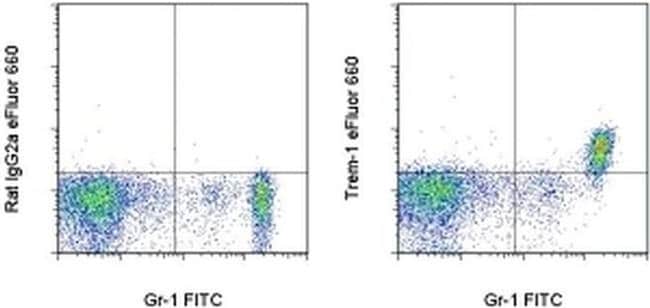
Invitrogen™ CD354 (TREM-1) Monoclonal Antibody (TR3MBL1), eFluor™ 660, eBioscience™


Description
Description: The TR3MBL1 monoclonal antibody recognizes mouse CD354 (also known as TREM-1), a 30-kDa glycosylated member of the Ig superfamily. CD354 is expressed on the cell surface of myeloid cells such as neutrophils, monocytes, dendritic cells, some macrophages, platelets, and megakaryocytes. Outside the immune system, CD354 is expressed on hepatocytes, osteoclasts, and microglia. CD354 also exists as a soluble receptor (sTREM-1) that arises from proteolytic cleavage of the membrane-bound receptor by matrix metalloproteases. CD354 plays a critical role in the innate immune response to bacterial and fungal infection by triggering the release of pro-inflammatory chemokines and cytokines. The cell surface receptor associates constitutively with the ITAM-containing adaptor protein DAP12 to activate the MAPK and NFkB signaling pathways. Finally, levels of the soluble receptor are increased in several inflammatory diseases, including sepsis, asthma, and inflammatory bowel disease, making this receptor a valuable diagnostic biomarker. Applications Reported: This TR3MBL1 antibody has been reported for use in flow cytometric analysis. Applications Tested: This TR3MBL1 antibody has been tested by flow cytometric analysis of mouse peripheral blood cells. This can be used at less than or equal to 0.125 μg per test. A test is defined as the amount (μg) of antibody that will stain a cell sample in a final volume of 100 μL. Cell number should be determined empirically but ca...

Specifications
Specifications
| Antigen | CD354 (TREM-1) |
| Applications | Flow Cytometry |
| Classification | Monoclonal |
| Clone | TR3MBL1 |
| Concentration | 0.2 mg/mL |
| Conjugate | eFluor 660 |
| Formulation | PBS with 0.09% sodium azide; pH 7.2 |
| Gene | TREM1 |
| Gene Accession No. | Q9JKE2 |
| Gene Alias | CD354; sCD354; soluble CD354; soluble TREM 1; soluble TREM1; sTREM 1; sTREM1; TREM; Trem1; TREM-1; triggering receptor expressed in monocytes 1; triggering receptor expressed on monocytes 1; Triggering receptor expressed on myeloid cells; Triggering receptor expressed on myeloid cells 1 |
| Show More |
Frequently Asked Questions (FAQs)
Yes, the eFluor Organic fluorochromes can be used for intracellular staining. The eFluor organic fluorochromes maintain bright signal and require minimal changes in compensation when fixed with eBioscience IC Fixation Buffer (Cat. No. 00-8222-49) and Permeabilization Buffer (Cat. No. 00-8333-56) or 1-step Fix/Lyse Solution (Cat. No. 00-5333-54, 00-5333-57) (as compared to live cells).
Yes, in-house studies have demonstrated that the eFluor 660 fluorochrome is recognized by Anti-Cy5/Alexa Fluor 647 beads. Side by side studies with Alexa Fluor 647 versus eFluor 660 conjugated antibodies have demonstrated comparable results.
The eFluor Organic fluorochromes and eVolve QDots can be used with flow staining buffers containing PBS and protein.
The eFluor Organic Dyes (eFluor 450, APC-eFluor 780, PerCP-eFluor 710, eFluor 710) are conventional fluorochromes. In contrast, the eVolve line of products are Quantum dots.
As with other fluorochromes, we recommend minimal exposure to light to maintain optimal signal.
By clicking Submit, you acknowledge that you may be contacted by Fisher Scientific in regards to the feedback you have provided in this form. We will not share your information for any other purposes. All contact information provided shall also be maintained in accordance with our Privacy Policy.