Learn More

Invitrogen™ CD68 Monoclonal Antibody (FA-11), eFluor™ 660, eBioscience™


Description
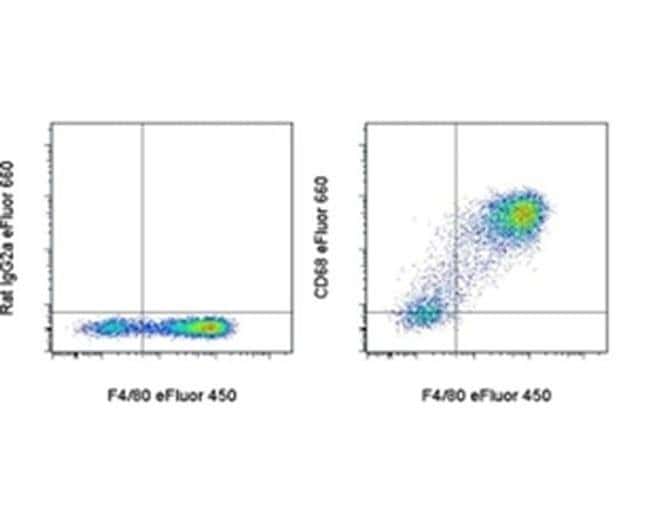
Description: This FA-11 monoclonal antibody reacts with mouse CD68, known also as macrosialin. CD68 is a heavily O- and N- glycosylated type I integral membrane protein belonging to the sialomucin family and is closely related to the Lysosomal/endosomal-Associated Membrane Glycoproteins (LAMP). Although commonly used as a pan-macrophage marker, low levels of expression have also been observed in Langerhans cells and conventional dendritic cells. CD68 is mostly localized in the late endosomes and lysosomes with a smaller fraction circulating to the cell surface. In the steady state, only about 10-15% of CD68 is present at the surface. Cell stimulation increases expression of CD68, its transport to cell surface, and results in glycoform remodeling. CD68 binds oxidized LDL and is involved in the process of phagocytosis. The FA-11 antibody is not recommended for use in immunohistochemistry of formalin-fixed paraffin embedded tissues. Applications Reported: This FA-11 antibody has been reported for use in intracellular staining followed by flow cytometric analysis, and immunohistochemical staining of frozen tissue sections. Applications Tested: This FA-11 antibody has been tested by intracellular staining and flow cytometric analysis of mouse bone marrow-derived macrophages using the Intracellular Fixation & Permeabilization Buffer Set (Product # 88-8824-00) and protocol. Please refer to BestProtocols®: Protocol A: Two step protocol for (cytoplasmic) intracellular prote...

Specifications
Specifications
| Antigen | CD68 |
| Applications | Flow Cytometry, Immunohistochemistry (Frozen), Immunocytochemistry |
| Classification | Monoclonal |
| Clone | FA-11 |
| Concentration | 0.2 mg/mL |
| Conjugate | eFluor 660 |
| Formulation | PBS with 0.09% sodium azide; pH 7.2 |
| Gene | Cd68 |
| Gene Accession No. | P31996 |
| Gene Alias | CD68; CD68 antigen; CD68 molecule; GP110; Lamp4; macrophage antigen CD68; macrosialin; Scard1; scavenger receptor class D, member 1; similar to CD68 antigen |
| Show More |
Frequently Asked Questions (FAQs)
Yes, the eFluor Organic fluorochromes can be used for intracellular staining. The eFluor organic fluorochromes maintain bright signal and require minimal changes in compensation when fixed with eBioscience IC Fixation Buffer (Cat. No. 00-8222-49) and Permeabilization Buffer (Cat. No. 00-8333-56) or 1-step Fix/Lyse Solution (Cat. No. 00-5333-54, 00-5333-57) (as compared to live cells).
Yes, in-house studies have demonstrated that the eFluor 660 fluorochrome is recognized by Anti-Cy5/Alexa Fluor 647 beads. Side by side studies with Alexa Fluor 647 versus eFluor 660 conjugated antibodies have demonstrated comparable results.
The eFluor Organic fluorochromes and eVolve QDots can be used with flow staining buffers containing PBS and protein.
As with other fluorochromes, we recommend minimal exposure to light to maintain optimal signal.
By clicking Submit, you acknowledge that you may be contacted by Fisher Scientific in regards to the feedback you have provided in this form. We will not share your information for any other purposes. All contact information provided shall also be maintained in accordance with our Privacy Policy.