Promotional price valid on web orders only. Your contract pricing may differ. Interested in signing up for a dedicated account number?
Learn More
Learn More


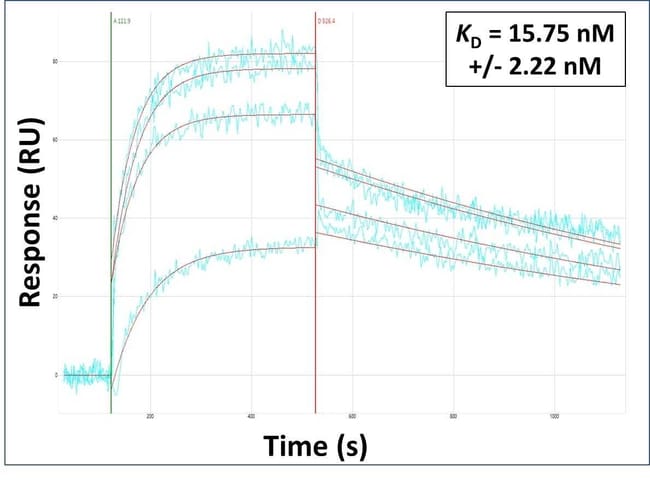
Invitrogen™ CPEB3 Polyclonal Antibody

Description
Peptide sequence: RTDNGNNLLP FQDRSRPYDT FNLHSLENSL MDMIRTDHEP LKGKHYPPSG Sequence homology: Cow: 100%; Dog: 100%; Horse: 100%; Human: 100%; Mouse: 100%; Pig: 100%; Rabbit: 100%; Rat: 100%.
Sequence-specific RNA-binding protein which acts as a translational repressor in the basal unstimulated state but, following neuronal stimulation, acts as a translational activator. In contrast to CPEB1, does not bind to the cytoplasmic polyadenylation element (CPE), a uridine-rich sequence element within the mRNA 3'-UTR, but binds to a U-rich loop within a stem-loop structure. Required for the consolidation and maintenance of hippocampal-based long term memory. In the basal state, binds to the mRNA 3'-UTR of the glutamate receptors GRIA2/GLUR2 mRNA and negatively regulates their translation. Also represses the translation of DLG4, GRIN1, GRIN2A and GRIN2B. When activated, acts as a translational activator of GRIA1 and GRIA2. In the basal state, suppresses SUMO2 translation but activates it following neuronal stimulation. Binds to the 3'-UTR of TRPV1 mRNA and represses TRPV1 translation which is required to maintain normal thermoception. Binds actin mRNA, leading to actin translational repression in the basal state and to translational activation following neuronal stimulation. Negatively regulates target mRNA levels by binding to TOB1 which recruits CNOT7/CAF1 to a ternary complex and this leads to target mRNA deadenylation and decay (PubMed:21336257). In addition to its role in translation, binds to and inhibits the transcriptional activation activity of STAT5B without affecting its dimerization or DNA-binding activity. This, in turn, represses transcription of the STAT5B target gene EGFR which has been shown to play a role in enhancing learning and memory performance (PubMed:20639532). In contrast to CPEB1, CPEB2 and CPEB4, not required for cell cycle progression (PubMed:26398195). [UniProt].

Specifications
Specifications
| Antigen | CPEB3 |
| Applications | Western Blot, Surface Plasmon Resonance |
| Classification | Polyclonal |
| Concentration | 0.5 mg/mL |
| Conjugate | Unconjugated |
| Formulation | PBS with 2% sucrose and 0.09% sodium azide |
| Gene | Cpeb3 |
| Gene Accession No. | Q8NE35 |
| Gene Alias | 4831444O18Rik; CPEB3; CPE-binding protein 3; CPE-BP3; cytoplasmic polyadenylation element binding protein 3; cytoplasmic polyadenylation element-binding protein 3; hCPEB-3; KIAA0940; mKIAA0940; RGD1564670 |
| Gene Symbols | Cpeb3 |
| Show More |
Product Title
By clicking Submit, you acknowledge that you may be contacted by Fisher Scientific in regards to the feedback you have provided in this form. We will not share your information for any other purposes. All contact information provided shall also be maintained in accordance with our Privacy Policy.
Spot an opportunity for improvement?