Promotional price valid on web orders only. Your contract pricing may differ. Interested in signing up for a dedicated account number?
Learn More
Learn More
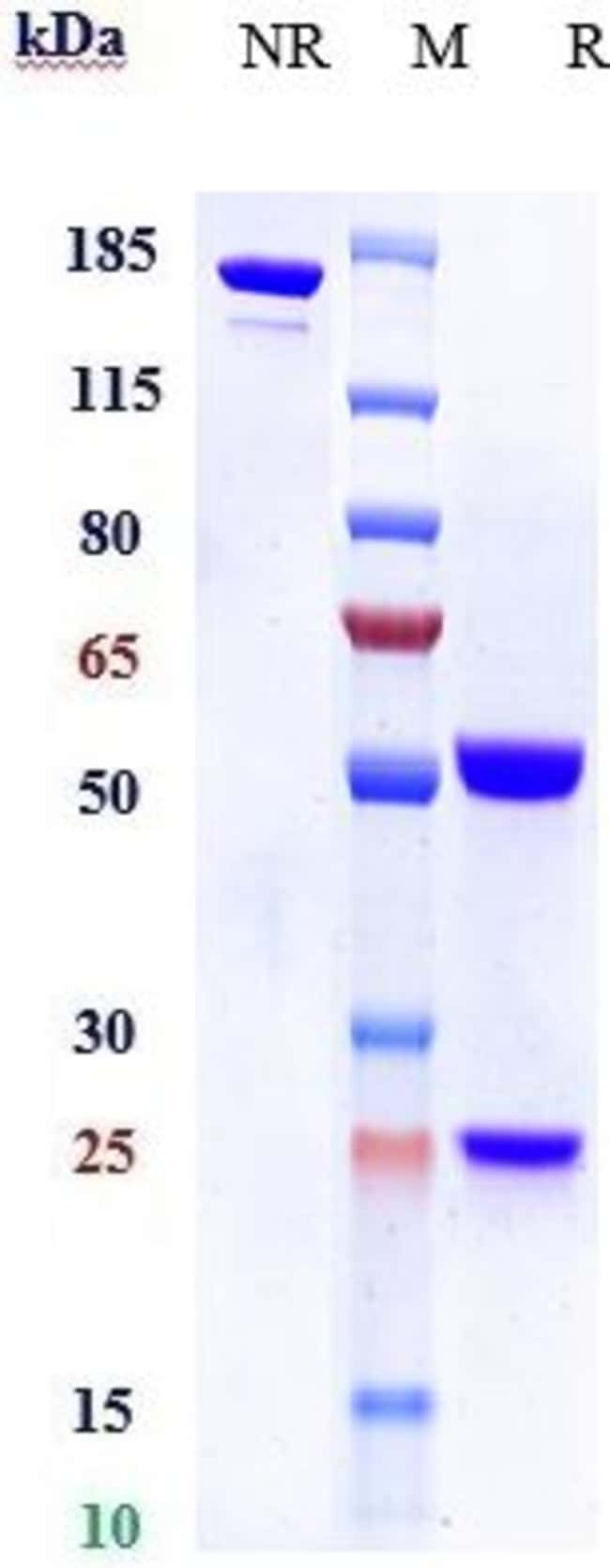
Invitrogen™ FGF19 Biosimilar Recombinant Monoclonal Antibody


Description
For reconstitution, add sterile, distilled water to achieve a final antibody concentration of 1 mg/mL. Gently shake to solubilize the protein completely. Do not vortex. Reconstituted products should be stored at -80 °. This antibody can also be cross referenced by the term 1A6.
FGF19, Fibroblast growth factor 19, is a protein that in humans is encoded by the FGF19 gene. The protein encoded by this gene is a member of the fibroblast growth factor (FGF) family. The FGF19 gene is mapped to 11q13.3. The deduced 216-amino acid FGF19 protein contains asignal sequence and 2 cysteine residues that are conserved in the FGF family. Expression of this gene was detected only in fetal but not adult brain tissue. Synergistic interaction of the chick homolog and Wnt-8c has been shown to be required for initiation of inner ear development. FGF19 stimulates hepatic protein and glycogen synthesis but does not induce lipogenesis. The effects of FGF19 are independent of the activity of either insulin or the protein kinase Akt and, instead, are mediated through a mitogen-activated protein kinase signaling pathway that activates components of the protein translation machinery and stimulates glycogen synthase activity. The orthologous protein in mouse is FGF15, which shares about 50% amino acid identity and has similar functions. Together they are often referred to as FGF15/19.

Specifications
Specifications
| Antigen | FGF19 (Biosimilar) |
| Applications | ELISA, Flow Cytometry, Functional Assay, Surface Plasmon Resonance |
| Classification | Recombinant Monoclonal |
| Concentration | 1 mg/mL |
| Conjugate | Unconjugated |
| Formulation | 25mM histidine with 8% sucrose, 0.01% Tween 80 and no preservative; pH 6.2 |
| Gene | FGF19 |
| Gene Accession No. | O95750 |
| Gene Alias | FGF; Fgf15; FGF19; FGF-19; Fibroblast growth factor; fibroblast growth factor 15; fibroblast growth factor 19; UNQ334/PRO533 |
| Gene Symbols | FGF19 |
| Show More |
Product Title
By clicking Submit, you acknowledge that you may be contacted by Fisher Scientific in regards to the feedback you have provided in this form. We will not share your information for any other purposes. All contact information provided shall also be maintained in accordance with our Privacy Policy.
Spot an opportunity for improvement?