Learn More

Invitrogen™ IDO Monoclonal Antibody (mIDO-48), eFluor™ 660, eBioscience™, Invitrogen™


Description
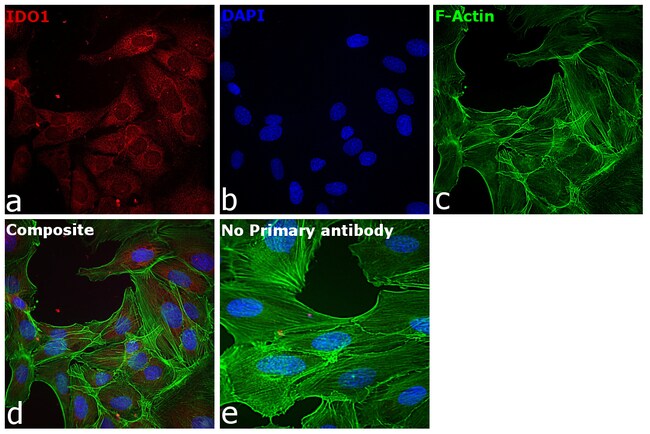
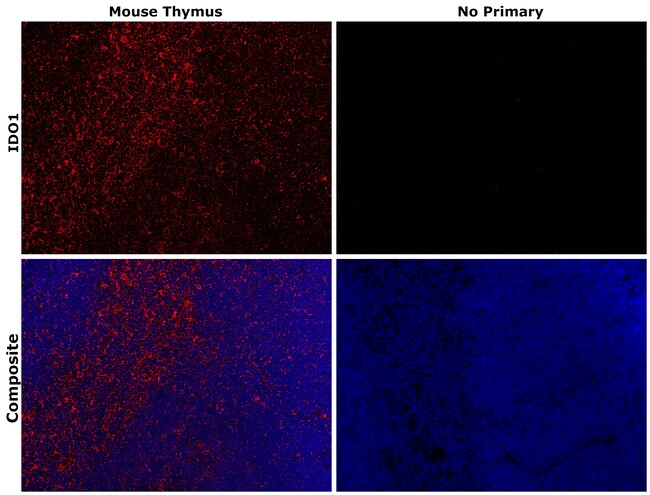
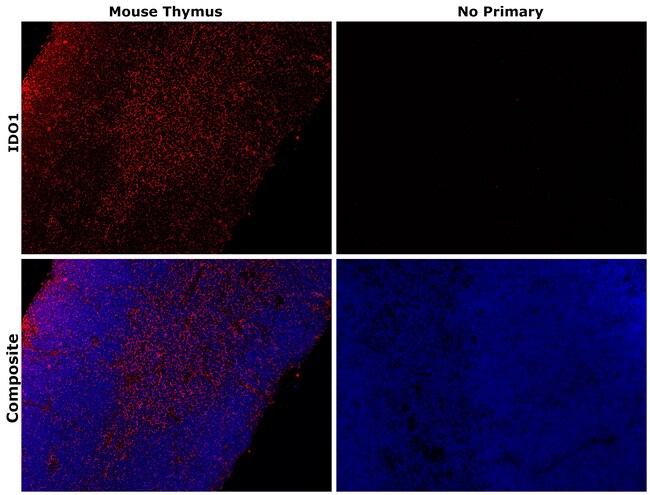
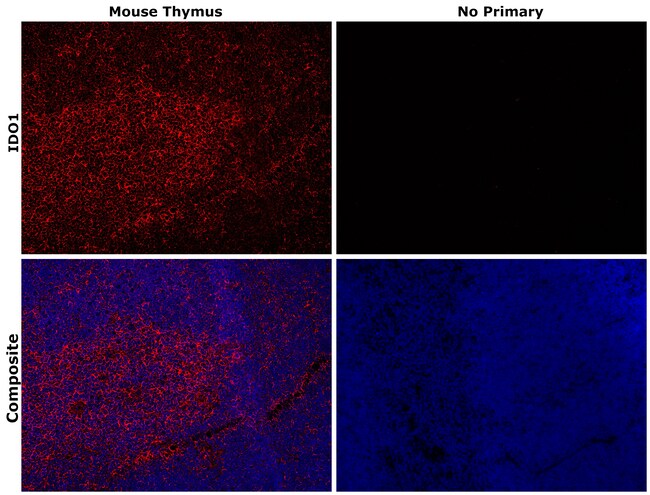
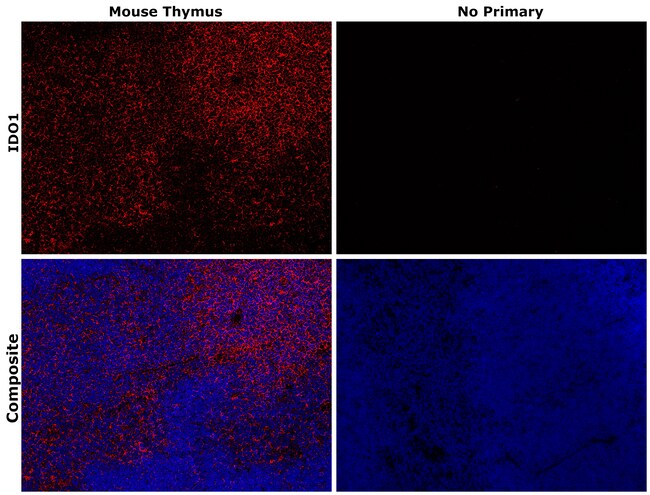
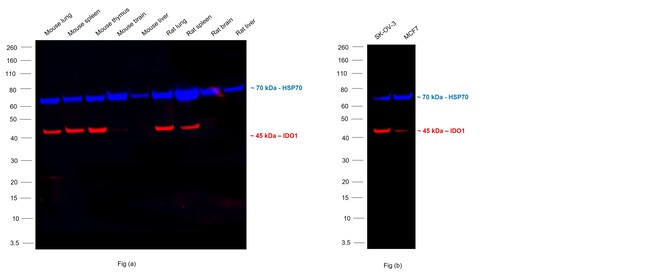
Description: The monoclonal antibody mIDO-48 reacts with mouse indoleamine 2,3-dioxygenase 1(IDO1). IDO1 is an enzyme expressed intracellularly by dendritic cells, interferon gamma activated macrophages, epithelial cells, vascular endothelium and tumor cells. This enzyme catalyzes tryptophan into kynurenine metabolites. The reduction of tryptophan and the introduction of kynurenine metabolites in the microenvironment of IDO-expressing cells suppress T cell proliferation and promote the activation and induction of regulatory T cells. Applications Reported: This mIDO-48 antibody has been reported for use in intracellular staining followed by flow cytometric analysis. Applications Tested: This mIDO-48 antibody has been tested by intracellular staining and flow cytometric analysis of mouse splenocytes using the Intracellular Fixation & Permeabilization Buffer Set (cat. 88-8824) and protocol. Please refer to Best Protocols: Protocol A: Two step protocol for (cytoplasmic) intracellular proteins located under the Resources Tab online. This can be used at less than or equal to 1 μg per test. A test is defined as the amount (μg) of antibody that will stain a cell sample in a final volume of 100 μL. Cell number should be determined empirically but can range from 10^5 to 10^8 cells/test. It is recommended that the antibody be carefully titrated for optimal performance in the assay of interest.

Specifications
Specifications
| Antigen | IDO |
| Applications | Flow Cytometry, Immunohistochemistry (Paraffin), Western Blot, Immunocytochemistry |
| Classification | Monoclonal |
| Clone | mIDO-48 |
| Concentration | 0.2 mg/mL |
| Conjugate | eFluor 660 |
| Formulation | PBS with 0.09% sodium azide; pH 7.2 |
| Gene | Ido1 |
| Gene Accession No. | P28776 |
| Gene Alias | EC 1.13.11.52; IDO; IDO1; IDO-1; INDO; indolamine 2,3 dioxygenase; indole 2,3-dioxygenase; indoleamine; indoleamine 2,3-dioxygenase 1; indoleamine 23-dioxygenase; Indoleamine-2; indoleamine-pyrrole 2,3 dioxygenase; indoleamine-pyrrole 2,3-dioxygenase |
| Show More |
Safety and Handling
For Research Use Only.
By clicking Submit, you acknowledge that you may be contacted by Fisher Scientific in regards to the feedback you have provided in this form. We will not share your information for any other purposes. All contact information provided shall also be maintained in accordance with our Privacy Policy.