Promotional price valid on web orders only. Your contract pricing may differ. Interested in signing up for a dedicated account number?
Learn More
Learn More
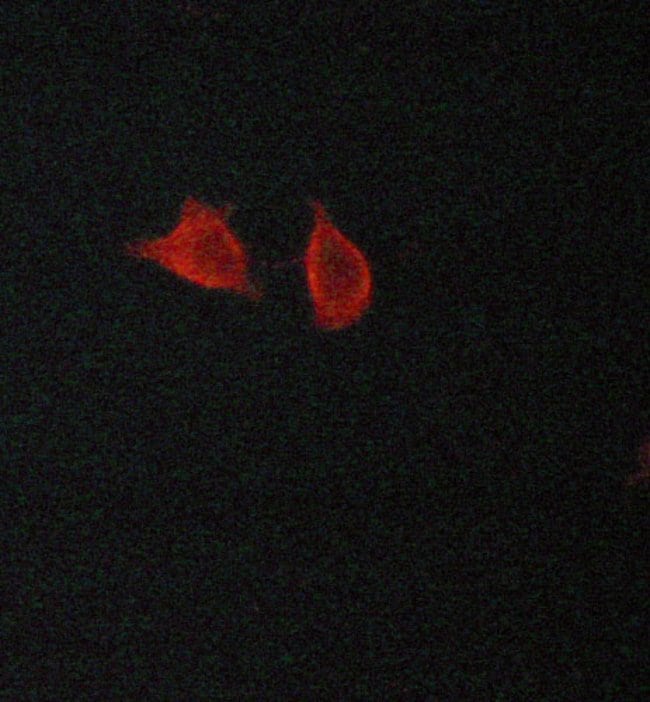
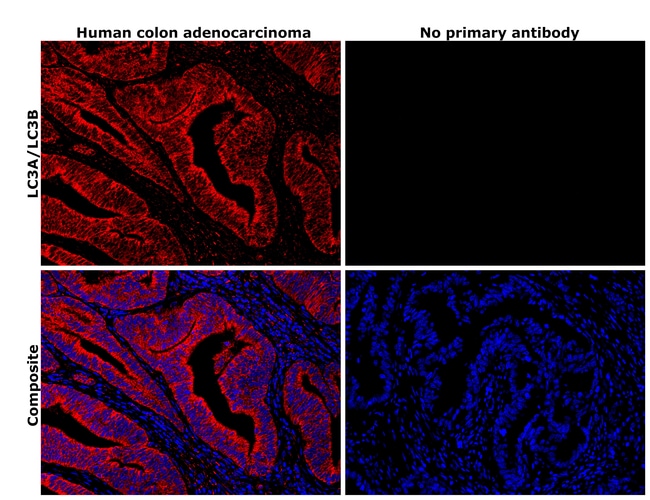
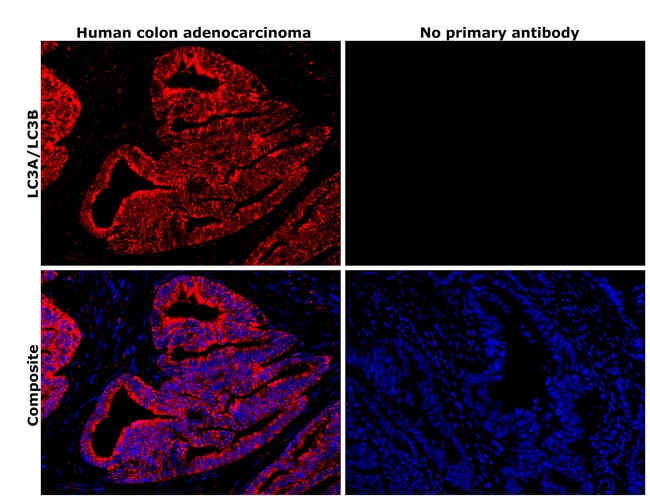
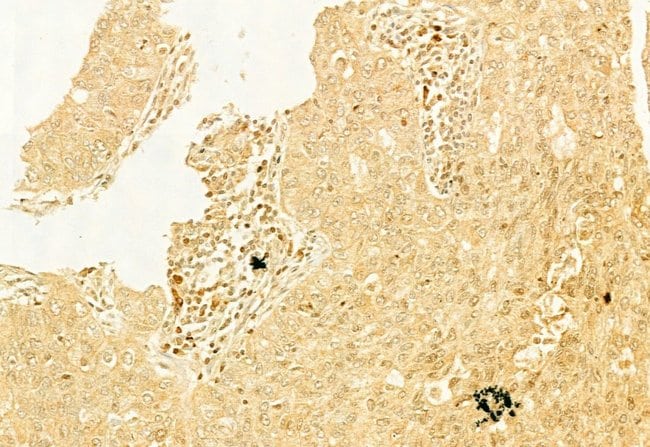
Invitrogen™ LC3A/LC3B Polyclonal Antibody

Description
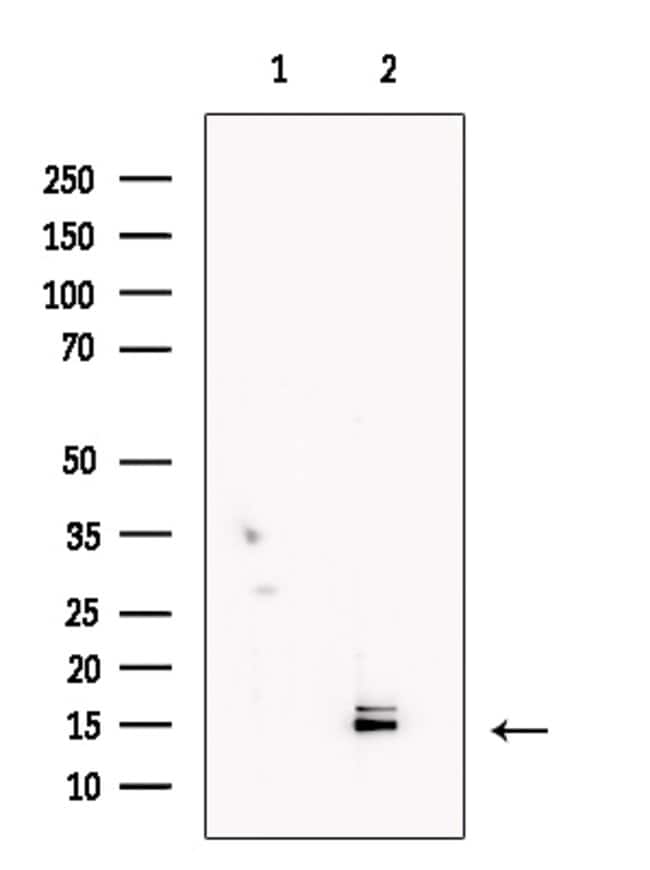
Antibody detects endogenous levels of total LC3A/B.
Autophagy is a process of intracellular bulk degradation in which cytoplasmic components, including organelles, are sequestered within double-membrane vesicles that deliver the contents to the lysosome/vacuole for degradation. During macroautophagy, the sequestering vesicles, termed autophagosomes, fuse with the lysosome or vacuole resulting in the delivery of an inner vesicle (autophagic body) into the lumen of the degradative compartment. There are 16 proteins participating in the autophagy pathway in human. The autophagy protein LC3, a mammalian homologue of Atg8, was originally identified as microtubule-associated protein 1 light chain 3. It is a component of both the MAP1A and MAP1B microtubule-binding domains and the heavy-chain independent regulation of LC3 expression might modify MAP1 microtubule-binding activity during development. LC3 is the only known mammalian protein identified that stably associates with the autophagosome membranes. LC3-I is cytosolic and LC3-II is membrane bound and enriched in the autophagic vacuole fraction. The detection of LC3-I to LC3-II conversion is a useful and sensitive marker for distinguishing autophagy in mammalian cells.

Specifications
Specifications
| Antigen | LC3A/LC3B |
| Applications | Immunohistochemistry (Paraffin), Western Blot, Immunocytochemistry |
| Classification | Polyclonal |
| Concentration | 1 mg/mL |
| Conjugate | Unconjugated |
| Formulation | PBS with 50% glycerol and 0.02% sodium azide |
| Gene | MAP1LC3B2 |
| Gene Accession No. | A6NCE7, Q62625, Q6XVN8, Q91VR7, Q9CQV6, Q9GZQ8, Q9H492 |
| Gene Alias | 1010001C15Rik; 1010001H21Rik; 4922501H04Rik; Atg8; ATG8E; ATG8F; Autophagy-related protein LC3 A; autophagy-related protein LC3 B; Autophagy-related ubiquitin-like modifier LC3 A; autophagy-related ubiquitin-like modifier LC3 B; LC3; LC3a; LC3b; MAP1 light chain 3-like protein 1; MAP1 light chain 3-like protein 2; MAP1A/1B light chain 3 A; MAP1A/1B light chain 3 B; MAP1A/1BLC3; MAP1A/MAP1B LC3 A; MAP1A/MAP1B LC3 B; MAP1A/MAP1B light chain 3 A; MAP1A/MAP1B light chain 3 B; Map1alc3; MAP1BLC3; Map1lc3; Map1lc3a; MAP1LC3B; MAP1LC3B-a; microtubule associated protein 1 light chain 3 alpha; microtubule associated protein 1 light chain 3 beta; microtubule-associated protein 1 light chain 3; microtubule-associated protein 1 light chain 3 alpha; Microtubule-associated protein 1 light chain 3 beta; microtubule-associated protein 1-light chain 3A; microtubule-associated proteins 1A/1B light chain 3; microtubule-associated proteins 1A/1B light chain 3A; Microtubule-associated proteins 1A/1B light chain 3B; Mpl3; wu:fb60g11; zbs559; zgc:56434; zgc:77094 |
| Gene Symbols | MAP1LC3A, MAP1LC3B, MAP1LC3B2 |
| Show More |
Product Title
By clicking Submit, you acknowledge that you may be contacted by Fisher Scientific in regards to the feedback you have provided in this form. We will not share your information for any other purposes. All contact information provided shall also be maintained in accordance with our Privacy Policy.
Spot an opportunity for improvement?