Promotional price valid on web orders only. Your contract pricing may differ. Interested in signing up for a dedicated account number?
Learn More

Invitrogen™ MARVELD2 Recombinant Rabbit Monoclonal Antibody (54H19L38)

Catalog No. 700191
Encompass_Preferred
Change view
Click to view available options
Quantity:
100 μg
1 product options available for selection
Product selection table with 1 available options. Use arrow keys to navigate and Enter or Space to select.
Catalog No. Quantity
70-019-1 100 μg
Use arrow keys to navigate between rows. Press Enter or Space to select a product option. 1 options available.
1 options
Catalog No. 70-019-1 Supplier Invitrogen™ Supplier No. 700191
Only null left
Add to Cart
Add to Cart

Rabbit Recombinant Monoclonal Antibody

This antibody is predicted to react with chimpanzee, mouse, rat, bovine and Xenopus based on sequence homology. Intact IgG appears on a non-reducing gel as ~150 kDa band and upon reduction generating a ~25 kDa light chain band and a ~50 kDa heavy chain. Recombinant rabbit monoclonal antibodies are produced using in vitro expression systems. The expression systems are developed by cloning in the specific antibody DNA sequences from immunoreactive rabbits. Then, individual clones are screened to select the best candidates for production. The advantages of using recombinant rabbit monoclonal antibodies include: better specificity and sensitivity, lot-to-lot consistency, animal origin-free formulations, and broader immunoreactivity to diverse targets due to larger rabbit immune repertoire.

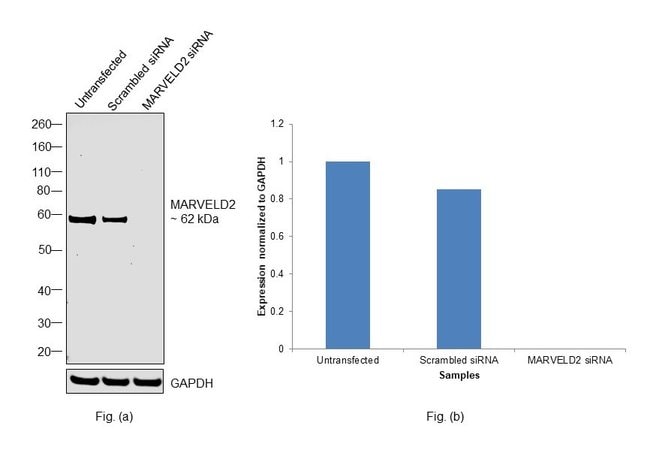
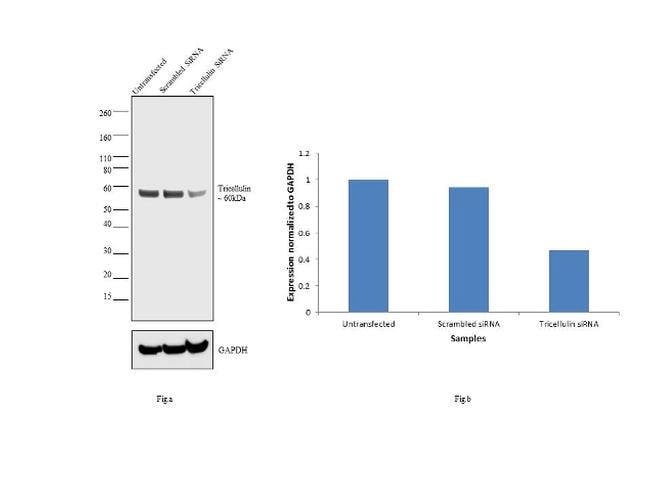
Tight junctions form an important barrier of paracellular transport in epithelial cells. Sealing of two adjacent cells at bicellular tight junctions, a point where three adjacent cells are in contact with each other. Tricellulin is the first protein identified that specifically concentrates in tricellular tight junctions. This protein has four membrane spanning domains, similarly to claudins. Tricellulin expression is high in epithelium-derived tissues, such as small intestine, kidney and lung. Functional evidence for the role of tricellulin in tight junction formation comes from siRNA studies, where suppression of its expression leads to compromised epithelial barrier and tight junction formation. Loss of function in tricellulin mutants missing all or most of a conserved region in the cytosolic domain which binds to the cytosolic scaffolding protein ZO-1, indicate that interaction with other known tight junction proteins plays an important role for the function of tricellulin.
TRUSTED_SUSTAINABILITY

Specifications

Antigen MARVELD2
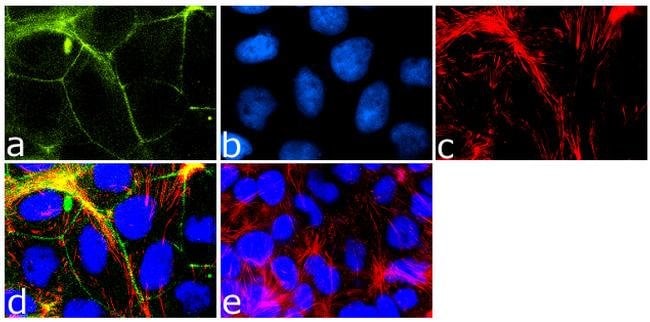
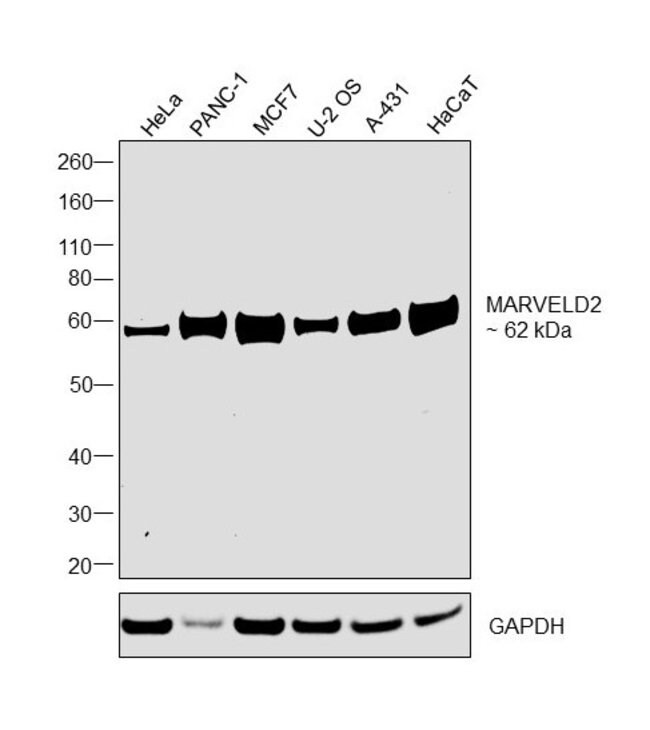
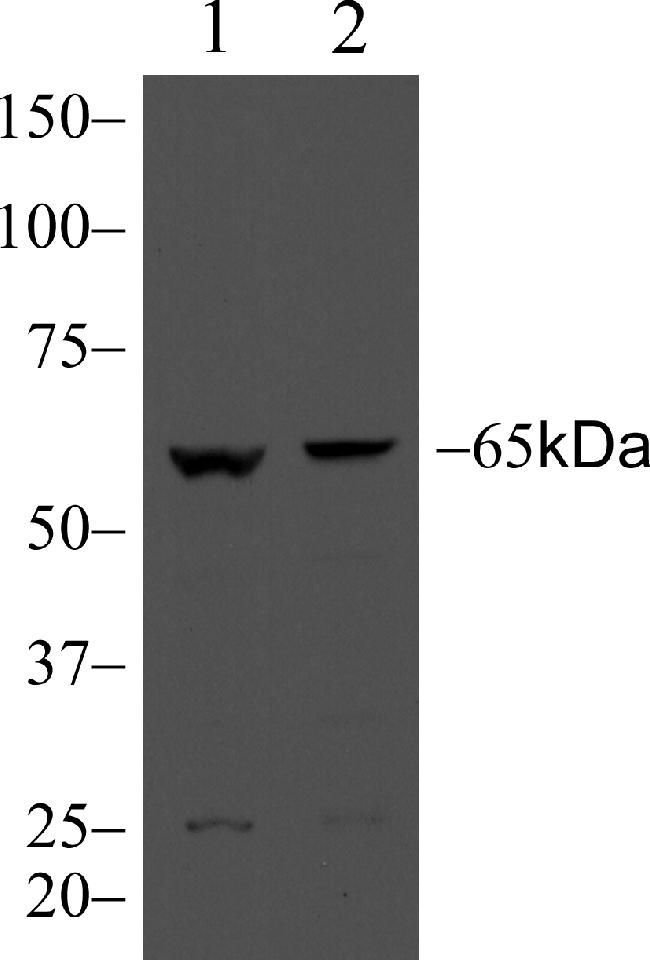
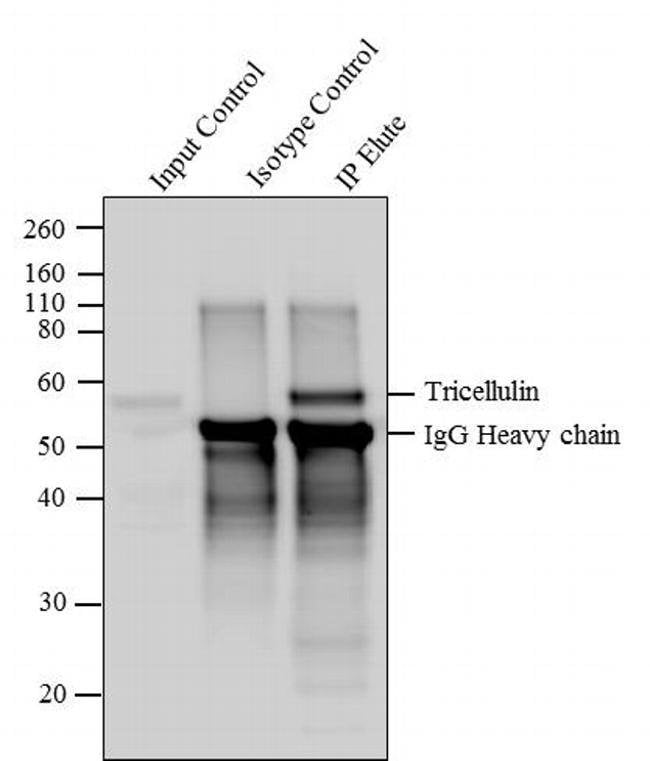
Applications Immunoprecipitation, Western Blot, Immunocytochemistry
Classification Recombinant Monoclonal
Clone 54H19L38
Concentration 0.5 mg/mL
Conjugate Unconjugated
Formulation PBS with 0.09% sodium azide
Gene MARVELD2
Gene Accession No. Q8N4S9
Gene Alias BC003296; DFNB49; MARVD2; MARVEL (membrane-associating) domain containing 2; MARVEL domain containing 2; MARVEL domain-containing protein 2; Marveld2; Mrvldc2; Tric; Trica; Tricb; Tricc; Tricellulin
Gene Symbols MARVELD2
Host Species Rabbit
Immunogen A recombinant protein corresponding to amino acids 369-558 of Q8N4S9.
Purification Method Protein A
Quantity 100 μg
Regulatory Status RUO
Primary or Secondary Primary
Gene ID (Entrez) 153562
Target Species Human
Content And Storage Store at 4°C short term. For long term storage, store at -20°C, avoiding freeze/thaw cycles.
Product Type Antibody
Form Liquid
Isotype IgG
Show More Show Less
WARNING: Cancer - www.P65Warnings.ca.gov
Product Title
Select an issue

By clicking Submit, you acknowledge that you may be contacted by Fisher Scientific in regards to the feedback you have provided in this form. We will not share your information for any other purposes. All contact information provided shall also be maintained in accordance with our Privacy Policy.