Learn More
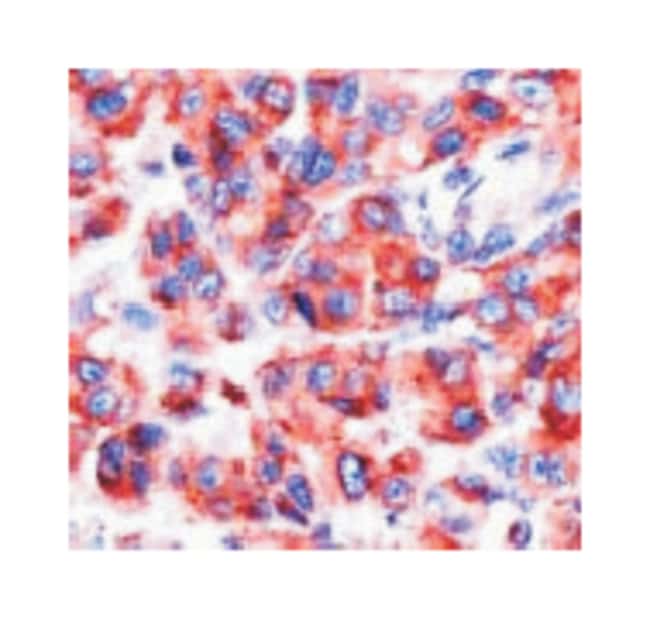
Description
The protein encoded by this gene is a member of the transmembrane 4 superfamily, also known as the tetraspanin family. Most of these members are cell-surface proteins that are characterized by the presence of four hydrophobic domains. The proteins mediate signal transduction events that play a role in the regulation of cell development, activation, growth and motility. This encoded protein is a cell surface glycoprotein that is known to complex with integrins. It may function as a blood platelet activation marker. Deficiency of this protein is associated with Hermansky-Pudlak syndrome. Also this gene has been associated with tumor progression. The use of alternate polyadenylation sites has been found for this gene. Alternative splicing results in multiple transcript variants encoding different proteins. [provided by RefSeq
Specifications
Specifications
| Antigen | CD63 |
| Applications | Immunohistochemistry (PFA fixed) |
| Classification | Monoclonal |
| Clone | SPM524 |
| Concentration | Lot specific |
| Conjugate | Unconjugated |
| Description | Mouse monoclonal antibody raised against recombinant CD63. |
| Dilution | Immunohistochemistry (Formalin/PFA-fixed paraffin-embedded sections) (Formalin/PFA-fixed paraffin-embedded sections) (1:200) The optimal working dilution should be determined by the end user. |
| Formulation | In 10mM PBS, pH 7.4 (1% BSA, 0.09% sodium azide) |
| Gene | CD63 |
| Show More |
By clicking Submit, you acknowledge that you may be contacted by Fisher Scientific in regards to the feedback you have provided in this form. We will not share your information for any other purposes. All contact information provided shall also be maintained in accordance with our Privacy Policy.