Promotional price valid on web orders only. Your contract pricing may differ. Interested in signing up for a dedicated account number?
Learn More
Learn More

Invitrogen™ OPA1 Polyclonal Antibody

Description
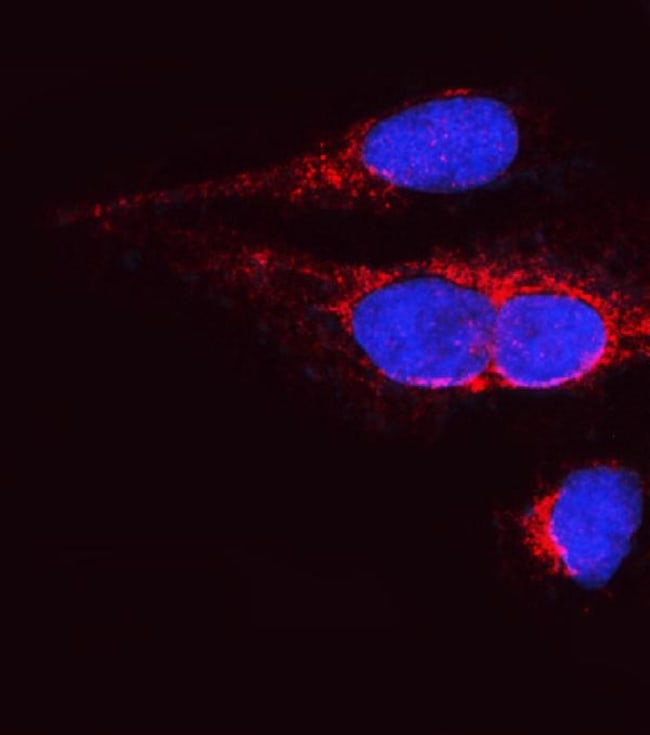
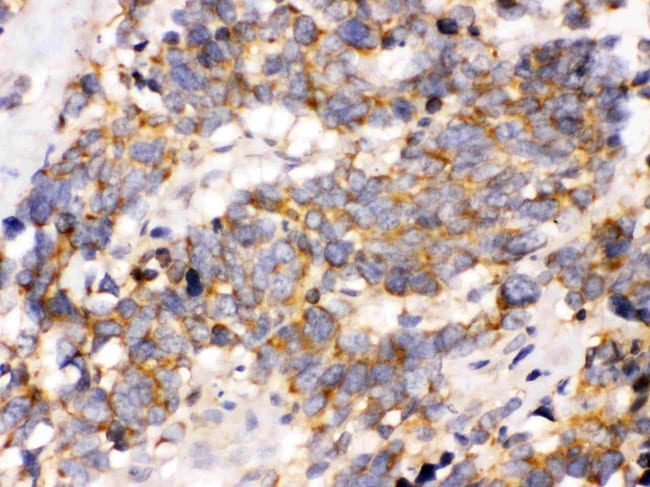
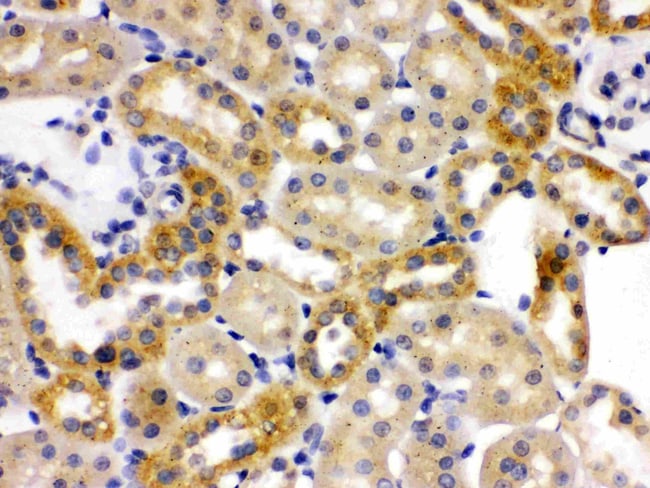
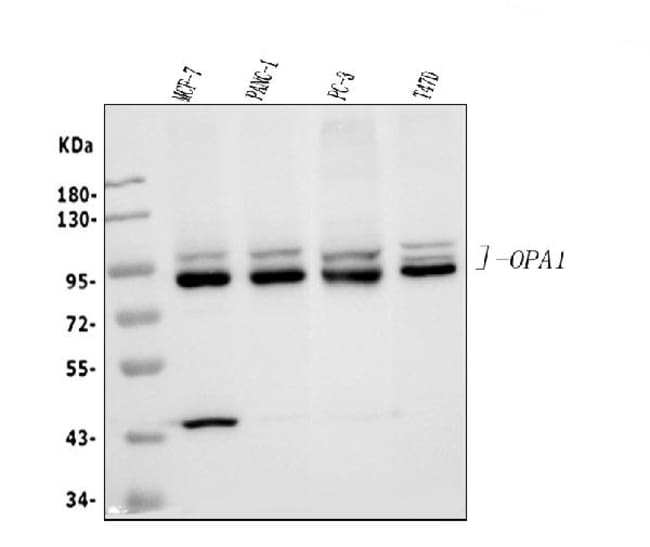
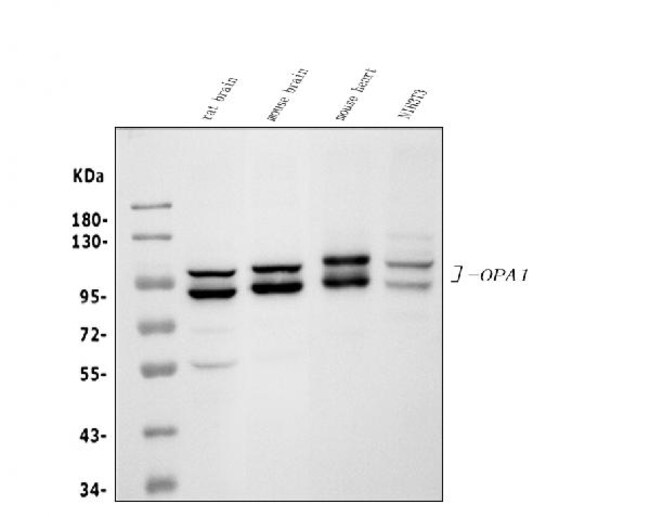
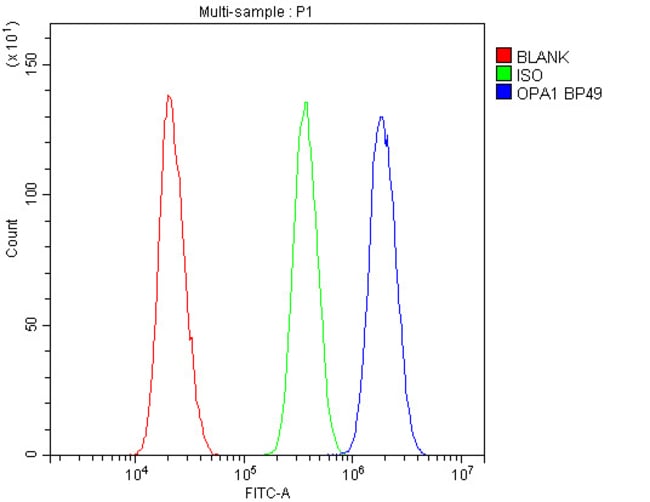
Reconstitute with 0.2 mL of distilled water to yield a concentration of 500 μg/mL. Positive Control - WB: human MCF-7 whole cell, human PANC-1 whole cell, human PC-3 whole cell, human T47D whole cell, rat brain tissue, mouse brain tissue, mouse heart tissue, mouse NIH/3T3 whole cell. IHC: Mouse Liver tissue, Rat Kidney tissue, Human Lung Cancer tissue. ICC/IF: U20S cell. Flow: U20S cell.
OPA1 is a dynamin-related GTPase that is critical for the maintenance of mitochondrial morphology and mtDNA. The most commonly associated phenotype with OPA1 mutations is heterozygous optic atrophy, a heterozygous dominant trait that causes reduced visual clarity and sometimes blindness. The disease usually begins in childhood and increases in severity throughout the life of affected individuals. Usually, this phenotype is attributed to the degeneration of optic nerve fibers. Interestingly, the same type of nerve degeneration seems to be partially causative of certain schizophrenia characteristics. OPA1 dysfunction also seems to be implicated in this case; mitochondrial networks associated with critical nerves seem to link schizophrenia and OPA1. The dysfunction is associated with issues with apoptosis and normal cellular metabolic regulation, all regulated through OPA1.

Specifications
Specifications
| Antigen | OPA1 |
| Applications | Flow Cytometry, Immunohistochemistry (Frozen), Immunohistochemistry (Paraffin), Western Blot, Immunocytochemistry |
| Classification | Polyclonal |
| Concentration | 500 μg/mL |
| Conjugate | Unconjugated |
| Formulation | PBS with 5mg BSA and 0.05mg sodium azide |
| Gene | OPA1 |
| Gene Accession No. | O60313, P58281, Q2TA68 |
| Gene Alias | 1200011N24Rik; AI225888; AI847218; BERHS; Dynamin-like 120 kDa protein, form S1; Dynamin-like 120 kDa protein, mitochondrial; dynamin-like guanosine triphosphatase; EMBL:AAI11072.1}; hypothetical protein; KIAA0567; Large GTP-binding protein; largeG; lilr3; MGM1; mitochondrial dynamin-like GTPase; mitochondrial OPA1; mKIAA0567; MTDPS14; NPG; NTG; OPA1; opa1 {ECO:0000312; OPA1 mitochondrial dynamin like GTPase; OPA1, mitochondrial dynamin like GTPase; optic atrophy 1; optic atrophy 1 (autosomal dominant); optic atrophy 1 homolog; optic atrophy 1-like protein; optic atrophy protein 1; Optic atrophy protein 1 homolog; RCJMB04_1m16; RN protein |
| Gene Symbols | OPA1 |
| Show More |
Product Title
By clicking Submit, you acknowledge that you may be contacted by Fisher Scientific in regards to the feedback you have provided in this form. We will not share your information for any other purposes. All contact information provided shall also be maintained in accordance with our Privacy Policy.
Spot an opportunity for improvement?