Learn More
Invitrogen™ PAG1 Monoclonal Antibody (PAG-C1)

Description
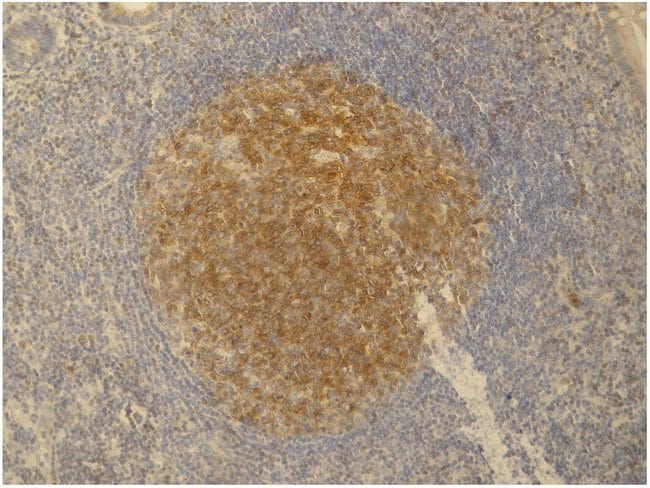
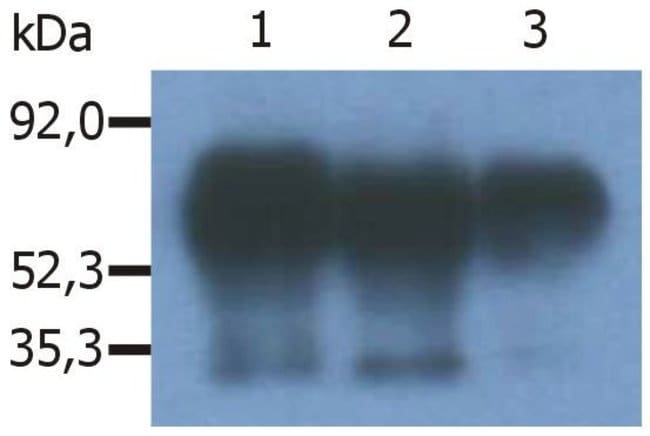
This antibody recognizes an epitope located in the intracellular C-terminal domain of Csk-binding protein (Cbp / PAG), a 46 kDa ubiquitously expressed transmembrane adaptor protein present in membrane rafts (glycosphingolipid-enriched microdomains), which however migrates on SDS PAGE gels anomalously as an 80 kDa molecule. A suggested positive control for Immunoprecipitation is RAJI human Burkitt lymphoma cell line. A suggested positive control for immunohistochemistry is appendix (germinal center of lymphatic follicle). For IHC staining, heat-mediated antigen retrieval in citrate buffer, pH 6.1, is recommended.

Specifications
Specifications
| Antigen | PAG1 |
| Applications | Immunohistochemistry (Paraffin), Immunoprecipitation, Western Blot |
| Classification | Monoclonal |
| Clone | PAG-C1 |
| Concentration | 1 mg/mL |
| Conjugate | Unconjugated |
| Formulation | PBS with 15mM sodium azide; pH 7.4 |
| Gene | PAG1 |
| Gene Accession No. | Q29432, Q3U1F9, Q9JM80, Q9NWQ8 |
| Gene Alias | CBP; Csk binding protein; csk-binding protein; F730007C19Rik; Pag; PAG 1; Pag1; PAG1B; phosphoprotein associated with glycosphingolipid microdomains 1; phosphoprotein associated with glycosphingolipid-enriched microdomains 1; phosphoprotein membrane anchor with glycosphingolipid microdomains 1; phosphoprotein transmembrane adaptor 1; phosphoprotein-associated with GEMs; pregnancy-associated glycoprotein 1; Pregnancy-specific protein B; PSP-B; similar to pregnancy-associated glycoprotein 1; transmembrane adapter protein PAG; transmembrane adaptor protein PAG; transmembrane phosphoprotein Cbp |
| Show More |
By clicking Submit, you acknowledge that you may be contacted by Fisher Scientific in regards to the feedback you have provided in this form. We will not share your information for any other purposes. All contact information provided shall also be maintained in accordance with our Privacy Policy.