Learn More
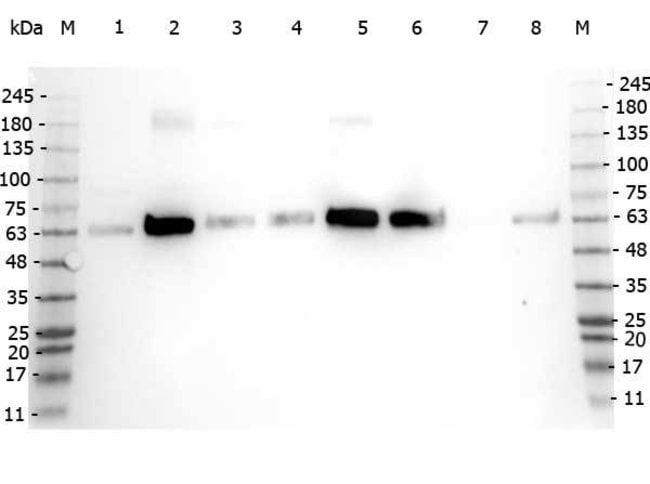
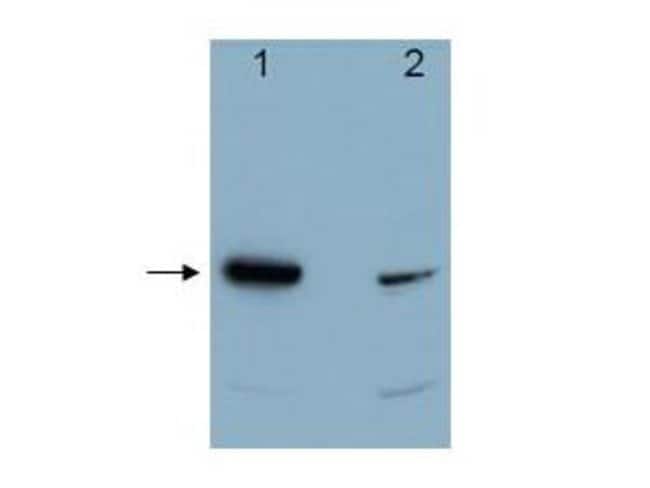
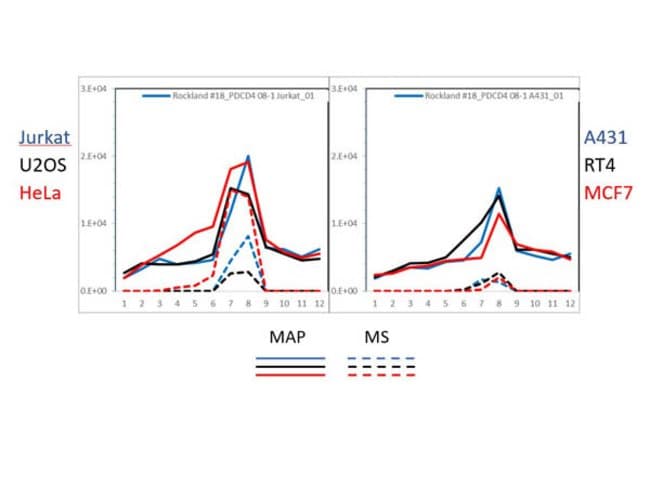
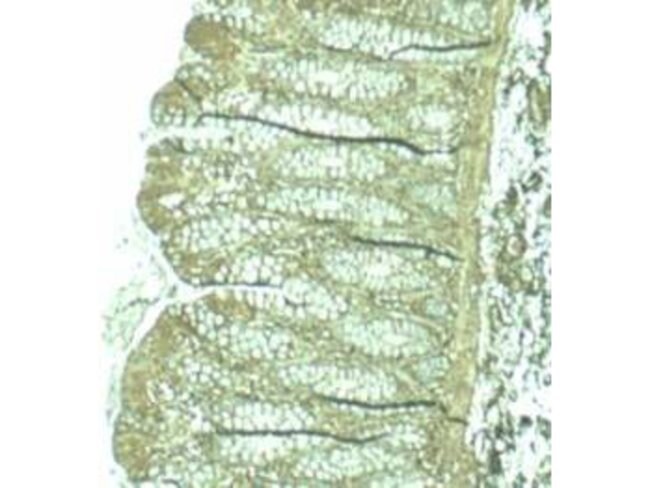
Pdcd4Rabbit anti-Human, Mouse, Rat, Xenopus laevis, Polyclonal, Rockland™


Description
Store vial at -20°C prior to opening. Aliquot contents and freeze at -20°C or below for extended storage. Avoid cycles of freezing and thawing. Centrifuge product if not completely clear after standing at room temperature. This product is stable for several weeks at 4°C as an undiluted liquid. Dilute only prior to immediate use. Directed against human Pdcd4 protein. A BLAST analysis was used to suggest cross-reactivity with Pdcd4 from human, mouse, rat and Xenopus based on 100% homology with the immunizing sequence. Cross-reactivity with Pdcd4 from other sources has not been determined. The antibody reacts with Pdcd4 protein that is either phosphorylated or non-phosphorylated at Ser457.
Specifications
Specifications
| Antigen | Pdcd4 |
| Applications | ELISA, Immunohistochemistry, Immunohistochemistry (Paraffin), Western Blot |
| Classification | Polyclonal |
| Concentration | 1 mg/mL |
| Conjugate | Unconjugated |
| Formulation | 0.02M potassium phosphate with 0.15M NaCl and 0.01% sodium azide; pH 7.2 |
| Gene | PDCD4 |
| Gene Accession No. | Q53EL6, Q61823, Q9JID1 |
| Gene Alias | D19Ucla1; Death up-regulated gene protein; death-upregulated; Dug; H731; Ma3; MGC33046; MGC33047; Neoplastic transformation inhibitor protein; nuclear antigen H731; Nuclear antigen H731-like; PDCD4; programmed cell death 4; programmed cell death 4 (neoplastic transformation inhibitor); Programmed cell death protein 4; Protein 197/15a; Protein MA-3; RP11-348N5.4; Tis; Topoisomerase-inhibitor suppressed protein |
| Gene Symbols | PDCD4 |
| Show More |
By clicking Submit, you acknowledge that you may be contacted by Fisher Scientific in regards to the feedback you have provided in this form. We will not share your information for any other purposes. All contact information provided shall also be maintained in accordance with our Privacy Policy.