Promotional price valid on web orders only. Your contract pricing may differ. Interested in signing up for a dedicated account number?
Learn More
Learn More
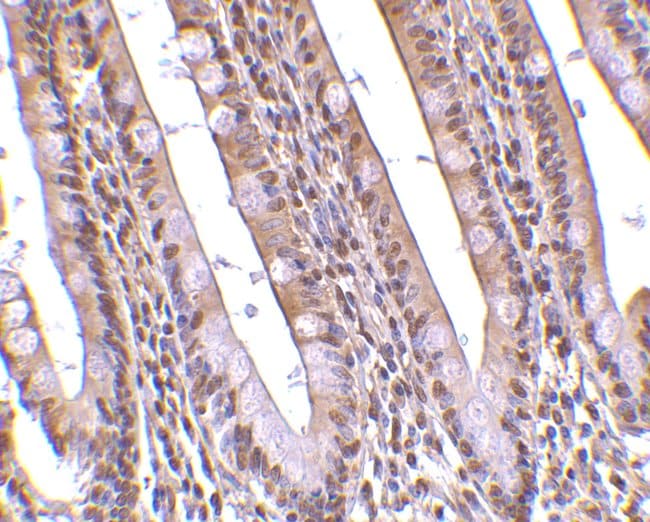
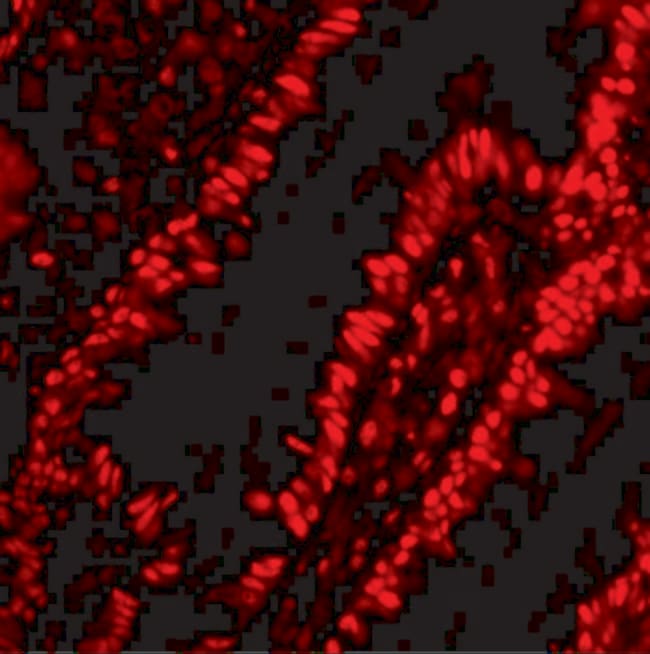
Invitrogen™ PHAP Polyclonal Antibody

Description
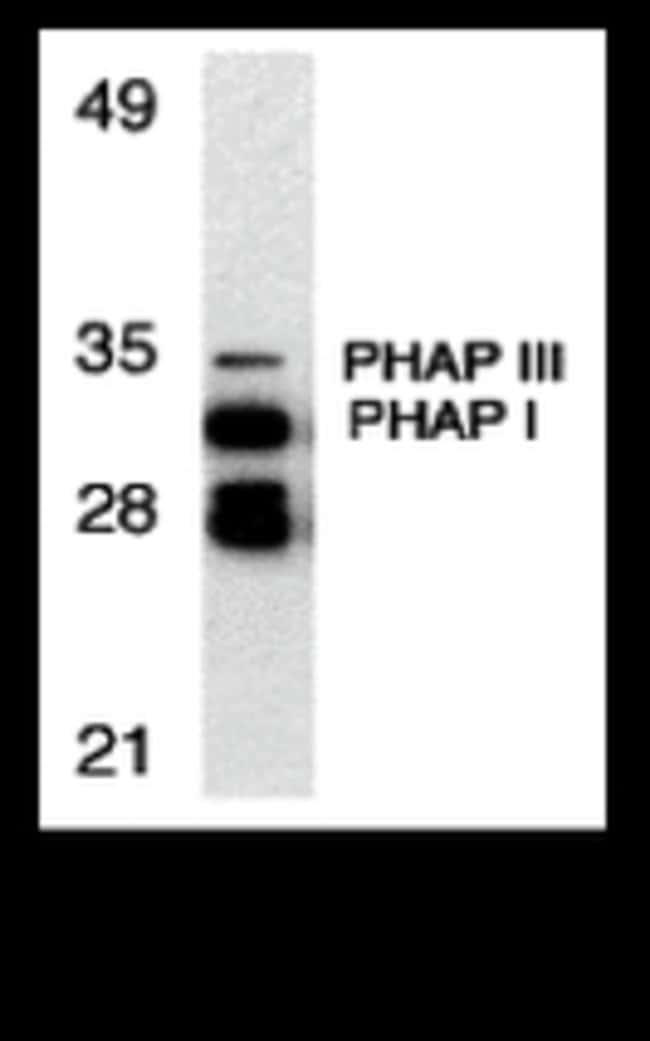
In Western blot applications, this antibody detects a band at ~32kDa and ~35kDa. A suggested positive control is Raji cell lysate. PA5-20026 can be used with blocking peptide PEP-0145.
Apoptosis is related to many diseases and development. Caspase-9 plays a central role in cell death induced by a variety of apoptosis activators. Cytochrome c, after released from mitochondria, binds to Apaf-1, which forms an apoptosome that in turn binds to and activate procaspase-9. Activated caspase-9 cleaves and activates the effector caspases (caspase-3, -6 and -7), which are responsible for the proteolytic cleavage of many key proteins in apoptosis. The tumor suppressor putative HLA-DR-associated proteins (PHAPs) were recently identified as important regulators of mitochondrion apoptosis. PHAP appears to facilitate apoptosome-medicated caspase-9 activation and to stimulate the mitochondrial apoptotic pathway. PHAP was also shown to oppose both Ras- and Myc-medicated cell transformation.

Specifications
Specifications
| Antigen | PHAP |
| Applications | Immunohistochemistry, Western Blot |
| Classification | Polyclonal |
| Concentration | 1 mg/mL |
| Conjugate | Unconjugated |
| Formulation | PBS with 0.02% sodium azide |
| Gene | ANP32A |
| Gene Accession No. | O35381, P39687, P49911, P97822, Q5XIE0, Q92688, Q9BTT0, Q9EST5, Q9EST6 |
| Gene Alias | 2410015B15Rik; 2810018A15Rik; Acid nuclear phosphoprotein 32 (leucine rich); acidic (leucine-rich) nuclear phosphoprotein 32 family, member A; acidic (leucine-rich) nuclear phosphoprotein 32 family, member B; acidic (leucine-rich) nuclear phosphoprotein 32 family, member D; acidic (leucine-rich) nuclear phosphoprotein 32 family, member E; acidic leucine-rich nuclear phosphoprotein 32 family member A; Acidic leucine-rich nuclear phosphoprotein 32 family member B; acidic leucine-rich nuclear phosphoprotein 32 family member E; acidic nuclear phosphoprotein 32; acidic nuclear phosphoprotein 32 family member A; acidic nuclear phosphoprotein 32 family member B; acidic nuclear phosphoprotein 32 family member E; acidic nuclear phosphoprotein 32 family, member A; acidic nuclear phosphoprotein 32 family, member B; acidic nuclear phosphoprotein pp32; Acidic protein rich in leucines; AI047746; AI326868; Anp32; Anp32a; Anp32b; ANP32D; ANP32E; APRIL; C15orf1; cerebellar leucine rich acidic nuclear protein; cerebellar postnatal development protein 1; Cpd1; hepatopoietin Cn; HPPCn; hypothetical protein LOC509685; I1PP2A; inhibitor-1 of protein phosphatase-2A; LANP; LANPL; LANP-L; LANP-like protein; Leucine-rich acidic nuclear protein; leucine-rich acidic nuclear protein LANP; leucine-rich acidic nuclear protein like; MAPM; Mapmodulin; mLANP-L; Pal31; PHAP1; PHAPI; PHAPI2; PHAPI2a; Potent heat-stable protein phosphatase 2A inhibitor I1PP2A; PP32; proliferation related acidic leucine rich protein PAL31; proliferation-related acidic leucine-rich protein PAL31; Putative HLA-DR-associated protein I; putative HLA-DR-associated protein I-2; putative human HLA class II associated protein I; silver-stainable protein SSP29; SSP29; vacidic (leucine-rich) nuclear phosphoprotein 32 family, member A; W91701 |
| Gene Symbols | ANP32A, ANP32B, ANP32E |
| Show More |
Product Title
By clicking Submit, you acknowledge that you may be contacted by Fisher Scientific in regards to the feedback you have provided in this form. We will not share your information for any other purposes. All contact information provided shall also be maintained in accordance with our Privacy Policy.
Spot an opportunity for improvement?