Learn More
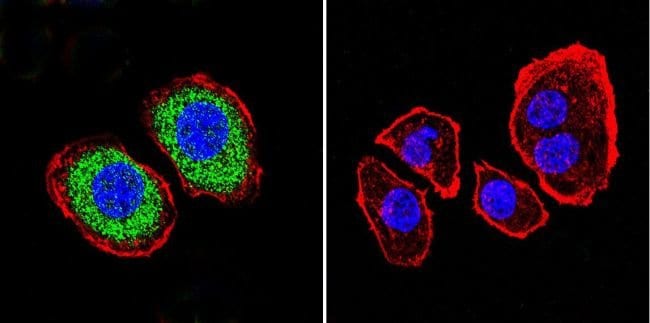
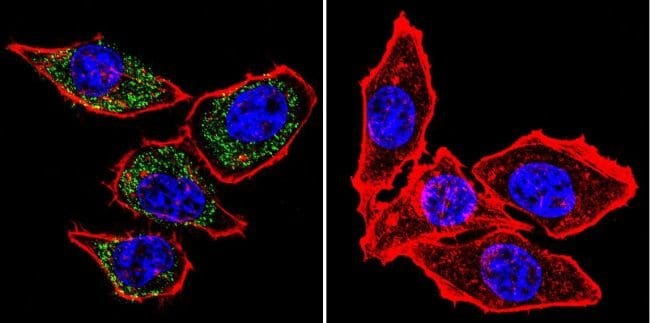
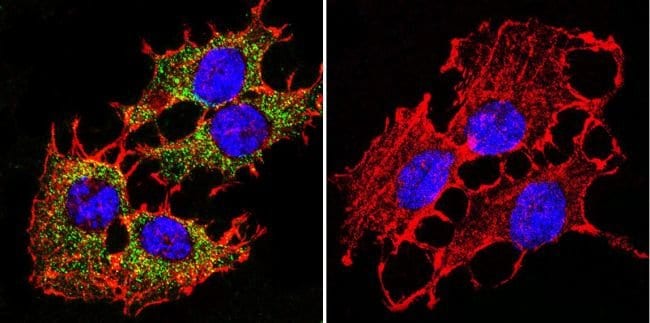
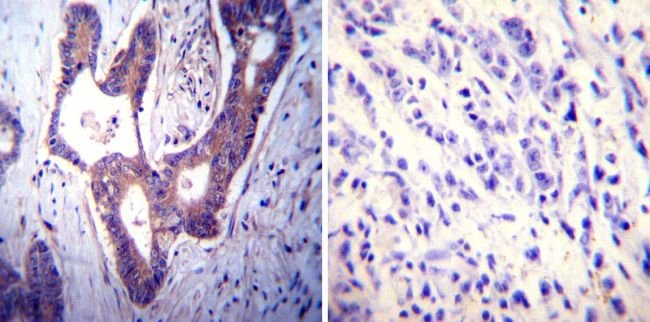



Description
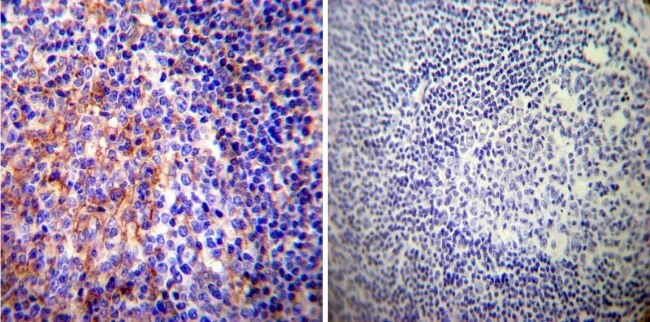
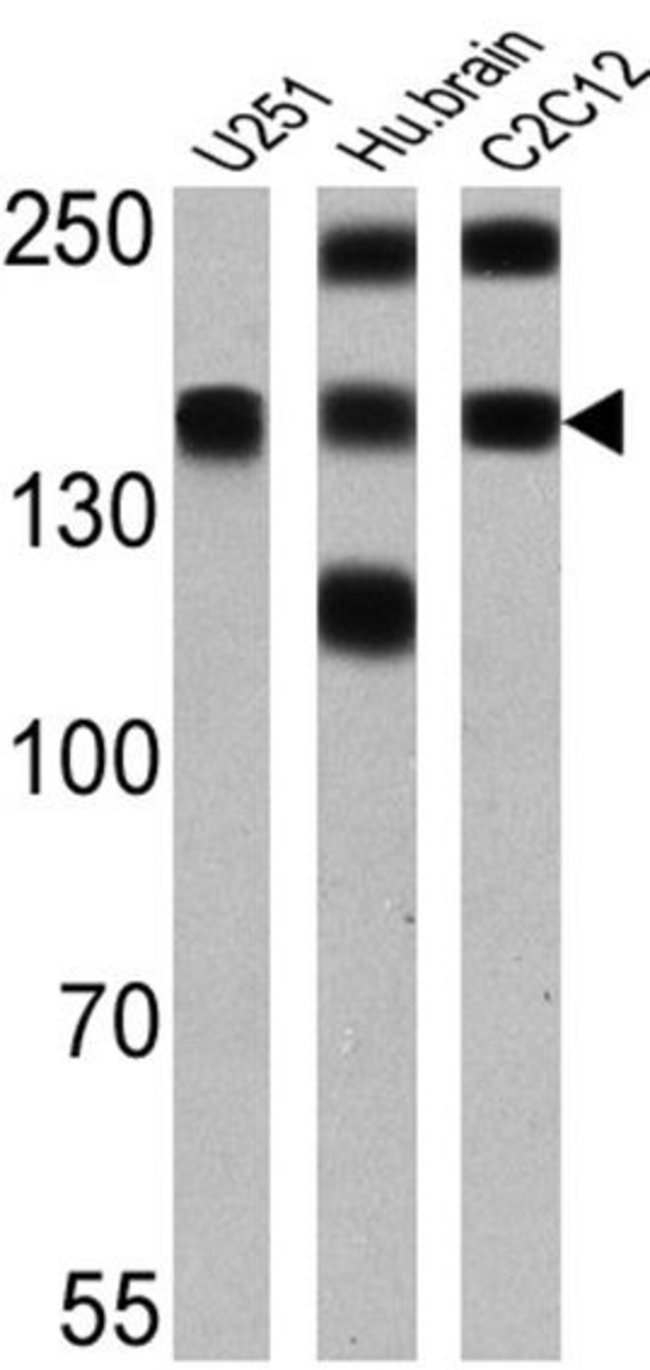
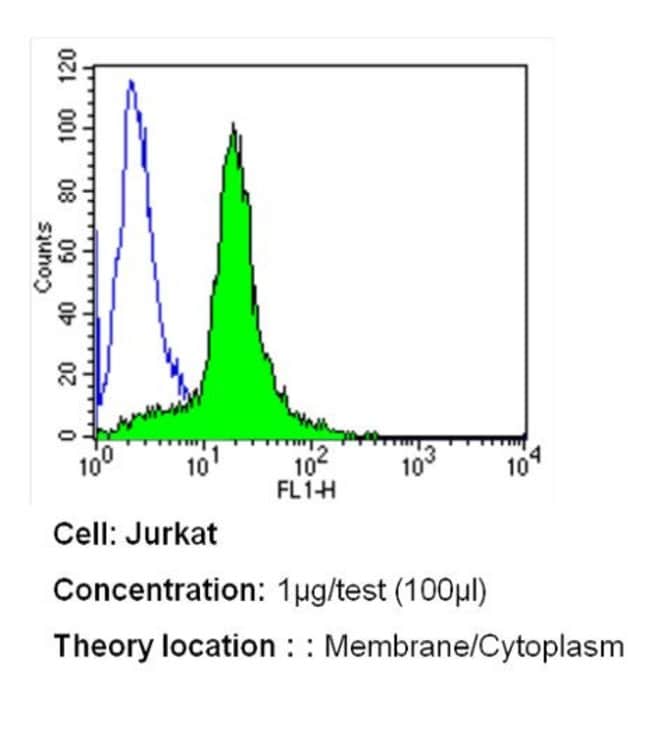
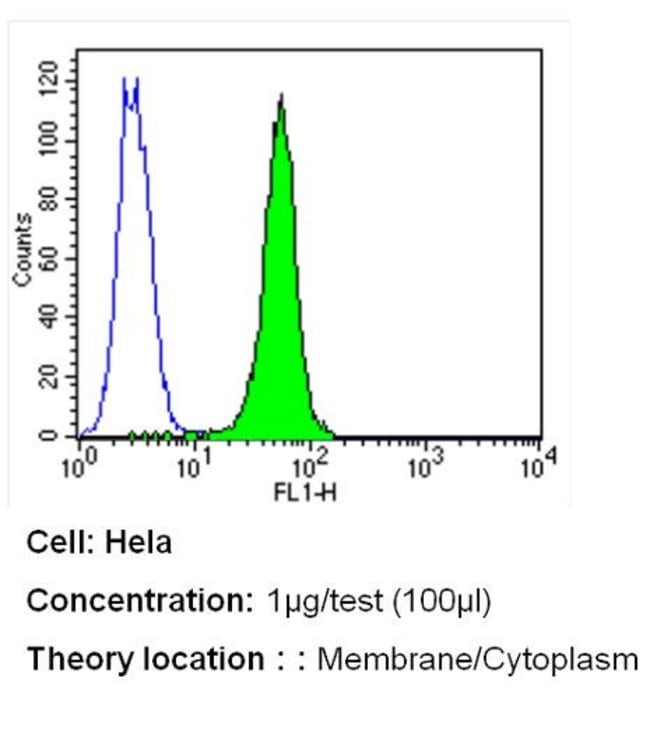
MA3-914 detects calcium pump of the plasma membrane (PMCA) ATPase from amphibian, canine, chicken, feline, human, mouse, sheep, primate, rabbit, and rat tissues. This antibody detects all four known isoforms of the PMCA ATPase. MA3-914 has been successfully used in Western blot, FACS, immunohistochemistry, immunocytochemistry, immunofluorescence and immunoprecipitation procedures. By Western blot, this antibody recognizes an ~140 kDa protein representing PMCA ATPase and bands at 95kDa and 180 kDa which probably represent products of aggregation and/or natural proteolytic products of the pump from rat liver membrane preparations. Immunohistochemical staining of PMCA ATPase with MA3-914 yields a pattern consistent with that seen in the literature and depends on the tissue being studied and the localization of the isoforms present. MA3-914 can be used on both frozen and formalin-fixed paraffin-embedded tissues. The MA3-914 antigen is purified human erythrocyte calcium ATPase. This antibody recognizes an epitope between amino acids 724-783 of the human erythrocyte calcium pump.

Specifications
Specifications
| Antigen | PMCA ATPase |
| Applications | Flow Cytometry, Immunohistochemistry (Frozen), Immunohistochemistry (Paraffin), Immunoprecipitation, Western Blot, Immunocytochemistry |
| Classification | Monoclonal |
| Clone | 5F10 |
| Concentration | 1 mg/mL |
| Conjugate | Unconjugated |
| Formulation | PBS with 0.05% sodium azide |
| Gene | ATP2B3 |
| Gene Accession No. | G5E829, P11505, P11506, P20020, P23634, Q00804, Q01814, Q16720, Q64542, Q64568, Q6Q477, Q98SH2, Q9R0K7 |
| Gene Alias | 2810442I22Rik; 6430519O13Rik; ATP2B; ATP2B1; ATP2B2; ATP2B3; ATP2B4; ATPase isoform 2 Na+K+ transporting beta polypeptide 2; ATPase isoform 2, Na+K+ transporting, beta polypeptide 2; ATPase plasma membrane Ca2+ transporting 1; ATPase plasma membrane Ca2+ transporting 2; ATPase plasma membrane Ca2+ transporting 3; ATPase plasma membrane Ca2+ transporting 4; ATPase, Ca++ transporting, plasma membrane 1; ATPase, Ca++ transporting, plasma membrane 2; ATPase, Ca++ transporting, plasma membrane 3; ATPase, Ca++ transporting, plasma membrane 4; ATP-dependent plasma membrane calcium transporter; Ca2+/Mg2+ ATPase; CFAP39; cilia and flagella associated protein 39; CLA2; D6Abb2e; deaf waddler; dfw; E130111D10Rik; Gena300; jog; Matrix-remodeling-associated protein 1; MXRA1; OPCA; plasma membrane Ca(2+)-ATPase; plasma membrane Ca++-ATPase; plasma membrane Ca2+ pump 2; plasma membrane Ca2+-ATPases 4; plasma membrane calcium ATPase; Plasma membrane calcium ATPase isoform 1; plasma membrane calcium ATPase isoform 1b; Plasma membrane calcium ATPase isoform 2; Plasma membrane calcium ATPase isoform 3; Plasma membrane calcium ATPase isoform 4; plasma membrane calcium ATPase isoform 4a; plasma membrane calcium ATPase isoform 4b; plasma membrane calcium pump; Plasma membrane calcium pump isoform 1; plasma membrane calcium pump isoform 1b; Plasma membrane calcium pump isoform 2; Plasma membrane calcium pump isoform 3; Plasma membrane calcium pump isoform 4; Plasma membrane calcium-transporting ATPase 1; plasma membrane calcium-transporting ATPase 2; Plasma membrane calcium-transporting ATPase 3; plasma membrane calcium-transporting ATPase 4; plasma membrane calcium-transporting ATPase 4; plasma membrane calcium-transporting ATPase 1; PMCA; PMCA1; Pmca1a; Pmca1b; Pmca1c; PMCA1kb; PMCA2; PMCA2a; PMCA2i; Pmca3; PMCA3a; Pmca4; PMCA4a; PMCA4b; PMCA4x; sarcolemmal calcium pump; SCAX1; Tmy; wms; wri; wriggle |
| Show More |
Frequently Asked Questions (FAQs)
We recommend that hydrophobic residues comprise 50% or less of all the residues in your sequence. Make sure there is at least one charged residue for every five amino acids: this is generally known to enhance the solubility of the peptide. Peptides (compared to polypeptides, which fold and bury the hydrophobic amino acids) are too small to fold, so just a few hydrophobic amino acids may leave them insoluble.
Other guidelines include:
Peptides containing multiple Cys, Met, and Trp can be hard to synthesize.
Some sequences are problematic in solid-phase peptide synthesis or cleavage and are best avoided; these include Asp-Pro sequences or stretches of amino acids that require bulky protecting groups on their side chains during synthesis.
Glycine is often good for antigenicity as it has only a hydrogen side chain; this allows for complete rotation.
Please note that we offer a Custom Antibody Production service (https://www.thermofisher.com/us/en/home/life-science/antibodies/custom-antibodies/custom-antibody-production.html) that includes the use of our proprietary Antigen Profiler and Antigen Preparation tool (https://www.thermofisher.com/us/en/home/life-science/antibodies/custom-antibodies/custom-antibody-production/antigen-profiler-antigen-preparation.html).
Most peptide antigens range in length from 12 to 16 residues and are relatively easy to synthesize. Peptides of 9 residues or shorter have been effective antigens for antibody production, but peptides longer than 16 amino acids may contain several epitopes and form secondary structures. Peptides in excess of 18 residues begin to present more synthetic challenges. Before you synthesize your peptide, we recommend doing a BLASTP search using your peptide sequence. This is to make sure that the peptide is not homologous or identical to a sequence in a completely unrelated protein in the host animal.
Please note that we offer a Custom Antibody Production service (https://www.thermofisher.com/us/en/home/life-science/antibodies/custom-antibodies/custom-antibody-production.html) that includes the use of our proprietary Antigen Profiler and Antigen Preparation tool (https://www.thermofisher.com/us/en/home/life-science/antibodies/custom-antibodies/custom-antibody-production/antigen-profiler-antigen-preparation.html).
Improper storage of antibodies can lead to:
- Degradation: Loss of activity and specificity
- Aggregation: Formation of precipitates or clumps
- Reduced performance: Poor results in assays or experiments
Antibody pair kits contain capture antibody, detection antibody, recombinant standard and HRP conjugate. Each contains enough reagents to process forty 96-well plates. A list of Antibody Pair Kits (https://www.thermofisher.com/us/en/home/life-science/protein-biology/protein-assays-analysis/elisa/antibody-pair-kits.html) is available by target.
Reagent Sets contain Capture Antibody, Detection Antibody, Recombinant Standard, HRP Conjugate, TMB Substrate and Stop Solution. Each contains enough reagents to process five 96-well plates. Reagent Sets are included in the main list of ELISA (https://www.thermofisher.com/us/en/home/life-science/protein-biology/protein-assays-analysis/elisa/antibody-pair-kits.html) kits (search by “Reagent Set”).
By clicking Submit, you acknowledge that you may be contacted by Fisher Scientific in regards to the feedback you have provided in this form. We will not share your information for any other purposes. All contact information provided shall also be maintained in accordance with our Privacy Policy.