Promotional price valid on web orders only. Your contract pricing may differ. Interested in signing up for a dedicated account number?
Learn More

Invitrogen™ PTEN Recombinant Rabbit Monoclonal Antibody (SJ19-03)
GREENER_CHOICE

Catalog No. MA551927
Encompass_Preferred
Change view
Click to view available options
Quantity:
100 μL
1 product options available for selection
Product selection table with 1 available options. Use arrow keys to navigate and Enter or Space to select.
Catalog No. Quantity
MA551927 100 μL
Use arrow keys to navigate between rows. Press Enter or Space to select a product option. 1 options available.
1 options
Catalog No. MA551927 Supplier Invitrogen™ Supplier No. MA551927
Add to Cart
Edge
Add to Cart

Rabbit Recombinant Monoclonal Antibody

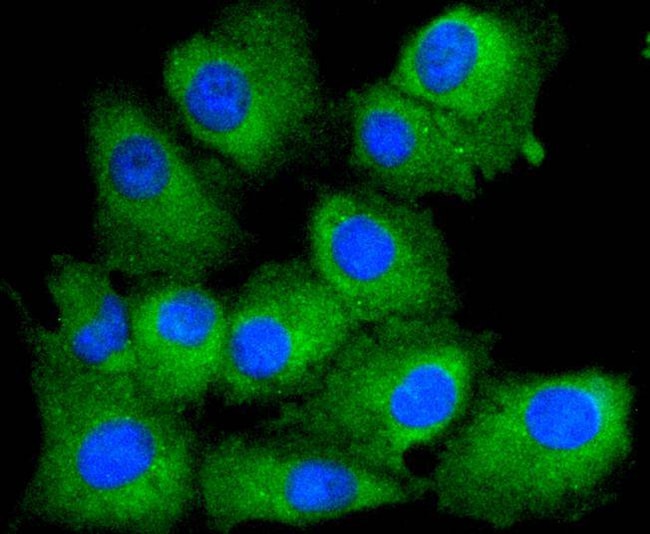
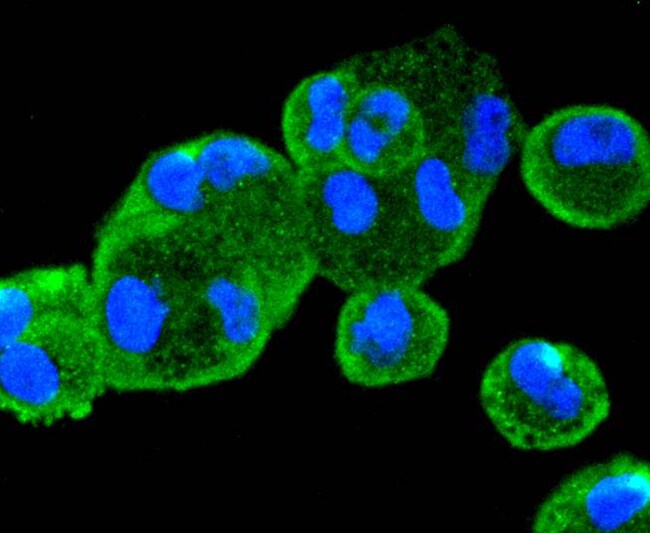
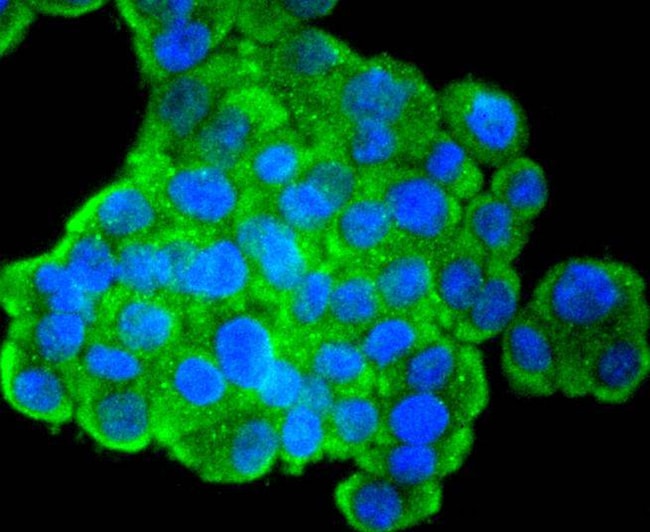
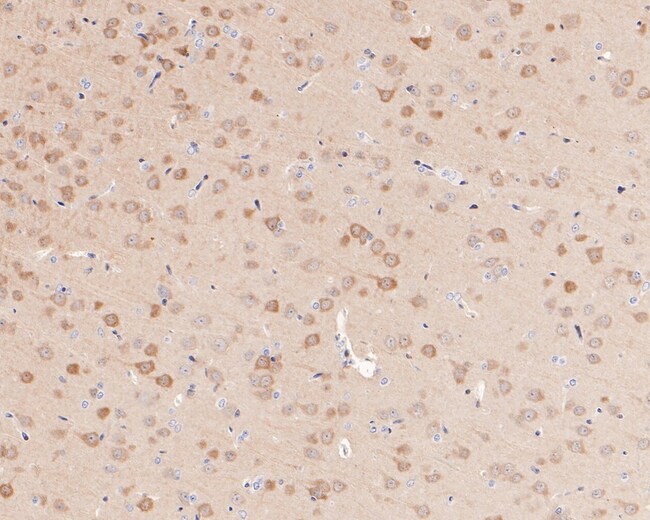
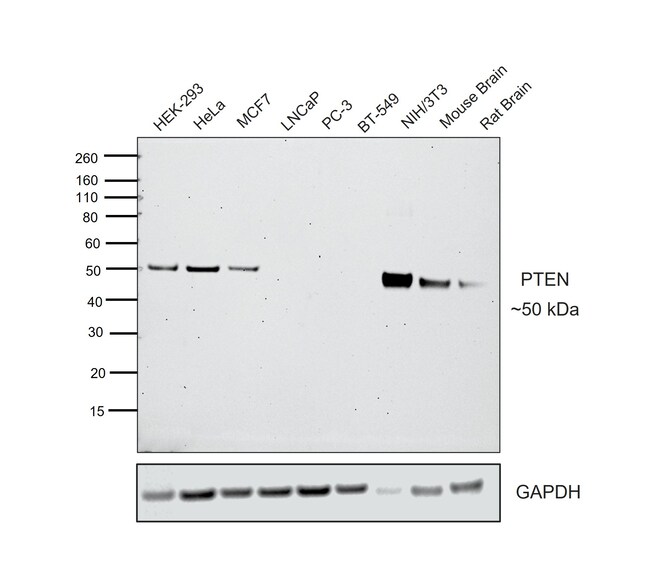
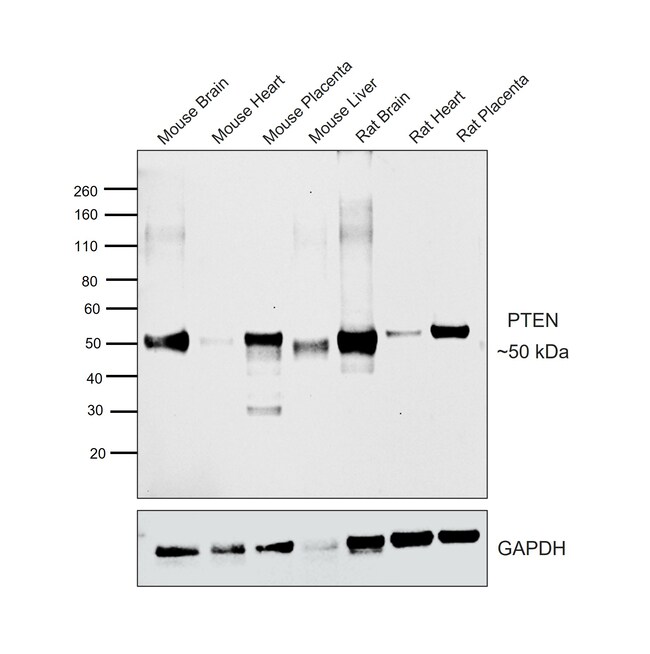
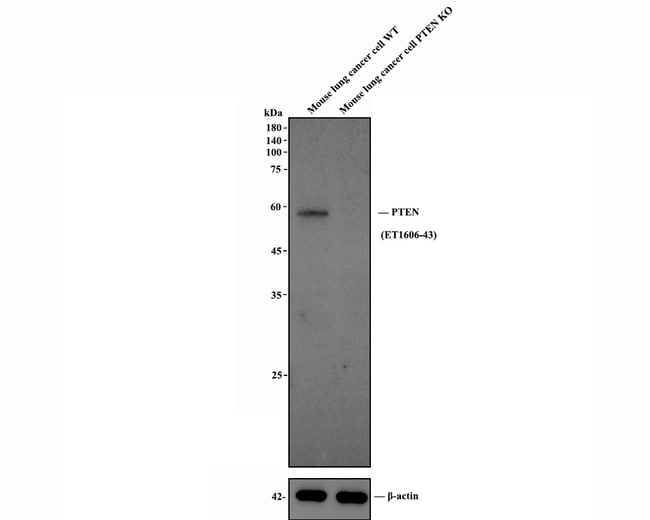
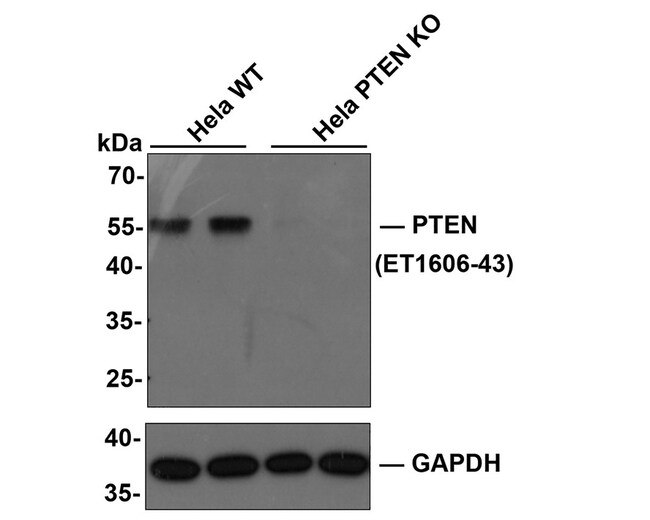
Sequence Similarities: 99% Mouse/98%Rat. Tissue Specificity: Expressed at a relatively high level in all adult tissues, including heart, brain, placenta, lung, liver, muscle, kidney and pancreas. Positive Control: MCF7 cell lysate, A431 cell lysate, HeLa cell lysate, NIH/3T3 cell lysate, C6 cell lysate, PC-12 cell lysate, Hela, A549, SW480, mouse brain tissue, rat brain tissue. Subcellular Location: Cytoplasm, Nucleus, Secreted. Predicted band size: 47 kDa.

PTEN was identified as a tumor suppressor that is mutated in a large number of cancers at high frequency. The PTEN gene is a phosphatidylinositol-3, 4, 5-trisphosphate 3-phosphatase. It contains a tensin like domain as well as a catalytic domain similar to that of the dual specificity protein tyrosine phosphatases. Unlike most of the protein tyrosine phosphatases, this protein preferentially dephosphorylates phosphoinositide substrates. PTEN negatively regulates intracellular levels of phosphatidylinositol-3, 4, 5-trisphosphate in cells and functions as a tumor suppressor by negatively regulating AKT/PKB signaling pathway. PTEN plays a role as a key modulator of the AKT-mTOR signaling pathway controlling the tempo of the process of newborn neurons integration during adult neurogenesis, including correct neuron positioning, dendritic development and synapse formation. Also, PTEN may be a negative regulator of insulin signaling and glucose metabolism in adipose tissue. The nuclear monoubiquitinated form possesses greater apoptotic potential, whereas the cytoplasmic nonubiquitinated form of PTEN induces less tumor suppressive ability.
TRUSTED_SUSTAINABILITY

Specifications

Antigen PTEN
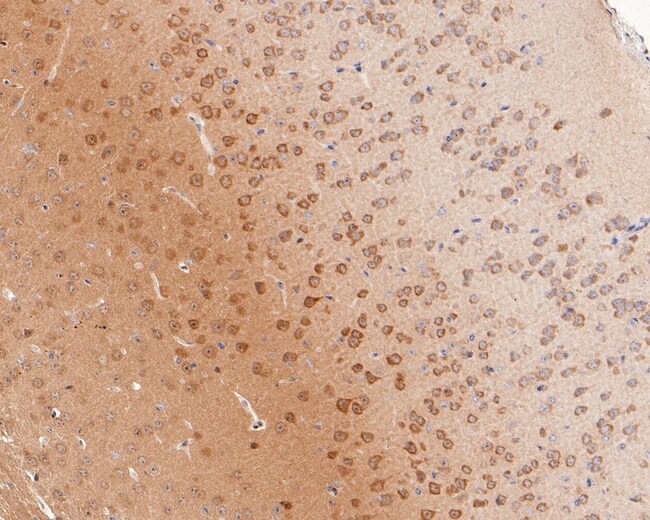
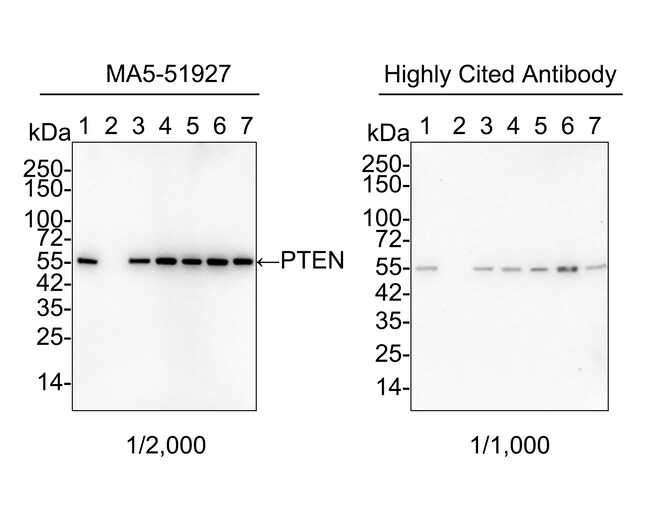
Applications Immunohistochemistry (Paraffin), Western Blot, Immunocytochemistry
Classification Recombinant Monoclonal
Clone SJ19-03
Concentration 1 mg/mL
Conjugate Unconjugated
Formulation TBS with 0.05% BSA, 40% glycerol and 0.05% sodium azide; pH 7.4
Gene PTEN
Gene Accession No. O08586, P60484
Gene Alias 10q23del; 2310035O07Rik; A130070J02Rik; AI463227; B430203M17Rik; BZS; CWS1; DEC; GLM2; homolog of human mutated in multiple advanced cancers; MHAM; mitochondrial phosphatase and tensin protein alpha; mitochondrial PTENalpha; Mmac; MMAC1; MMAC1 phosphatase and tensin homolog deleted on chromosome 10; mutated in multiple advanced cancers 1; Phosphatase and tensin homolog; phosphatase and tensin homolog (mutated in multiple advanced cancers 1); phosphatase and tensin homolog deleted on chromosome ten; phosphatase and tensin-like protein; phosphatidylinositol 3; phosphatidylinositol 3,4,5-trisphosphate 3-phosphatase and dual-specificity protein phosphatase PTEN; phosphatidylinositol-3; phosphatidylinositol-3,4,5-trisphosphate 3-phosphatase and dual-specificity protein phosphatase PTEN; protein tyrosine phosphatase and tensin-like protein; PTEN; pten tumor suppressor; PTEN1; TEP1
Gene Symbols PTEN
Host Species Rabbit
Immunogen Recombinant full length protein of human pten.
Purification Method Protein A
Quantity 100 μL
Regulatory Status RUO
Primary or Secondary Primary
Gene ID (Entrez) 19211, 50557, 5728
Target Species Human, Mouse, Rat
Content And Storage Store at 4°C short term. For long term storage, store at -20°C, avoiding freeze/thaw cycles.
Product Type Antibody
Form Liquid
Isotype IgG
Show More Show Less
Product Title
Select an issue

By clicking Submit, you acknowledge that you may be contacted by Fisher Scientific in regards to the feedback you have provided in this form. We will not share your information for any other purposes. All contact information provided shall also be maintained in accordance with our Privacy Policy.