Promotional price valid on web orders only. Your contract pricing may differ. Interested in signing up for a dedicated account number?
Learn More
Learn More
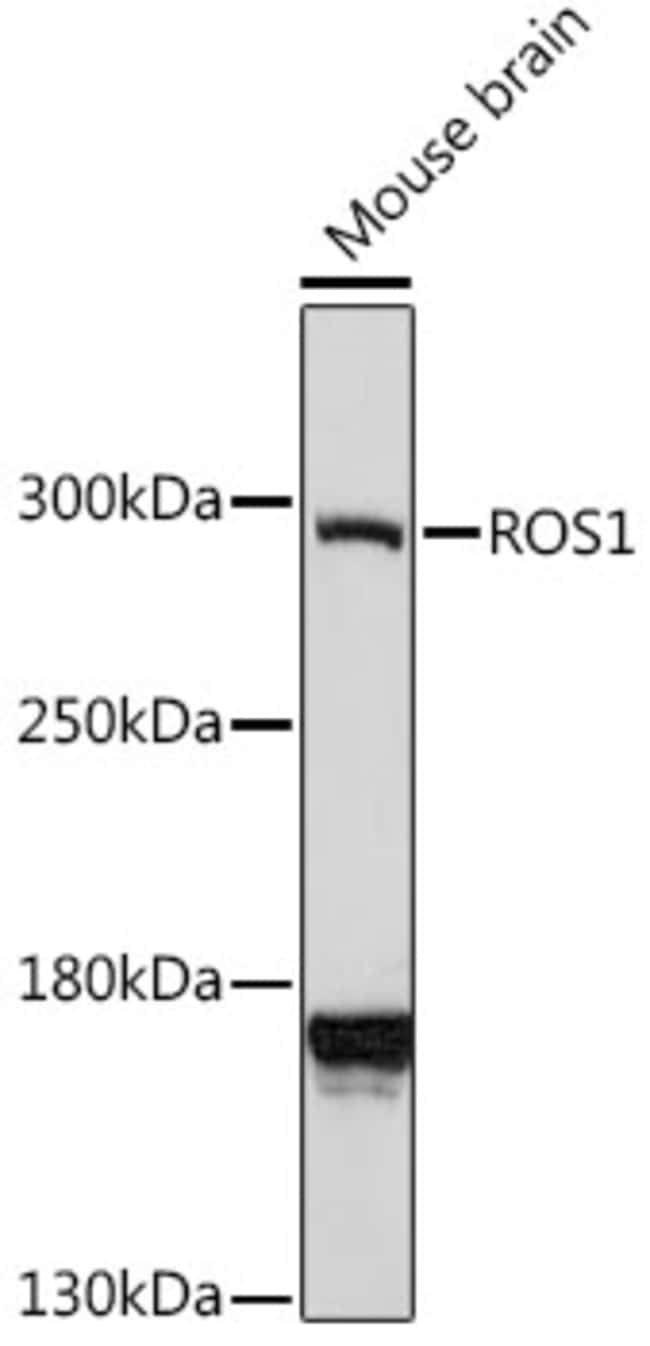
Invitrogen™ ROS1 Polyclonal Antibody

Description
Immunogen sequence: IENLPAFPRE KLTLRLLLGS GAFGEVYEGT AVDILGVGSG EIKVAVKTLK KGSTDQEKIE FLKEAHLMSK FNHPNILKQL GVCLLNEPQY IILELMEGGD LLTYLRKARM ATFYGPLLTL VDLVDLCVDI SKGCVYLERM HFIHRDLAAR NCLVSVKDYT SPRIVKIGDF GLARDIYKND YYRKRGEGLL PVRWMAPESL MDGIFTTQSD VWSFGILIWE ILTLGHQPYP AHSNLDVLNY VQTGGRLEPP RNCPDDLWNL MTQCWAQEPD QRPTFHRIQD QLQLFRNFFL NSIYKSRDE.
ROS1 is a tyrosine kinase that functions as a growth or differentiation factor receptor. Protein kinases are enzymes that transfer a phosphate group from a phosphate donor, generally the g phosphate of ATP, onto an acceptor amino acid in a substrate protein. By this basic mechanism, protein kinases mediate most of the signal transduction in eukaryotic cells, regulating cellular metabolism, transcription, cell cycle progression, cytoskeletal rearrangement and cell movement, apoptosis, and differentiation. With more than 500 gene products, the protein kinase family is one of the largest families of proteins in eukaryotes. The family has been classified in 8 major groups based on sequence comparison of their tyrosine (PTK) or serine/threonine (STK) kinase catalytic domains. The tyrosine kinase (TK) group is mainly involved in the regulation of cell-cell interactions such as differentiation, adhesion, motility and death. There are currently about 90 TK genes sequenced, 58 are of receptor protein TK (e.g. EGFR, EPH, FGFR, PDGFR, TRK, and VEGFR families), and 32 of cytosolic TK (e.g. ABL, FAK, JAK, and SRC families).

Specifications
Specifications
| Antigen | ROS1 |
| Applications | ELISA, Western Blot |
| Classification | Polyclonal |
| Concentration | 3.02 mg/mL |
| Conjugate | Unconjugated |
| Formulation | PBS with 50% glycerol and 0.01% thimerosal; pH 7.3 |
| Gene | ROS1 |
| Gene Accession No. | P08922, Q78DX7 |
| Gene Alias | c-ros; c-ros oncogene 1 , receptor tyrosine kinase; c-Ros receptor tyrosine kinase; c-ros-1; heart - derived c - ros - 1 proto - oncogene; MCF3; Proto-oncogene c-Ros; proto-oncogene c-Ros-1; Proto-oncogene tyrosine-protein kinase ROS; receptor tyrosine kinase c-ros oncogene 1; ROS; ROS proto-oncogene 1 , receptor tyrosine kinase; ROS proto-oncogene 1, receptor tyrosine kinase; Ros1; Ros-1; Ros1 proto-oncogene; ROS1C; RP1-179P9.1; transmembrane tyrosine-specific protein kinase; v-ros avian UR2 sarcoma virus oncogene homolog 1; v-ros UR2 sarcoma virus oncogene homolog 1 |
| Gene Symbols | ROS1 |
| Show More |
Safety and Handling
WARNING: Cancer - www.P65Warnings.ca.gov
Product Title
By clicking Submit, you acknowledge that you may be contacted by Fisher Scientific in regards to the feedback you have provided in this form. We will not share your information for any other purposes. All contact information provided shall also be maintained in accordance with our Privacy Policy.
Spot an opportunity for improvement?