Promotional price valid on web orders only. Your contract pricing may differ. Interested in signing up for a dedicated account number?
Learn More
Learn More


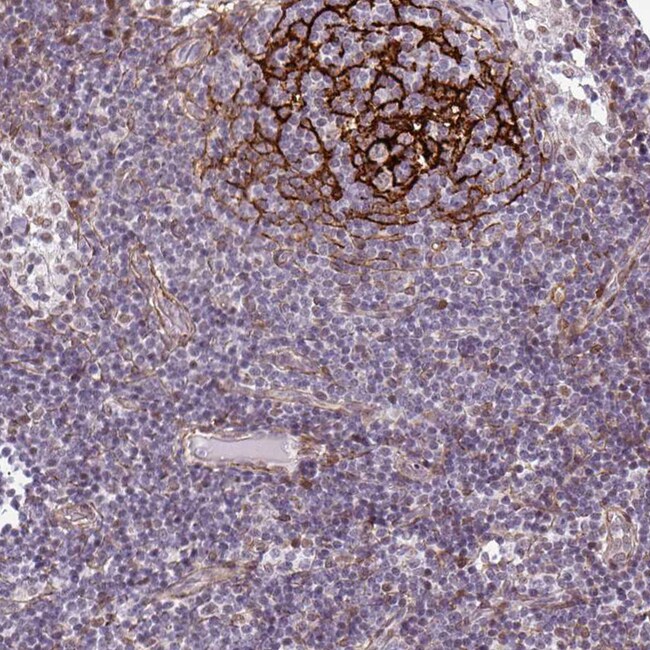


Description
Immunogen sequence: GDGARMVEGR GAEEEEKGSQ EGDQEVQGHG VPVETPEAQE EPCSGVLEGA VVAGEGQGEL EGSLLLAQEA QGPVGPPESP CACSSVHPS Highest antigen sequence identity to the following orthologs: Mouse - 52%, Rat - 46%.
Tmem119 encodes a single-pass type I transmembrane protein which seems to interact with a multitude of micro-RNAs as well as certain transcription factors such as SMAD1, SMAD5 and RUNX2. Tmem119 has been identified as a surface marker of microglia that can be used to reliably distinguish microglia from infiltrating macrophages. Microglial cells are phagocytes that are restricted to the brain and involved in clearing up debris and dendrite pruning of neurons. They display a high functional plasticity, balancing neuroprotective and neurotoxic functions, which is reflected by their distinct physiology in response to changes in their microenvironment. Microglia are particularly mobile in areas of the brain undergoing restructuring. Reactive microglia co-express the marker Iba1. In a pathological context, microglia have been associated with differentiation of pathogenic/inflammatory A1 type astrocytes by secretion of Cq1, IL-1a and TNF when stimulated with LPS, and thought to contribute to the pathology of several neurodegenerative diseases such as Alzheimers, Parkinsons, Chorea Huntingtons disease and Multiple Sclerosis. The specific function Tmem119 plays on microglial cells remains unclear. Outside of the neural system, Tmem119 seems to be involved in osteoblast differentiation/ossification.

Specifications
Specifications
| Antigen | TMEM119 |
| Applications | Immunohistochemistry (Paraffin) |
| Classification | Polyclonal |
| Concentration | 0.10 mg/mL |
| Conjugate | Unconjugated |
| Formulation | PBS with 40% glycerol and 0.02% sodium azide; pH 7.2 |
| Gene | TMEM119 |
| Gene Accession No. | Q4V9L6 |
| Gene Alias | AW208946; BC025600; OBIF; Osteoblast induction factor; PSEC0199; Tmem119; Transmembrane protein 119; UNQ731/PRO1415 |
| Gene Symbols | TMEM119 |
| Show More |
Product Title
By clicking Submit, you acknowledge that you may be contacted by Fisher Scientific in regards to the feedback you have provided in this form. We will not share your information for any other purposes. All contact information provided shall also be maintained in accordance with our Privacy Policy.
Spot an opportunity for improvement?