
Life Science Buffers
Balanced salt solutions and powders used for molecular, protein, nucleic acid, and cell biology applications including cell culture, electrophoresis, ELISA, and chromatography processes; available in a variety of formulations and grades.
Buffer solutions serve to keep pH (acidity or alkalinity) nearly constant in a variety of chemical and biological applications. For example, a bicarbonate buffer helps maintain the pH of blood, a buffered saline maintains cellular contents at a consistent pH level, and buffers help maintain a narrow pH range for enzymes to function correctly.
Most biological samples used in research are kept at a pH of about 7.4. Common biological buffers used for tissue culture include Dulbeccos phosphate buffered saline (PBS), Tris base, HEPES, MOPS, PIPES, and other formulations developed for specific cell lines or applications. Most buffers used in cell culture are also DNase-, RNase-, and protease-free.
The choice of buffer for a particular biological reaction or site depends on several factors:
- Temperature
- Desired or target pH
- Buffer toxicity (to the system)
- Buffer interactions with other system components


Apexbio Technology LLC Annexin V-HF647/7-AAD Apoptosis Kit 20assays
Annexin V is a Ca2 -dependent phospholipid-binding protein that specifically binds to phosphatidylserine (PS) Normally PS is localized on the inner leaflet of the cell membrane lipid bilayer During the early stages of apoptosis PS translocates from the inner leaflet to the outer surface of the cell membrane exposing it to the extracellular environment Due to Annexin V s high affinity for PS fluorescently labeled Annexin V (HF647) can be used as a probe in combination with flow cytometry or fluorescence microscopy for detecting apoptosis and the staining process requires only 10-20 minutes 7-AAD specifically binds double-stranded DNA emitting red fluorescence Normally 7-AAD cannot penetrate intact cell membranes However in late-apoptotic and dead cells membrane integrity is compromised allowing 7-AAD to enter and stain nuclear DNA Co-staining with Annexin V-HF647 and 7-AAD thus differentiates cells in various apoptotic stages and dead cells


Apexbio Technology LLC Annexin V-HF488/7-AAD Apoptosis Kit 20assays
Annexin V is a Ca2 -dependent phospholipid-binding protein that specifically binds to phosphatidylserine (PS) Normally PS is localized on the inner leaflet of the cell membrane lipid bilayer During the early stages of apoptosis PS translocates from the inner leaflet to the outer surface of the cell membrane exposing it to the extracellular environment Due to Annexin V s high affinity for PS fluorescently labeled Annexin V (HF488) can be used as a fluorescent probe to detect apoptotic cells through flow cytometry or fluorescence microscopy with staining taking only 10-20 minutes 7-AAD can specifically bind to double-stranded DNA resulting in red fluorescence Normally 7-AAD cannot pass through intact cell membranes however it can penetrate the cell membranes of late-stage apoptotic and dead cells staining their nuclei Combined staining with Annexin V-HF488 and 7-AAD allows differentiation of cells in various stages of apoptosis and dead cells

Apexbio Technology LLC EdU Flow Cytometry Assay Kits (HF594) 100tests
EdU Flow Cytometry Assay Kits (HF594) provides a novel method based on click chemistry specifically CuAAC (copper-catalyzed azide-alkyne cycloaddition) enabling direct measurement of DNA synthesis during the S-phase of the cell cycle The thymidine analog EdU (5-ethynyl-2 -deoxyuridine) can be incorporated directly into DNA strands during DNA synthesis The alkyne group on EdU a biologically inert moiety undergoes highly selective reaction with azide-functionalized dyes via the CuAAC reaction forming a stable 1 2 3-triazole product The EdU Flow Cytometry Assay Kits (HF594) use HyperFluor 594 azide to label the DNA of proliferating cells following its reaction with EdU Samples labeled in this manner can be analyzed via flow cytometry (HyperFluor 594 azide excitation maximum at 590 nm emission maximum at 617 nm)

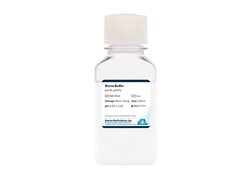
Boston Bioproducts Inc Bicine Buffer (0.5 M, pH 8.5) - 250ml
Bicine Buffer (0 5 M pH 8 5) - 250ml (For Research Use and Further Manufacturing Only)
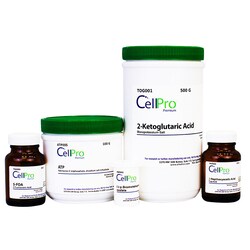
Alkali Scientific PIPES Sesquisodium Salt [Piperazine N,N' bis (2 ethanesulfonic acid) sesquisodium salt], 5 Kilograms
PIPES Sesquisodium Salt (Piperazine N,N' bis(2 ethanesulfonic acid) sesquisodium salt), 5 Kilograms, is a highly specialized biochemical reagent used primarily for preparing buffers in laboratory research. PIPES is particularly valuable for maintaining a stable pH in biological systems, including enzyme reactions and cell culture environments. It is commonly used in electrophoresis, chromatography, and as a component in molecular biology protocols. The large 5 kg volume makes it ideal for high-throughput laboratories and large-scale biochemical experiments. PIPES is known for its exceptional buffering capacity in the physiological pH range, making it an essential tool in many laboratory applications.


Sigma Aldrich Fine Chemicals Biosciences MES monohydrate | 145224-94-8 | MFCD00149409 | 25 g
MES monohydrate | Purity: ≥99.0% | Mol Wt: 213.25 | 145224-94-8 | MFCD00149409 | 25 g


Medchemexpress LLC Glycine, N-(2-amino-2-oxoethyl)-N-(carboxymethyl)-, sodium salt (1:2) | 41689-31-0 | 98.0% | 25 G

ADA disodium is a buffer salt derived from ADA (adenosine deaminase) and is widely used in biochemical research, especially in the preparation of enzyme buffers.
- Derived from adenosine deaminase
- Used in biochemical research
- Ideal for enzyme buffer preparation

Sigma Aldrich Fine Chemicals Biosciences CHES BioXtra, >=99.0% (titration) | 103-47-9 | MFCD00003835 | 100G
CHES BioXtra, >=99.0% (titration) | Purity: >=99.0% (titration) | Mol Wt: 207.29 | 103-47-9 | MFCD00003835 | 100G


Medchemexpress LLC 2-Morpholinoethanesulphonic acid monohydrate (Standard) | 145224-94-8 | 99.95% | 50 MG
MES monohydrate (Standard) is the analytical standard of MES (monohydrate), intended for research and analytical applications. MES (2-Morpholinoethanesulphonic acid) is an amphoteric ion buffer with a buffer capacity ranging from pH 5.5-7.0. As a Good's buffer, it is widely used in biochemistry and molecular biology experiments.
- Used for research and analytical applications.
- Amphoteric ion buffer.
- Buffer capacity ranging pH 5.5-7.0.
- Widely used in biochemistry and molecular biology experiments.
- Suitable for cell culture, enzyme activity determination, electrophoresis, and protein studies.
- Commonly used in qualitative, quantitative, and methodological research experiments in HPLC, GC, and MS.

Gold Biotechnology Inc HEPES, Free Acid 250 g
HEPES is a buffering agent used in biochemistry and molecular biology that was selected and described by Good et al. It is a zwitterionic, piperazinic buffer that is useful for a pH range of 6.8 – 8.2. HEPES lacks the ability to form a significant complex with most metal ions and is recommended for use as a non-coordinating buffer in solutions with metal ions. It is commonly used in cell culture media and as an ampholytic separator to create a pH gradient in isoelectric focusing. HEPES interferes with reactions between DNA and restriction enzymes to a lesser extent than similar buffers with less substituted amine groups, such as Tris. This lack of interference occurs because steric hindrance of the protonated tertiary amine in HEPES shields the negative charge of DNA to a lesser extent than less substituted buffers. This buffer is capable of forming radicals and is therefore not suitable for redox reactions. It is suitable for use in the bicinchoninic acid (BCA) assay.
Sigma Aldrich Fine Chemicals Biosciences HEPES buffered saline BioUltra, for molecular biology, 2x concentrate | MFCD00006158 | 50ML
HEPES buffered saline BioUltra, for molecular biology, 2x concentrate | MFCD00006158 | 50ML
Sigma Aldrich Fine Chemicals Biosciences CAPS BioXtra, >=99% | 1135-40-6 | MFCD00003837 | 1KG
CAPS BioXtra, >=99% | Purity: >=99% | Mol Wt: 221.32 | 1135-40-6 | MFCD00003837 | 1KG