
Organosulfur Compounds


Medchemexpress LLC (R)-Zelebrudomide ((R)-NX-2127) | 3024312-52-2 | C39H45N9O5 | 50 MG

(R)-Zelebrudomide ((R)-NX-2127), also known as (R)-Compound 28, is an isomer of the BTK PROTAC degrader Zelebrudomide. It is intended for research use only.
- Molecular weight: 719.83
- Chemical formula: C39H45N9O5
- Appearance: Solid
- Color: Light yellow to yellow
- Purity: 98.93%
- Shipping condition: Room temperature in continental US
- Storage condition: 4°C, protect from light
- Storage in solvent: -80°C for 6 months; -20°C for 1 month, protect from light

Medchemexpress LLC Zelebrudomide (NX-2127) | 2416131-46-7 | C39H45N9O5 | 100 MG
Zelebrudomide (NX-2127) is an orally active PROTAC degrader that targets Bruton's Tyrosine Kinase (BTK). It inhibits the proliferation of BTKC481S mutant TMD8 cells more effectively than Ibrutinib. Zelebrudomide also catalyzes the degradation of Ikaros (IKZF1) and Aiolos (IKZF3) with respective values of 25 nM and 54 nM. Additionally, it stimulates T cell activation and increases IL-2 production in primary human T Cells.
- Orally active PROTAC degrader targets Bruton's Tyrosine Kinase (BTK).
- Inhibits proliferation of BTKC481S mutant TMD8 cells more effectively than Ibrutinib.
- Catalyzes degradation of Ikaros (IKZF1) and Aiolos (IKZF3) with respective values of 25 nM and 54 nM.
- Stimulates T cell activation and increases IL-2 production in primary human T Cells.
- Demonstrates potent degradation of BTK in vivo.
- Results in superior tumor growth inhibition in both WT TMD8 and C481S mutant xenograft models in mice.
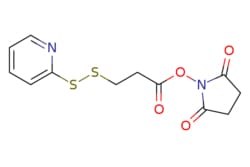
eMolecules 68181-17-9 | N-Succinimidyl 3-(2-Pyridyldithio)propionate | Combi-Blocks | MFCD00009636 | 312.360 | C12H12N2O4S2 | 96.000 | O=C(CCSSc1ccccn1)ON1C(=O)CCC1=O | 5g | 528673833
N-Succinimidyl 3-(2-Pyridyldithio)propionate | Combi-Blocks | 68181-17-9 | MFCD00009636 | 312.360 | C12H12N2O4S2 | 96.000 | O=C(CCSSc1ccccn1)ON1C(=O)CCC1=O | 5g | 528673833

eMolecules 564483-18-7 | Dicyclohexyl[2-(2,4,6-triisopropylphenyl)phenyl]phosphane | Combi-Blocks | MFCD04117682 | 476.729 | C33H49P | 97.000 | CC(C)c1cc(C(C)C)c(c(c1)C(C)C)-c1ccccc1P(C1CCCCC1)C1CCCCC1 | 5g | 117541497
Dicyclohexyl[2-(2,4,6-triisopropylphenyl)phenyl]phosphane | Combi-Blocks | 564483-18-7 | MFCD04117682 | 476.729 | C33H49P | 97.000 | CC(C)c1cc(C(C)C)c(c(c1)C(C)C)-c1ccccc1P(C1CCCCC1)C1CCCCC1 | 5g | 117541497
eMolecules 564483-18-7 | Dicyclohexyl[2-(2,4,6-triisopropylphenyl)phenyl]phosphane | Combi-Blocks | MFCD04117682 | 476.729 | C33H49P | 97.000 | CC(C)c1cc(C(C)C)c(c(c1)C(C)C)-c1ccccc1P(C1CCCCC1)C1CCCCC1 | 25g | 117541498
Dicyclohexyl[2-(2,4,6-triisopropylphenyl)phenyl]phosphane | Combi-Blocks | 564483-18-7 | MFCD04117682 | 476.729 | C33H49P | 97.000 | CC(C)c1cc(C(C)C)c(c(c1)C(C)C)-c1ccccc1P(C1CCCCC1)C1CCCCC1 | 25g | 117541498

Medchemexpress LLC Dibenzyl disulfide | 150-60-7 | 99.9% | 246.39 | 100 G
Dibenzyl disulfide is an endogenous metabolite appearing as a solid with a white to off-white color. It is intended for research use only and not sold to patients, originating from plants such as Petiveria alliacea.
- Endogenous metabolite
- Solid form
- White to off-white color
- Sourced from plants like Petiveria alliacea
- Intended for research use only

Medchemexpress LLC N N-Dicyclohexyl-2-b 5g
N N-Dicyclohexyl-2-benzothiazolesulfenamide is a compound with reproductive and developmental toxicity that can affect body weight gain reproductive organ weight and multiple reproductive and developmental indicators in rats
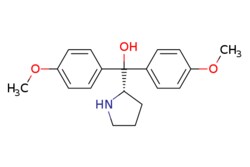
eMolecules 131180-57-9 | (S)-ALPHA,ALPHA-BIS(4-METHOXYPHENYL)-2-PYRROLIDINEMETHANOL | AstaTech | MFCD08702731 | 313.397 | C19H23NO3 | 95.000 | COc1ccc(cc1)C(O)([C@@H]1CCCN1)c1ccc(OC)cc1 | 1g | 586050065
(S)-ALPHA,ALPHA-BIS(4-METHOXYPHENYL)-2-PYRROLIDINEMETHANOL | AstaTech | 131180-57-9 | MFCD08702731 | 313.397 | C19H23NO3 | 95.000 | COc1ccc(cc1)C(O)([C@@H]1CCCN1)c1ccc(OC)cc1 | 1g | 586050065

eMolecules SPDP-PEG11-SPDP | Broadpharm |939.220 | C40H66N4O13S4 | 97.000 | O=C(CCSSc1ccccn1)NCCOCCOCCOCCOCCOCCOCCOCCOCCOCCOCCOCCNC(=O)CCSSc1ccccn1 | 250mg | 518001008
SPDP-PEG11-SPDP | Broadpharm |939.220 | C40H66N4O13S4 | 97.000 | O=C(CCSSc1ccccn1)NCCOCCOCCOCCOCCOCCOCCOCCOCCOCCOCCOCCNC(=O)CCSSc1ccccn1 | 250mg | 518001008

eMolecules Broadpharm / DSPE-SPDP / 50mg / 649282048 / BP-26161 / / 144735-79-5 / [null] / 945.350 / C49H89N2O9PS2
Broadpharm / DSPE-SPDP / 50mg / 649282048 / BP-26161 / / 144735-79-5 / [null] / 945.350 / C49H89N2O9PS2

Medchemexpress LLC N N-Dicyclohexyl-2-b 10g
N N-Dicyclohexyl-2-benzothiazolesulfenamide is a compound with reproductive and developmental toxicity that can affect body weight gain reproductive organ weight and multiple reproductive and developmental indicators in rats
Apexbio Technology LLC DIBENZYL-DISULFIDE-1G
Dibenzyl disulfide (CAS No 150-60-7) is a significant compound in biomedical research particularly in the study of oxidative stress and cell signaling pathways Originating from natural sources like Allium vegetables it is known for its potential to modulate biochemical pathways related to enzymatic antioxidant activities Research indicates its influence on the reduction of oxidative stress via the regulation of reactive oxygen species Dibenzyl disulfide exhibits common in vitro activity in the nanomolar to low micromolar range It is utilized in various applications including cell models examining cancer cell lines and animal studies exploring its pharmacological effects Additionally its role in drug screening highlights its potential as an adjunct or alternative therapeutic agent Experimental concentrations typically depend on the specific research design ensuring adaptability across different study frameworks and objectives
