
Universal Pipette Tips
Disposable pipette tips designed to fit single and multichannel pipettes from most manufacturers; offer acceptable performance compared to pipette specific tips and can be used with a variety of pipette models.
Single-use universal pipette tips are designed for compatibility with most mechanical and electronic single and multichannel pipettors.
Universal pipette tips are available in a range of types, sizes, colors, styles, and packaging configurations and may be designed for specific purposes or tasks.
- Capacity or volume based on the pipettor size
- Filters to reduce contamination and cross-contamination
- Color
- Sterility or autoclavability
- Tip style: beveled, tapered, wide bore, round, flat, or gel-loading
- Length: short or extended
- Purity: metal-free or DNase-, RNase-, ATP-, Bioburden-, PCR inhibitor-, endotoxin-, or pyrogen-free for genomic and biologic applications
- Surface treatments to reduce retention
- Packaging options to help facilitate re-stocking or eliminate waste

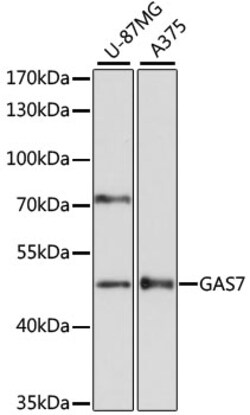
ABclonal Technology GAS7 Rabbit pAb

Growth arrest-specific 7 is expressed primarily in terminally differentiated brain cells and predominantly in mature cerebellar Purkinje neurons. GAS7 plays a putative role in neuronal development. Several transcript variants encoding proteins which vary in the N-terminus have been described.

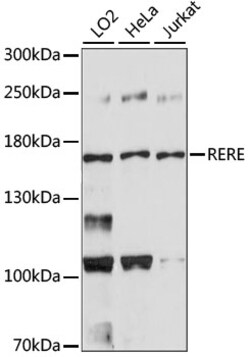
ABclonal Technology RERE Rabbit pAb
This gene encodes a member of the atrophin family of arginine-glutamic acid (RE) dipeptide repeat-containing proteins. The encoded protein co-localizes with a transcription factor in the nucleus, and its overexpression triggers apoptosis. A similar protein in mouse associates with histone deacetylase and is thought to function as a transcriptional co-repressor during embryonic development. Multiple transcript variants encoding different isoforms have been found for this gene.
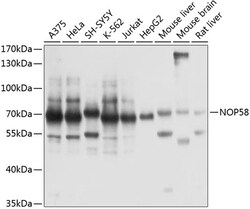
ABclonal Technology NOP58 Rabbit pAb
The protein encoded by this gene is a core component of box C/D small nucleolar ribonucleoproteins. Some box C/D small nucleolar RNAs (snoRNAs), such as U3, U8, and U14, are dependent upon the encoded protein for their synthesis. This protein is SUMOylated, which is necessary for high affinity binding to snoRNAs.
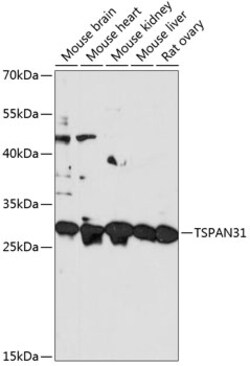
ABclonal Technology TSPAN31 Rabbit pAb
The protein encoded by this gene is a member of the transmembrane 4 superfamily, also known as the tetraspanin family. Most of these members are cell-surface proteins that are characterized by the presence of four hydrophobic domains. The proteins mediate signal transduction events that play a role in the regulation of cell development, activation, growth and motility. This encoded protein is thought to be involved in growth-related cellular processes. This gene is associated with tumorigenesis and osteosarcoma.
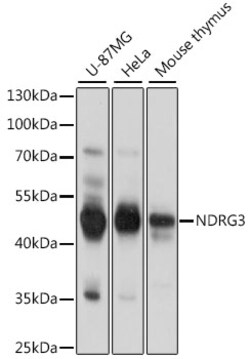
ABclonal Technology NDRG3 Rabbit pAb
Predicted to be involved in signal transduction. Located in cytoplasm.
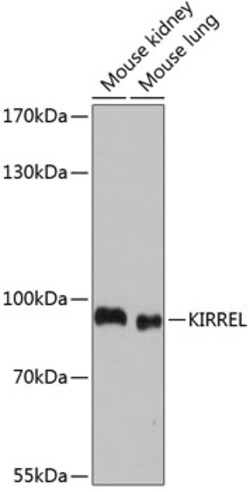
ABclonal Technology KIRREL Rabbit pAb
NEPH1 is a member of the nephrin-like protein family, which includes NEPH2 (MIM 607761) and NEPH3 (MIM 607762). The cytoplasmic domains of these proteins interact with the C terminus of podocin (NPHS2, MIM 604766), and the genes are expressed in kidney podocytes, cells involved in ensuring size- and charge-selective ultrafiltration (Sellin et al., 2003 [PubMed 12424224]).
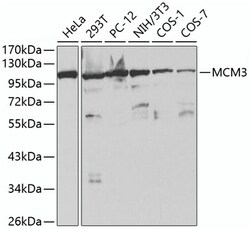
ABclonal Technology MCM3 Rabbit pAb
The protein encoded by this gene is one of the highly conserved mini-chromosome maintenance proteins (MCM) that are involved in the initiation of eukaryotic genome replication. The hexameric protein complex formed by MCM proteins is a key component of the pre-replication complex (pre_RC) and may be involved in the formation of replication forks and in the recruitment of other DNA replication related proteins. This protein is a subunit of the protein complex that consists of MCM2-7. It has been shown to interact directly with MCM5/CDC46. This protein also interacts with and is acetylated by MCM3AP, a chromatin-associated acetyltransferase. The acetylation of this protein inhibits the initiation of DNA replication and cell cycle progression. Several transcript variants encoding different isoforms have been found for this gene.
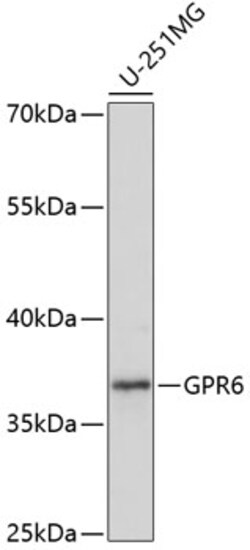
ABclonal Technology GPR6 Rabbit pAb
Predicted to enable sphingosine-1-phosphate receptor activity. Predicted to be involved in adenylate cyclase-activating G protein-coupled receptor signaling pathway and regulation of metabolic process. Predicted to act upstream of or within positive regulation of cytosolic calcium ion concentration. Predicted to be integral component of plasma membrane. Predicted to be active in cytoplasm and plasma membrane.
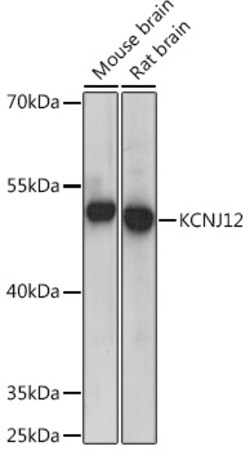
ABclonal Technology KCNJ12 Rabbit pAb
This gene encodes an inwardly rectifying K+ channel which may be blocked by divalent cations. This protein is thought to be one of multiple inwardly rectifying channels which contribute to the cardiac inward rectifier current (IK1). The gene is located within the Smith-Magenis syndrome region on chromosome 17.
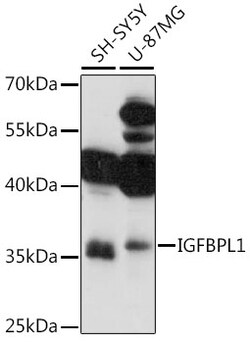
ABclonal Technology IGFBPL1 Rabbit pAb
Predicted to enable insulin-like growth factor binding activity. Involved in cellular response to tumor cell. Located in extracellular space.
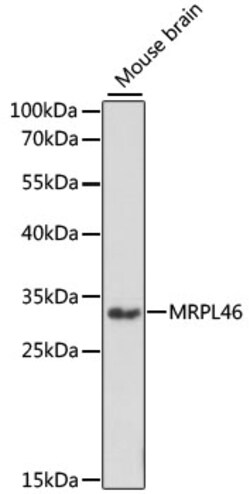
ABclonal Technology MRPL46 Rabbit pAb
Mammalian mitochondrial ribosomal proteins are encoded by nuclear genes and help in protein synthesis within the mitochondrion. Mitochondrial ribosomes (mitoribosomes) consist of a small 28S subunit and a large 39S subunit. They have an estimated 75% protein to rRNA composition compared to prokaryotic ribosomes, where this ratio is reversed. Another difference between mammalian mitoribosomes and prokaryotic ribosomes is that the latter contain a 5S rRNA. Among different species, the proteins comprising the mitoribosome differ greatly in sequence, and sometimes in biochemical properties, which prevents easy recognition by sequence homology. This gene encodes a 39S subunit protein.
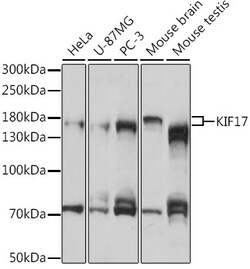
ABclonal Technology KIF17 Rabbit pAb
Predicted to enable microtubule binding activity and plus-end-directed microtubule motor activity. Predicted to be involved in anterograde dendritic transport of neurotransmitter receptor complex and cell projection organization. Predicted to act upstream of or within microtubule-based process, protein-containing complex localization, and vesicle-mediated transport. Predicted to be located in microtubule cytoskeleton. Predicted to be part of intraciliary transport particle B and kinesin complex. Predicted to be active in cilium, microtubule cytoskeleton, and neuron projection.
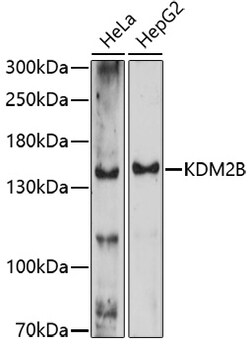
ABclonal Technology KDM2B Rabbit pAb
This gene encodes a member of the F-box protein family which is characterized by an approximately 40 amino acid motif, the F-box. The F-box proteins constitute one of the four subunits of ubiquitin protein ligase complex called SCFs (SKP1-cullin-F-box), which function in phosphorylation-dependent ubiquitination. The F-box proteins are divided into 3 classes Fbws containing WD-40 domains, Fbls containing leucine-rich repeats, and Fbxs containing either different protein-protein interaction modules or no recognizable motifs. The protein encoded by this gene belongs to the Fbls class. Multiple alternatively spliced transcript variants have been found for this gene, but the full-length nature of some variants has not been determined.
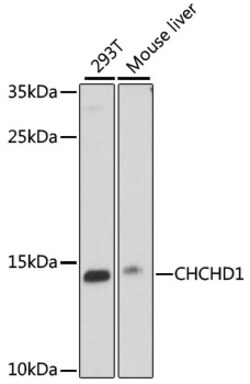
ABclonal Technology CHCHD1 Rabbit pAb
Enables RNA binding activity. Predicted to be involved in mitochondrial translation. Located in cytosol, mitochondrion, and nuclear lumen.
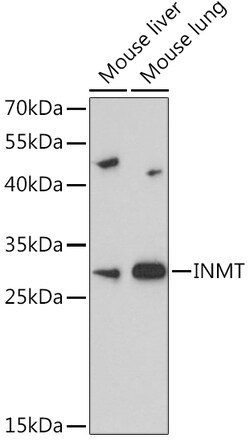
ABclonal Technology INMT Rabbit pAb
N-methylation of endogenous and xenobiotic compounds is a major method by which they are degraded. This gene encodes an enzyme that N-methylates indoles such as tryptamine. Alternative splicing results in multiple transcript variants. Read-through transcription also exists between this gene and the downstream MINDY4 (aka FAM188B) gene. In rodents and other mammals such as cetartiodactyla this gene is in the opposite orientation compared to its orientation in human and other primates and this gene appears to have been lost in carnivora and chiroptera.