
Universal Pipette Tips
Disposable pipette tips designed to fit single and multichannel pipettes from most manufacturers; offer acceptable performance compared to pipette specific tips and can be used with a variety of pipette models.
Single-use universal pipette tips are designed for compatibility with most mechanical and electronic single and multichannel pipettors.
Universal pipette tips are available in a range of types, sizes, colors, styles, and packaging configurations and may be designed for specific purposes or tasks.
- Capacity or volume based on the pipettor size
- Filters to reduce contamination and cross-contamination
- Color
- Sterility or autoclavability
- Tip style: beveled, tapered, wide bore, round, flat, or gel-loading
- Length: short or extended
- Purity: metal-free or DNase-, RNase-, ATP-, Bioburden-, PCR inhibitor-, endotoxin-, or pyrogen-free for genomic and biologic applications
- Surface treatments to reduce retention
- Packaging options to help facilitate re-stocking or eliminate waste

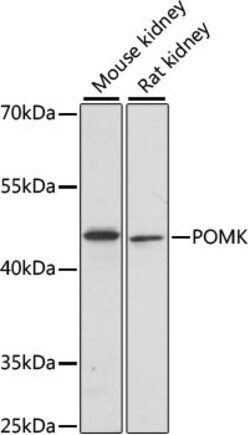
ABclonal Technology POMK Rabbit pAb

This gene encodes a protein that may be involved in the presentation of the laminin-binding O-linked carbohydrate chain of alpha-dystroglycan (a-DG), which forms transmembrane linkages between the extracellular matrix and the exoskeleton. Some pathogens use this O-linked carbohydrate unit for host entry. Loss of function compound heterozygous mutations in this gene were found in a human patient affected by the Walker-Warburg syndrome (WWS) phenotype. Mice lacking this gene contain misplaced neurons (heterotopia) in some regions of the brain, possibly from defects in neuronal migration. Alternative splicing of this gene results in multiple transcript variants.

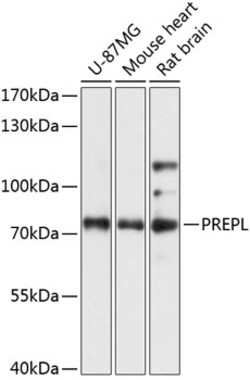
ABclonal Technology PREPL Rabbit pAb
The protein encoded by this gene belongs to the prolyl oligopeptidase subfamily of serine peptidases. Mutations in this gene have been associated with hypotonia-cystinuria syndrome, also known as the 2p21 deletion syndrome. Several alternatively spliced transcript variants encoding either the same or different isoforms have been described for this gene.
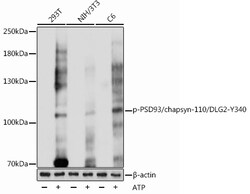
ABclonal Technology Phospho-PSD93/chapsyn-110/DLG2-Y340 Rabbit pAb
This gene encodes a member of the membrane-associated guanylate kinase (MAGUK) family. The encoded protein forms a heterodimer with a related family member that may interact at postsynaptic sites to form a multimeric scaffold for the clustering of receptors, ion channels, and associated signaling proteins. Multiple transcript variants encoding different isoforms have been found for this gene. Additional transcript variants have been described, but their full-length nature is not known.
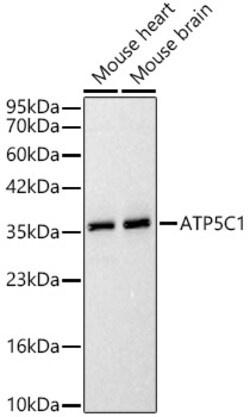
ABclonal Technology ATP5C1 Rabbit pAb
This gene encodes a subunit of mitochondrial ATP synthase. Mitochondrial ATP synthase catalyzes ATP synthesis, utilizing an electrochemical gradient of protons across the inner membrane during oxidative phosphorylation. ATP synthase is composed of two linked multi-subunit complexes the soluble catalytic core, F1, and the membrane-spanning component, Fo, comprising the proton channel. The catalytic portion of mitochondrial ATP synthase consists of 5 different subunits (alpha, beta, gamma, delta, and epsilon) assembled with a stoichiometry of 3 alpha, 3 beta, and a single representative of the other 3. The proton channel consists of three main subunits (a, b, c). This gene encodes the gamma subunit of the catalytic core. Alternatively spliced transcript variants encoding different isoforms have been identified. This gene also has a pseudogene on chromosome 14.
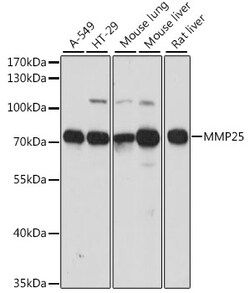
ABclonal Technology MMP25 Rabbit pAb
Proteins in the matrix metalloproteinase (MMP) family break down the extracellular matrix in processes like development, tissue remodeling, and disease progression, including arthritis and metastasis. Most MMPs are secreted as inactive proproteins, activated by extracellular proteinases. This gene encodes a membrane-type MMP (MT-MMP), anchored to the plasma membrane via a glycosylphosphatidylinositol anchor. In response to infection or inflammation, the protein inactivates alpha-1 proteinase inhibitor, aiding neutrophil migration to inflammation sites. It may also contribute to tumor invasion and metastasis by activating MMP2. The gene, formerly known as MMP20, is now renamed MMP25.
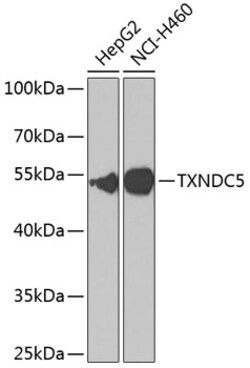
ABclonal Technology TXNDC5 Rabbit pAb
This gene encodes a member of the disulfide isomerase (PDI) family of endoplasmic reticulum (ER) proteins that catalyze protein folding and thiol-disulfide interchange reactions. The encoded protein has an N-terminal endoplasmic reticulum (ER)-signal sequence, three catalytically active thioredoxin domains and a C-terminal ER-retention sequence. Its expression is induced by hypoxia and its role may be to protect hypoxic cells from apoptosis. Alternative splicing results in multiple transcript variants. Read-through transcription also exists between this gene and the neighboring upstream BLOC1S5 gene.
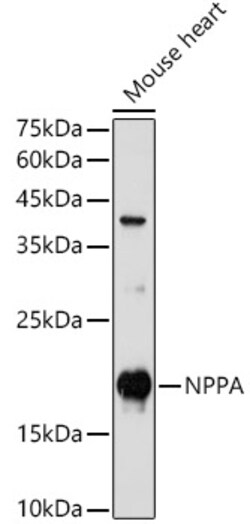
ABclonal Technology NPPA Rabbit pAb
The protein encoded by this gene belongs to the natriuretic peptide family. Natriuretic peptides are implicated in the control of extracellular fluid volume and electrolyte homeostasis. This protein is synthesized as a large precursor (containing a signal peptide), which is processed to release a peptide from the N-terminus with similarity to vasoactive peptide, cardiodilatin, and another peptide from the C-terminus with natriuretic-diuretic activity. Mutations in this gene have been associated with atrial fibrillation familial type 6. This gene is located adjacent to another member of the natriuretic family of peptides on chromosome 1.
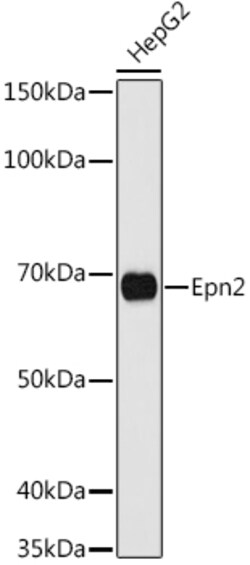
ABclonal Technology Epn2 Rabbit pAb
Predicted to enable clathrin binding activity and phospholipid binding activity. Acts upstream of or within Notch signaling pathway, embryonic organ development, and in utero embryonic development. Predicted to be located in intracellular membrane-bounded organelle. Predicted to be part of clathrin coat of endocytic vesicle. Predicted to be active in endosome and plasma membrane. Orthologous to human EPN2 (epsin 2).
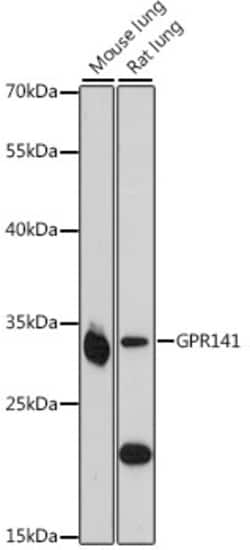
ABclonal Technology GPR141 Rabbit pAb
GPR141 is a member of the rhodopsin family of G protein-coupled receptors (GPRs) (Fredriksson et al., 2003 [PubMed 14623098]).
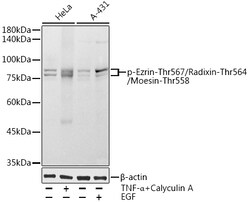
ABclonal Technology Phospho-Ezrin-Thr567/Radixin-Thr564/Moesin-Thr558 Rabbit pAb
This gene encodes a cytoplasmic peripheral membrane protein that functions as a protein-tyrosine kinase substrate in microvilli. As a member of the ERM protein family, it links the plasma membrane and the actin cytoskeleton, playing a key role in cell adhesion, migration, and organization. It has been implicated in various cancers. A pseudogene for this gene is located on chromosome 3. Radixin, similar to ezrin and moesin, is important for linking actin to the plasma membrane and is localized to 11q23. Truncated versions of radixin, such as pseudogene RDXP2, are found on Xp21.3, while RDXP1 is mapped to 11p. Multiple alternatively spliced variants encoding different isoforms have been identified. Moesin, another ERM family member, is important for cell movement and recognition.
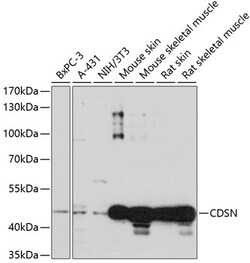
ABclonal Technology CDSN Rabbit pAb
This gene encodes a protein found in corneodesmosomes, which localize to human epidermis and other cornified squamous epithelia. The encoded protein undergoes a series of cleavages during corneocyte maturation. This gene is highly polymorphic in human populations, and variation has been associated with skin diseases such as psoriasis, hypotrichosis and peeling skin syndrome. The gene is located in the major histocompatibility complex (MHC) class I region on chromosome 6.
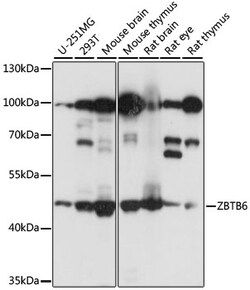
ABclonal Technology ZBTB6 Rabbit pAb
Predicted to enable DNA-binding transcription repressor activity, RNA polymerase II-specific and RNA polymerase II cis-regulatory region sequence-specific DNA binding activity. Predicted to be involved in regulation of transcription by RNA polymerase II. Located in mitochondrion and nucleoplasm.
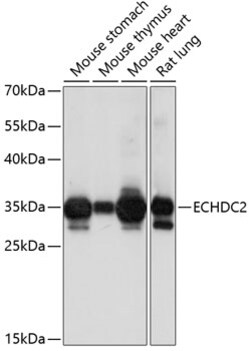
ABclonal Technology ECHDC2 Rabbit pAb
Predicted to enable enoyl-CoA hydratase activity. Predicted to be involved in fatty acid beta-oxidation. Predicted to be active in mitochondrion.
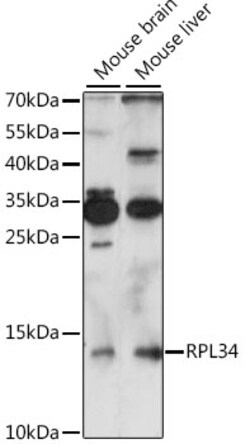
ABclonal Technology RPL34 Rabbit pAb
Ribosomes, the organelles that catalyze protein synthesis, consist of a small 40S subunit and a large 60S subunit. Together these subunits are composed of 4 RNA species and approximately 80 structurally distinct proteins. This gene encodes a ribosomal protein that is a component of the 60S subunit. The protein belongs to the L34E family of ribosomal proteins. It is located in the cytoplasm. This gene originally was thought to be located at 17q21, but it has been mapped to 4q. Overexpression of this gene has been observed in some cancer cells. Alternative splicing results in multiple transcript variants, all encoding the same isoform. As is typical for genes encoding ribosomal proteins, there are multiple processed pseudogenes of this gene dispersed through the genome.
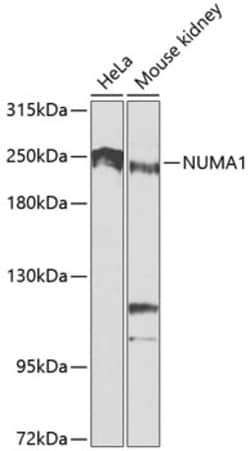
ABclonal Technology NUMA1 Rabbit pAb
This gene encodes a large protein that forms a structural component of the nuclear matrix. The encoded protein interacts with microtubules and plays a role in the formation and organization of the mitotic spindle during cell division. Chromosomal translocation of this gene with the RARA (retinoic acid receptor, alpha) gene on chromosome 17 have been detected in patients with acute promyelocytic leukemia. Alternative splicing results in multiple transcript variants.