
Universal Pipette Tips
Disposable pipette tips designed to fit single and multichannel pipettes from most manufacturers; offer acceptable performance compared to pipette specific tips and can be used with a variety of pipette models.
Single-use universal pipette tips are designed for compatibility with most mechanical and electronic single and multichannel pipettors.
Universal pipette tips are available in a range of types, sizes, colors, styles, and packaging configurations and may be designed for specific purposes or tasks.
- Capacity or volume based on the pipettor size
- Filters to reduce contamination and cross-contamination
- Color
- Sterility or autoclavability
- Tip style: beveled, tapered, wide bore, round, flat, or gel-loading
- Length: short or extended
- Purity: metal-free or DNase-, RNase-, ATP-, Bioburden-, PCR inhibitor-, endotoxin-, or pyrogen-free for genomic and biologic applications
- Surface treatments to reduce retention
- Packaging options to help facilitate re-stocking or eliminate waste

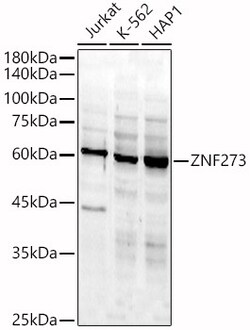
ABclonal Technology ZNF273 Rabbit pAb

This gene is a member of the krueppel C2H2-type zinc-finger protein family and encodes a protein with 13 C2H2-type zinc fingers and a KRAB domain. This nuclear protein is involved in transcriptional regulation. Alternative splicing results in multiple transcript variants.


ABclonal Technology NGLY1 Rabbit pAb
This gene encodes an enzyme that catalyzes hydrolysis of an N(4)-(acetyl-beta-D-glucosaminyl) asparagine residue to N-acetyl-beta-D-glucosaminylamine and a peptide containing an aspartate residue. The encoded enzyme may play a role in the proteasome-mediated degradation of misfolded glycoproteins. Multiple transcript variants encoding different isoforms have been found for this gene.
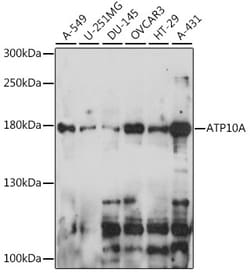
ABclonal Technology ATP10A Rabbit pAb
The protein encoded by this gene belongs to the family of P-type cation transport ATPases, and to the subfamily of aminophospholipid-transporting ATPases. The aminophospholipid translocases transport phosphatidylserine and phosphatidylethanolamine from one side of a bilayer to another. This gene is maternally expressed. It maps within the most common interval of deletion responsible for Angelman syndrome, also known as happy puppet syndrome.
Chrono Log Corporation TIPS FR 332 ATOCLAV RK 1632/PK
Tips for P/N 332, autoclavable racks 1632 tips

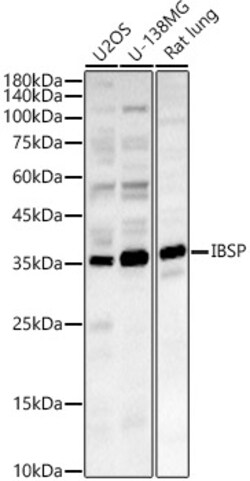
ABclonal Technology IBSP Rabbit pAb
The protein encoded by this gene is a major structural protein of the bone matrix. It constitutes approximately 12% of the noncollagenous proteins in human bone and is synthesized by skeletal-associated cell types, including hypertrophic chondrocytes, osteoblasts, osteocytes, and osteoclasts. The only extraskeletal site of its synthesis is the trophoblast. This protein binds to calcium and hydroxyapatite via its acidic amino acid clusters, and mediates cell attachment through an RGD sequence that recognizes the vitronectin receptor.
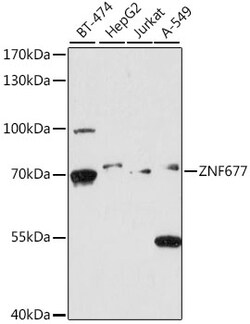
ABclonal Technology ZNF677 Rabbit pAb
Predicted to enable DNA-binding transcription factor activity, RNA polymerase II-specific and RNA polymerase II cis-regulatory region sequence-specific DNA binding activity. Predicted to be involved in regulation of transcription by RNA polymerase II. Predicted to be active in nucleus.
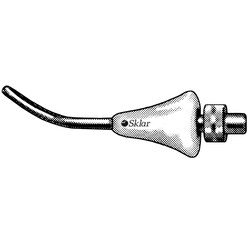
Sklar Instruments Manipulator Sklar Microscopy Surgical 1/EA
Manipulator Sklar Microscopy Surgical 1/EA
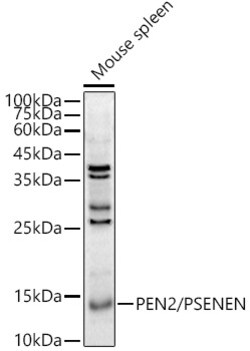
ABclonal Technology PEN2/PSENEN Rabbit pAb
Presenilins, which are components of the gamma-secretase protein complex, are required for intramembranous processing of some type I transmembrane proteins, such as the Notch proteins and the beta-amyloid precursor protein. Signaling by Notch receptors mediates a wide range of developmental cell fates. Processing of the beta-amyloid precursor protein generates neurotoxic amyloid beta peptides, the major component of senile plaques associated with Alzheimers disease. This gene encodes a protein that is required for Notch pathway signaling, and for the activity and accumulation of gamma-secretase. Mutations resulting in haploinsufficiency for this gene cause familial acne inversa-2 (ACNINV2). Alternative splicing results in multiple transcript variants.
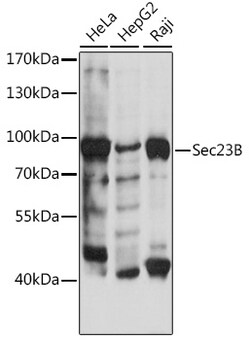
ABclonal Technology Sec23B Rabbit pAb
The protein encoded by this gene is a member of the SEC23 subfamily of the SEC23/SEC24 family, which is involved in vesicle trafficking. The encoded protein has similarity to yeast Sec23p component of COPII. COPII is the coat protein complex responsible for vesicle budding from the ER. The function of this gene product has been implicated in cargo selection and concentration. Multiple alternatively spliced transcript variants have been identified in this gene.
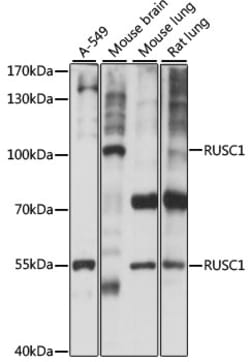
ABclonal Technology RUSC1 Rabbit pAb
Predicted to enable actin binding activity. Involved in protein polyubiquitination. Located in cytosol.
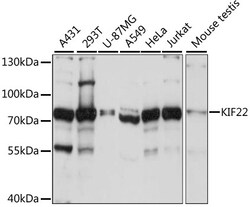
ABclonal Technology KIF22 Rabbit pAb
The protein encoded by this gene is a member of the kinesin-like protein family. The family members are microtubule-dependent molecular motors that transport organelles within cells and move chromosomes during cell division. The C-terminal half of this protein has been shown to bind DNA. Studies with the Xenopus homolog suggests its essential role in metaphase chromosome alignment and maintenance. Alternatively spliced transcript variants encoding different isoforms have been found for this gene.
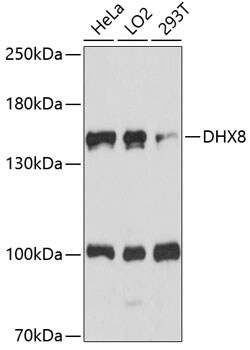
ABclonal Technology DHX8 Rabbit pAb
This gene is a member of the DEAH box polypeptide family. The encoded protein contains the DEAH (Asp-Glu-Ala-His) motif which is characteristic of all DEAH box proteins, and is thought to function as an ATP-dependent RNA helicase that regulates the release of spliced mRNAs from spliceosomes prior to their export from the nucleus. This protein may be required for the replication of human immunodeficiency virus type 1 (HIV-1). Alternative splicing results in multiple transcript variants.
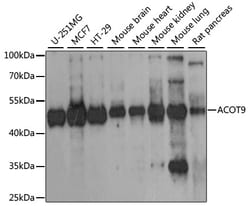
ABclonal Technology ACOT9 Rabbit pAb
The protein encoded by this gene is a mitochondrial acyl-CoA thioesterase of unknown function. Two transcript variants encoding different isoforms have been found for this gene.
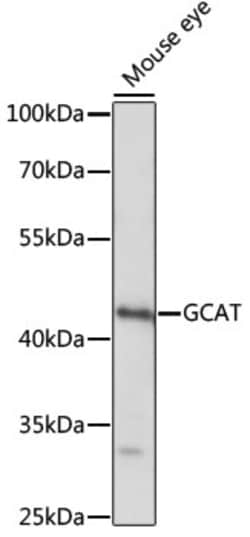
ABclonal Technology GCAT Rabbit pAb
The degradation of L-threonine to glycine consists of a two-step biochemical pathway involving the enzymes L-threonine dehydrogenase and 2-amino-3-ketobutyrate coenzyme A ligase. L-Threonine is first converted into 2-amino-3-ketobutyrate by L-threonine dehydrogenase. This gene encodes the second enzyme in this pathway, which then catalyzes the reaction between 2-amino-3-ketobutyrate and coenzyme A to form glycine and acetyl-CoA. The encoded enzyme is considered a class II pyridoxal-phosphate-dependent aminotransferase. Alternate splicing results in multiple transcript variants. A pseudogene of this gene is found on chromosome 14.
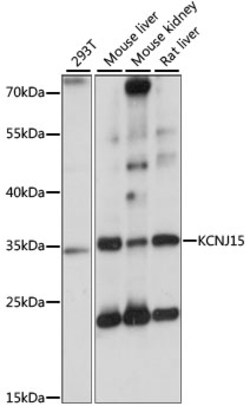
ABclonal Technology KCNJ15 Rabbit pAb
Potassium channels are present in most mammalian cells, where they participate in a wide range of physiologic responses. The protein encoded by this gene is an integral membrane protein and inward-rectifier type potassium channel. The encoded protein has a greater tendency to allow potassium to flow into a cell rather than out of a cell. Eight transcript variants encoding the same protein have been found for this gene.