
PCR Supplies



Biochain Institute Inc dATP, dCTP, dGTP, dTTP, 4x1 ml (100 mM)/PK
Polymerase Chain Reaction (PCR) has become one of the most important technologies in the scientific community since its introduction in 1985. BioChain provides the most common used qPCR and PCR enzyme and reagents, such as qPCR SuperMix, Taq polymerase, dNTP, primers, at the most competitive price. This product line offers our customers of genomic DNA, RNA, and cDNA, a convenient and economic source for large quantity PCR enzymes and reagents.




Biochain Institute Inc dTTP, 100 uL (100 mM)/PK
BioChain's dNTP reagent combines the highest quality with the most competitive price on the market. The dNTPs are purified with preparative HPLC to achieve at least 99.5% purity.

Biochain Institute Inc dCTP, 400 uL (100 mM)/PK
BioChain's dNTP reagent combines the highest quality with the most competitive price on the market. The dNTPs are purified with preparative HPLC to achieve at least 99.5% purity.
Cayman Chemical CndIda genus qPCR asy 1ea
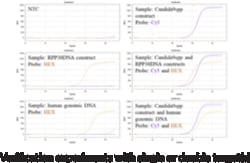
The primers and probes in the Candida genus kit are provided in tube 1 as a 20X concentrated working solution. This is a single assay that will detects 29 species of Candida including Candida albicans, Candida auris, Candida dubliniensis, Candida glabrata, Candida guiliermondii, Candida krusei, Candida lusitaniae, Candida parapsilosis, Candida tropicalis Organism Type: Fungi Controls (recommended): CrAssphage, Human RPP30-DNA Enzyme Master Mixes (recommended): Empirical qPCR mastermix, Standard qPCR enzyme mixture (Item No. 40705) Panels: Fungi, GI, Nail, Ophthalmology, UTI, Vaginal microbiota, Wound Colors: Cy5 (Candida genus), HEX (RPP30) Instruments: Any instrument

As One International Inc ROX internal reference dye, 3 x 0.2 ml
A passive reference dye to compensate for non-PCR related variations in the fluorescence. The fluorescence from the passive reference dye does not change during the course of the PCR reaction but provides a stable baseline to which samples are normalized. The excitation and emission of the reference dye are 584 nm and 612 nm, respectively.
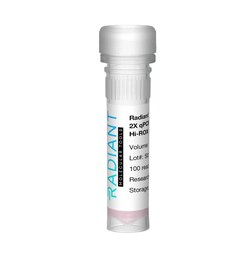
Alkali Scientific Radiant™ qPCR Genotyping Mixgenotyping mix for qPCR, Hi-Rox, 100 Reactions, (1 X 1mL)
Using the latest advancements in polymerase technology and advanced buffer chemistry Radiant™ Genotyping Mix Hi-Rox offers market leading performance with minimal optimization. Radiant™ Genotyping Mix Hi-Rox is a kit designed for use in dual-labeled probe based genotyping assays including Taqman, Molecular Beacon and Scorpion probe genotyping. Radiant™ Genotyping Mix is fully compatible with ABI TaqMan Pre-Designed SNP Genotyping assays. Radiant™ Genotyping Mix uses proprietary smallmolecular inhibitor technology that prevents formation of primer-dimers to improve reaction sensitivity and specificity. Highthroughput screening has resulted in a buffer system that allows efficient amplification from GC-rich and AT-rich templates, under fast and standard cycling conditions.

Miltenyi Biotec, Inc. StemMACS Brn2 mRNA, human
mRNA encoding the neural transcription factor Brn2 for transfection

Enzo Life Sciences AMPIGENE qPCR 1-Step Probe Kit No-ROX (200Reactions)
AMPIGENE qPCR 1-Step Probe Kits use the latest developments in reverse transcriptase (RTase) technology and buffer chemistry for efficient cDNA synthesis and qPCR in a single tube. The modified MMLV RTase is blended with RNase inhibitor to prevent degradation of RNA by contaminating RNase. The RTase is thermostable and extremely active. AMPIGENE qPCR 1-Step Probe Kits are designed for use on a variety of probes including: Taqma , Molecular Beacons, and Scorpion probes. An optimized buffer system allows efficient amplification and proprietary enhancers prevent the formation of primers/dimers to increase sensitivity and specificity. ROX is a reference dye which is used to normalize fluorescent signal in qPCR. AMPIGENE qPCR 1-Step Probe Kits come with either Lo-ROX, Hi-ROX, or No-ROX concentration. Choose the appropriate ROX concentration for the instrument (see instrument compatibility for reference dye chart below.) Applications: PCR.
Alpco Ltd Hospital Stool Panel RT-PCR Kit
Hospital Stool Panel is a multiplex real-time RT-PCR kit for the direct, qualitative detection and differentiation of norovirus (genogroup I and II), rotavirus and Clostridium difficile toxin genes A (tcdA) / B (tcdB) in human stool samples. Research Use Only. Not for Use in Diagnostic Procedures. This kit is sufficient for 100 tests.

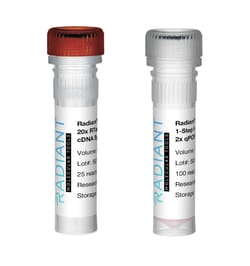
Alkali Scientific Radiant™ Probe 1-Step Hi-ROX qPCR Kit, 300 Reactions, (3 X 1mL 2X Probe 1-Step Hi-ROX qPCR Mix, 3 X 0.2mL 20X RTase with RNase inhibitor)
Alkali Scientific offers Radiant™ Probe 1-Step Hi-ROX qPCR Kits, a high-performance portfolio of 2X ready-to-use real-time PCR reagents designed for best-in- class quantitative PCR. Radiant™ qPCR Kits are engineered for robust real-time PCR with earlier quantification cycle values (Ct), industry-leading sensitivity (increased limit of detection) and exceptional speed (rapid extension rates). The proprietary buffer system allows for highly efficient amplification of GC-rich and AT-rich sequences in addition to dramatic improvements in PCR sensitivity in low- copy assays and PCR conditions conducive to ultra-fast amplification. The Radiant™ Probe 1-Step Hi-ROX qPCR Kit utilizes a proprietary, Green non-inhibitory intercalating dye for robust, fluorescent detection.