
General Cell Lines and Cell Cultures

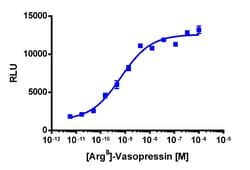
Eurofins Discoverx cAMP Hunter CHO-K1 AVPR2 Gs Cell Line, 2 vials. (95-0150C2)
The cAMP Hunter AVPR2 Gs cell line is a stable, engineered cell line for use in studying drug candidates (small molecules or biologics) targeting GPCRs. This cell line enables assessment of ligand (e.g. vasopressin) based activation of AVPR2 GPCR activity via detection of increasing levels of intracellular cAMP. This product uses EFC technology. The cells overexpress wild type AVPR2, a naturally Gs coupled GPCR. Upon activation of AVPR2, the increase in levels of intracellular cAMP leads to an increased signal from EFC when the cAMP detection kit is applied. This stable modified cell line is provided as two vials of cryopreserved cells. For detailed product information, User Manual and datasheet, visit www.discoverx.com/gpcr.


ATCC pRS306 phagemid; in E. coli
One of a series of pBluescript-based integrating vectors (ATCC 77138-77141) differing in the yeast selectable marker gene. This is a YI-type (integrating shuttle vector ) permitting visual detection of recombinants and production of ssDNA in E. coli. It contains promoters for invitro RNA synthesis, priming sites useful for sequencing, and encodes the lacZ alpha (lacZ?) peptide. The pRSS56, base vector was constructed by ligating a PvuI fragment (bp 498-2412) of pBluescript KS+ to a PvuI fragment (bp 2850-730) of pBS(+). It contains the KS MCS from pBluescript KS+ and the unique NdeI and AatII sites between bla and the f1 origin of pBS(+). A fragment (1.112 kb) containing the URA3 gene was inserted into the NdeI site of pRSS56. All ends were blunted.

ATCC JH4 clone 1; Lung; Guinea Pig (Cavia porcellus)
There is a Permit requirement: License form needed to be completed Material Transfer Agreement Addendum for Screening Application
The forms are available here: https://www.atcc.org/support/order-support/permits-and-restrictions
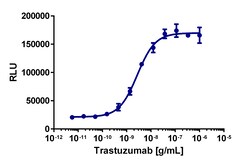
Eurofins Discoverx KILR NCI-N87 Cell Pool, 2 vials. (97-1004P021)
The KILR NCI-N87 cell pool is a stable, engineered target cell pool, which closely reflects the heterogeneous native protein expression of tumor environments, used to measure direct cell death mediated by immunooncology treatments (e.g. checkpoint modulators, bispecifics, CAR-T, etc.) via Antibody Dependent Cell-mediated Cytotoxicity (ADCC), Complement Dependent Cytotoxicity (CDC), and Antibody Dependent Cell Phagocytosis (ADCP). This product uses EFC technology. The cell pool is a heterogeneous population of NCI-N87 cells that overexpress a ProLabel-tagged housekeeping gene. Upon effector cells-mediated cell lysis, ProLabel is released to the media, where EA in the detection kit produces an EFC signal proportional to the level of ProLabel released. This allows for calculation of percent lysis of the KILR cell pool. This stable cell pool is provided as two vials of cryopreserved cells. For detailed product information, User Manual and datasheet, visit www.discoverx.com/kilr.

Biochain Institute Inc Paraffin Tissue Section - Asthma: Lung, 5 slides/PK
BioChain's tissue products are based on the sample repository network established following the IRB-approved ethical standard and procedures. BioChain's formalin fixed paraffin embedded (FFPE) tissue section line encompasses a large selection of tissue sections which are suitable for immunohistochemistry and in situ hybridization assays. The tissue sections are approximately 5 um thick. Each slide contains tissue from single human diseased sample. Documentation of tissues' clinical histories may be available upon request. For those customers who want to perform FFPE DNA and RNA isolation, BioChain can provide tissue section slices in tubes instead of mounting them on glass slides.


ATCC TE 354.T; Basal Cell Carcinoma; Human (Homo sapiens)
There is a Permit requirement: License form needed to be completed Material Transfer Agreement Addendum for Screening Application
The forms are available here: https://www.atcc.org/support/order-support/permits-and-restrictions

ATCC Human rhinovirus 17; Strain: 33342
Human rhinovirus 17 strain 33342 is propagated in H1HeLa cells (ATCC CRL-1958). This strain was presumed to be isolated from a throat swab from an adult with an upper respiratory illness in 1959 and was deposited by the National Institute of Allergy and Infectious Diseases (NIAID). It has applications in respiratory disease research.
Revvity Health Sciences Inc AequoZen Human Opioid Mu (OP3) Cell Line, CHO-K1 Frozen Cells
AequoZen Human Opioid Mu (OP3) Cell Line, CHO-K1 Frozen Cells

ATCC Cereibacter sphaeroides; ATH 2.4.1; genomic DNA
Genomic DNA isolated from Cereibacter sphaeroides strain ATH 2.4.1 (ATCC 17023). This product can be used in PCR and other molecular biology applications.

ATCC Mobiluncus mulieris; Strain BV 64-5; genomic DNA
Genomic DNA isolated from Mobiluncus mulieris strain BV 64-5. This bacterial strain is also available as ATCC Catalog No. 35240™.
Genscript Corporation CHO-K1/CMKLR1/G15 Stable Cell
The orphan receptor ChemR23 (also referred to as CMKLR1 or DEZ) is a G-protein coupled receptor (GPCR) with homology to neuropeptide and chemoattractant receptors ChemR23 is also a G i-linked receptor expressed primarily by monocytes M s and plasmacytoid dendritic cells CMKLR1 has been shown to be expressed by DC generated in vitro from monocytes to mediate their migration to the proteolytically regulated chemoattractant chemerin and CMKLR1 may be a key mediator of pDC recruitment from the blood into tissue sites enriched in active chemerin
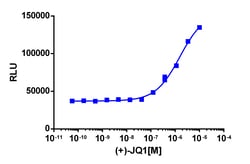
Eurofins Discoverx InCELL Hunter HEK 293 BRDT(1,2) Bromodomain Cell Line, 2 vials. (96-0046C1)
The InCELL Hunter HEK 293 BRDT(1,2) Bromodomain Cell Line is a stable, engineered cell line for use in studying small molecule drug candidates that engage with regulators of epigenetics pathways. This cell line enables assessment of compound-engagement-based stabilization of BRDT(1,2) via detection of BRDT(1,2) levels. This product uses EFC technology. The cell line included overexpresses BRDT(1,2) target protein fused to ProLabel. In the absence of compound that binds and stabilizes the target, this protein is degraded and no EFC signal is produced. When compound engages and stabilizes the target, EA contained in the detection reagent produces EFC signal. This stable modified cell line is provided as two vials of cryopreserved cells. For detailed product information, User Manual and datasheet, visit www.discoverx.com/epigenetics.
Eurofins Discoverx ChemiBrite FSH Glycoprotein Hormone Receptor Stable Cell Line, 2 vials. (HTS178L)
The ChemiBrite FSH Glycoprotein Hormone Receptor cell line is a stable, engineered cell line for use in studying drug candidates (small molecules or biologics) targeting GPCRs. This cell line enables assessment of ligand (e.g. follicle stimulating hormone) based activation of FSHR GPCR activity via detection of increasing levels of intracellular calcium. The included cell line overexpresses FSHR alongside exogenous high levels of a promiscuous G-protein, coupling the receptor to the calcium signaling pathway. ChemiBrite cells also express a clytin variant, allowing for luminescent as well as fluorescent signal detection. Upon activation of FSHR, the resulting calcium activity can be assayed in either detection mode. This stable modified cell line is provided as two vials of cryopreserved cells. For detailed product information, visit www.discoverx.com/targets/gpcr-target-biology.
Promocell GmbH PromoCell HUtMEC-c 500,000 Human Uterine Microvascular Endothelial Cells, cryopreserved
Primary Human Uterine Microvascular Endothelial Cells (HUtMEC) are isolated from the myometrium (middle layer of the uterine wall) from a single donor who is not pre-treated with hormones. The cells are routinely analyzed by immunofluorescent staining: they stain positive for CD31 and von Willebrand factor and negative for smooth muscle alpha-actin.During pregnancy HUtMEC propagate intensely and change their phenotype and expression pattern in response to sex steroids. This includes up-regulation of HUtMEC nitric oxide synthase activity, modulation of adhesion molecule expression, and an increase in endothelial cell survival and angiogenic activity. HUtMEC are involved in medical conditions like uterine fibroma or adeno-mysis.

ATCC Saccharopolyspora erythraea
Saccharopolyspora erythraea strain M5-12259 is a bacterial type strain isolated from soil in the Philippines. This strain is whole-genome sequenced and is known to produce erythromycin.