
Primary Antibody Matched Pairs

Miltenyi Biotec, Inc. CD55 (DAF)-VioBright 515, human, 100 t
Identification and enumeration of CD55 (DAF)+ cells by flow cytometry.
This product is subject to the following: Miltenyi Biotec, Inc. Terms and Conditions of Sale For Products and Services
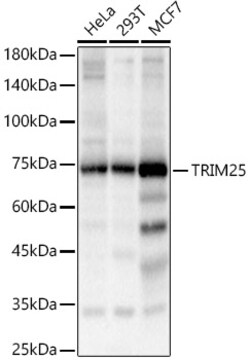
ABclonal Technology TRIM25 Rabbit pAb

The protein encoded by this gene is a member of the tripartite motif (TRIM) family. The TRIM motif includes three zinc-binding domains, a RING, a B-box type 1 and a B-box type 2, and a coiled-coil region. The protein is an RNA binding protein, functions as a ubiquitin E3 ligase and is involved in multiple cellular processes, including regulation of antiviral innate immunity.

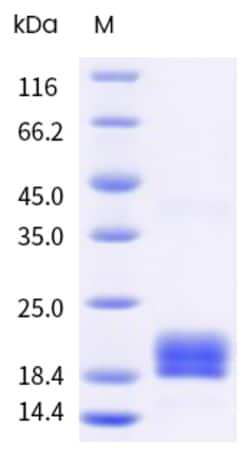
Sino Biological Recombinant Human IL-1RA/IL-1RN Protein, Biotinylated 100 µg
A DNA sequence encoding the mature form of human IL1RA isoform1 (NP_776214.1) (Arg 26-Glu 177) was expressed. The purified protein was biotinylated in vitro.

Medchemexpress LLC SMYD2 protein, human (sf9, His) | >95.0% | 10 UG
Recombinant human SMYD2 protein expressed in Sf9 insect cells with an N-terminal His tag. Supplied as purified protein suitable for biochemical assays, enzymatic methylation studies, antibody validation, and structural biology. Manufacturer documentation such as a datasheet, certificate of analysis (COA), and safety data sheet (SDS) are referenced by the supplier.
- Recombinant expression in Sf9 insect cells.
- N-terminal His tag for purification and detection.
- High purity (>95%) as determined by reducing SDS-PAGE.
- Available in low microgram quantities for research use.
- Datasheet, COA, and SDS referenced for quality and handling.
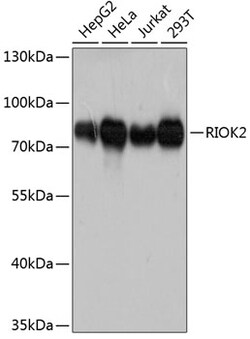
ABclonal Technology RIOK2 Rabbit pAb
Predicted to enable protein kinase activity. Involved in several processes, including positive regulation of rRNA processing, positive regulation of ribosomal small subunit export from nucleus, and regulation of mitotic metaphase/anaphase transition. Located in cytoplasm. Part of preribosome, small subunit precursor.

Medchemexpress LLC Recombinant human aldo-keto reductase family 1 member C2 (AKR1C2), His-tagged | >90.0% | 10 UG
Recombinant full-length human AKR1C2, His-tagged, is a cytoplasmic aldo-keto reductase expressed in E. coli and supplied lyophilized for research applications. It is enzymatically active in NAD(P)H-dependent reduction of ketosteroids and is suitable for biochemical assays and activity characterization.
- Full-length human sequence (M1-Y323).
- His-tagged for affinity purification.
- >90.0% purity by reducing SDS-PAGE.
- Approximate molecular weight 38 kDa.
- Specific activity 54.55 pmol/min/μg.
- Lyophilized from 50 mM Tris-HCl, 300 mM NaCl, pH 7.4.
- Store lyophilized at -20°C; after reconstitution, stable at 4°C for 1 week or at -20°C for longer; freeze aliquots for extended storage.

Genscript Corporation CD79B His Mouse
CD79B (also known as B29 Ig beta and B cell antigen receptor complex-associated protein beta-chain) is a 36-40 kDa member of the Ig-Superfamily It is required in cooperation with CD79A for initiation of the signal transduction cascade activated by the B-cell antigen receptor complex (BCR) which leads to internalization of the complex trafficking to late endosomes and antigen presentation Enhances phosphorylation of CD79A possibly by recruiting kinases which phosphorylate CD79A or by recruiting proteins which bind to CD79A and protect it from dephosphorylation

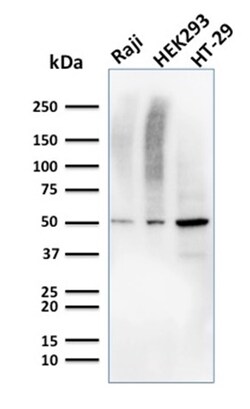
Biotium MMP3 (Marker of Metastasis and Rheumatoid Arthritis)(MMP3/2655), 0.2mg/mL
The matrix metalloproteinases (MMP) are a family of peptidase enzymes responsible for the degradation of extracellular matrix components, including collagen, gelatin, fibronectin, laminin and proteoglycan. Transcription of MMP genes is differentially activated by phorbol ester, lipopolysaccharide (LPS) or staphylococcal enterotoxin B (SEB). MMP catalysis requires both calcium and zinc. MMP-3, MMP-10 and MMP-11 (also designated stromelysin-1, 2 and 3, respectively) activate procollagenase. MMP-3 activation of procollagenase can occur via two pathways. Direct activation by MMP-3 is slow and activation by MMP-3 in conjunction with tissue or plasma proteinases is rapid. MMP-10 is expressed in small intestine, and at lower levels in lung and heart. MMP-11 is specifically expressed in stromal cells of breast carcinomas and contributes to epithelial cell malignancies. Primary antibodies are available purified, or with a selection of fluorescent CF Dyes and other labels. CF Dyes of
American Research Products Inc AMERICAN RESEARCH PRODUCTS INC
5000606700 ANTI-NPTX2 ANTIBODY ELISA KIT
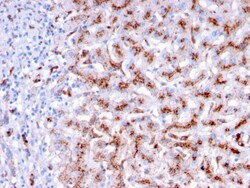
Biotium Cathepsin D (Tumor Marker)(CTSD/3276), CF647 conjugate, 0.1mg/mL
Cathepsin D is a ubiquitously expressed lysosomal aspartyl protease involved in the normal degradation of proteins. It is synthesized as an inactive 43 kDa preprocathepsin D that is cleaved and glycosylated to form a 46 kDa procathepsin D and then further cleaved to produce 28 kDa and 15 kDa subunits (heavy and light chains, respectively). Cathepsin D exhibits pepsin-like activity and plays a role in protein turnover and in the proteolytic activation of hormones and growth factors. Mutations in this gene play a causal role in neuronal ceroid lipofuscinosis-10 and may be involved in the pathogenesis of several other diseases, including breast cancer and possibly Alzheimer's disease. Primary antibodies are available purified, or with a selection of fluorescent CF Dyes and other labels. CF Dyes offer exceptional brightness and photostability. Note: Conjugates of blue fluorescent dyes like CF405S and CF405M are not recommended for detecting low abundance targets, because blu
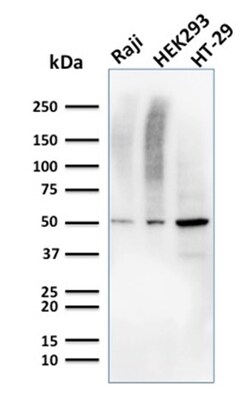
Biotium MMP3 (Marker of Metastasis and Rheumatoid Arthritis)(MMP3/2655), CF568 conjugate, 0.1mg/mL
The matrix metalloproteinases (MMP) are a family of peptidase enzymes responsible for the degradation of extracellular matrix components, including collagen, gelatin, fibronectin, laminin and proteoglycan. Transcription of MMP genes is differentially activated by phorbol ester, lipopolysaccharide (LPS) or staphylococcal enterotoxin B (SEB). MMP catalysis requires both calcium and zinc. MMP-3, MMP-10 and MMP-11 (also designated stromelysin-1, 2 and 3, respectively) activate procollagenase. MMP-3 activation of procollagenase can occur via two pathways. Direct activation by MMP-3 is slow and activation by MMP-3 in conjunction with tissue or plasma proteinases is rapid. MMP-10 is expressed in small intestine, and at lower levels in lung and heart. MMP-11 is specifically expressed in stromal cells of breast carcinomas and contributes to epithelial cell malignancies. Primary antibodies are available purified, or with a selection of fluorescent CF Dyes and other labels. CF Dyes of
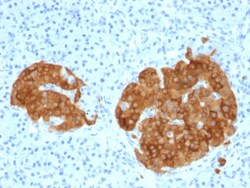
Biotium GAD2 / GAD65 (GABAergic Neuronal Marker) (GAD2/1960), CF647 conjugate, 0.1mg/mL
This MAb recognizes a protein of 65 kDa, which is identified as glutamic acid decarboxylase 2 (GDA2). It is responsible for catalyzing the production of gamma-aminobutyric acid from L-glutamic acid. There are two forms of glutamic acid decarboxylases (GAD s) that are found in the brain: GAD2 (also known as GAD65) and GAD1 (also known as GAD67). GAD1 and GAD2 are members of the group II decarboxylase family of proteins and are responsible for catalyzing the rate-limiting step in the production of GABA (ÃŽ³-aminobutyric acid) from L-glutamic acid. Although both GAD s are found in the brain, GAD2 localizes to synaptic vesicle membranes in nerve terminals, while GAD1 is distributed throughout the cell. A pathogenic role for GAD2 is identified in the human pancreas since it has been identified as an autoantibody and an auto-reactive T cell target in insulin-dependent diabetes.Primary antibodies are available purified, or with a selection of fluorescent CF Dyes and other label
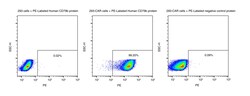
Sino Biological Recombinant Human CD79B Protein (PE site-specific conjugation, His Tag) 25
A DNA sequence encoding the human CD79B (NP_000617.1) (Met 1-Asp 159) was expressed with a C-terminal polyhistidine tag. The protein is site-specifically conjugated with PE (Excitation = 495-566 nm, Emission Max.= 575 nm).
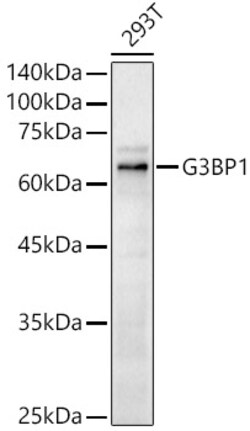
ABclonal Technology G3BP1 Rabbit pAb
This gene encodes one of the DNA-unwinding enzymes which prefers partially unwound 3-tailed substrates and can also unwind partial RNA/DNA and RNA/RNA duplexes in an ATP-dependent fashion. This enzyme is a member of the heterogeneous nuclear RNA-binding proteins and is also an element of the Ras signal transduction pathway. It binds specifically to the Ras-GTPase-activating protein by associating with its SH3 domain. Several alternatively spliced transcript variants of this gene have been described, but the full-length nature of some of these variants has not been determined.