
Primary Antibody Matched Pairs


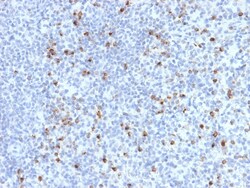
Biotium Perforin-1 (Pore Forming Protein) (Apoptosis Marker)(PRF1/2470), CF740 conjugate, 0.1mg/mL
Perforin is a pore-forming protein that leads to osmotic lysis of the target cells and subsequently enables granzymes to enter the target cells and activate apoptosis. Perforin has structural and functional similarities to complement component 9 (C9). Like C9, this protein creates transmembrane tubules and is capable of lysing non-specifically a variety of target cells. It is one of the main cytolytic proteins of cytolytic granules, and is known to be a key effector molecule for T-cell- and natural killer-cell-mediated cytolysis. Defects in this gene cause familial hemophagocytic lymphohistiocytosis type 2 (HPLH2), a rare and lethal autosomal recessive disorder of early childhood. The expression of perforin is reportedly upregulated in activated CD8 T-cells, natural killer cells and some CD4 T-cells. Primary antibodies are available purified, or with a selection of fluorescent CF Dyes and other labels. CF Dyes offer exceptional brightness and photostability. Note: Conjug

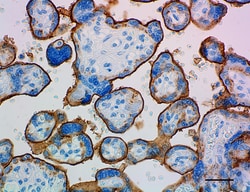
Biolegend Purified anti-PLAP
Purified anti-PLAP [8A11-C11-C9]; Isotype: Mouse IgG1, κ; Reactivity: Human; Apps: IHC-P, WB; Size: 25 μg
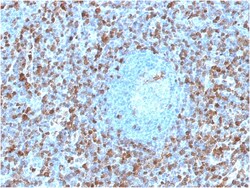
Biotium Annexin A1 / (Hairy Cell Leukemia Marker)(ANXA1/1671), 0.2mg/mL
Annexin A1 belongs to the annexin family. It plays a role in glucocorticoid-mediated down-regulation of the early phase of the inflammatory response. In resting conditions Annexin A1 is localized to the cytoplasm. Upon activation it is mobilized to the membrane and secreted. Annexin A1 and contains 4 annexin repeats. A pair of annexin repeats may form one binding site for calcium and a phospholipid. Expression of the ANXA1 gene is upregulated in hairy cell leukemia (HCL). Detection of ANXA1 provides a simple, highly sensitive and specific assay for diagnosing HCL. Annexin A1 has also been found to be protective against DNA damage induced by heat in breast cancer cells, suggesting it is involved in tumor suppressive and protective activities, and also is associated with treatment resistance. Primary antibodies are available purified, or with a selection of fluorescent CF Dyes and other labels. CF Dyes offer exceptional brightness and photostability. Note: Conjugates of blue

Medchemexpress LLC CD79B protein, recombinant (rat, HEK293, C-terminal His tag) | 98.0% | 50 UG

Recombinant rat CD79B (Igβ) protein is expressed in HEK293 cells with a C-terminal His tag. The protein comprises 228 amino acids and is intended for research into B-cell receptor signaling, B cell development, and studies of glycosylation and lymphoma biology.
- Expressed in HEK293 mammalian cells to preserve post-translational modifications.
- Contains a C-terminal His tag for purification and detection.
- Composed of 228 amino acids matching the rat CD79B sequence.
- Suitable for studies of B-cell receptor signaling, B cell development, and lymphoma biology.
- High purity (98.0%) appropriate for biochemical and cell-based assays.
ABclonal Technology Genious 2X SYBR Green Fast qPCR Mix
Real-time Quantitative PCR (qPCR) is a powerful technique in detecting initial DNA input in a PCR reaction by fluorescence signal accumulation. ABclonal Genious 2X SYBR Green Fast qPCR Mix is a fluorescence reagent for qPCR reactions using the SYBR(R) Green I. This product provides real-time data on DNA amplification during PCR by performing quantitative fluorescence signal detection on SYBR(R) / FAM channels. This product uses the antibody-based hot-start Taq enzyme for amplification, which greatly improves the specificity of the product while ensuring the amplification effect. At the same time, by optimizing the qPCR Mix Buffer system, the product is suitable for multiple species, providing a powerful tool for multidisciplinary experimental needs. This product is a 2X pre-mix enzyme, contains all the components required for qPCR except primers and templates, providing great convenience for experimental manipulation.

Influenza B NP ELISA Pair Set 15PP (Sino Biological)
Each vial contains 85 ng of recombinant Influenza B (B/Washington/02/2019) Nucleoprotein. Reconstitute with 1 mL dilution buffer. After reconstitution, store at -20℃ to -80℃ in a manual defrost freezer. A seven-point standard curve using 2-fold serial dilutions in dilution buffer, and a high standard of 2500 pg/mL is recommended.

Sino Biological Recombinant Human BCMA Protein (Site-Specific AF 488 Conjugation, ECD, His Tag)
A DNA sequence encoding the extracellular domain (Met1-Ala54) of human TNFRSF17 (NP_001183.2) was expressed with a C-terminal polyhistidine tag. The protein is site-specifically conjugated with AF 488 (Excitation Max.= 495 nm, Emission Max.= 519 nm).
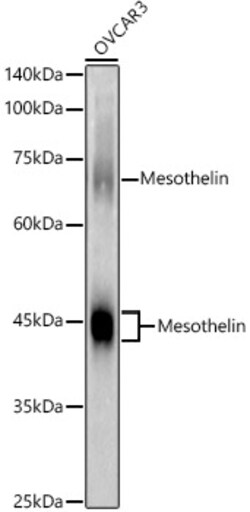
ABclonal Technology Mesothelin Rabbit pAb
This gene encodes a preproprotein that is proteolytically processed to generate two protein products, megakaryocyte potentiating factor and mesothelin. Megakaryocyte potentiating factor functions as a cytokine that can stimulate colony formation of bone marrow megakaryocytes. Mesothelin is a glycosylphosphatidylinositol-anchored cell-surface protein that may function as a cell adhesion protein. This protein is overexpressed in epithelial mesotheliomas, ovarian cancers and in specific squamous cell carcinomas. Alternative splicing results in multiple transcript variants, at least one of which encodes an isoform that is proteolytically processed.
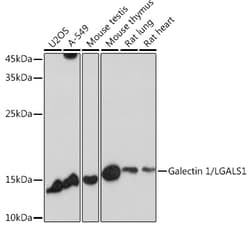
ABclonal Technology Galectin 1/LGALS1 Rabbit pAb
The galectins are a family of beta-galactoside-binding proteins implicated in modulating cell-cell and cell-matrix interactions. This gene product may act as an autocrine negative growth factor that regulates cell proliferation.
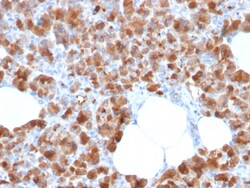
Biotium Carboxypeptidase A1 / CPA1 (Pancreatic Cancer Marker)(CPA1/2713), CF594 conjugate, 0.1mg/mL
Carboxypeptidase A1 (CPA1) is a secreted zinc metalloprotease that is highly expressed in pancreatic tissue. It catalyzes the release of C-terminal amino acids from a variety of proteins, thereby playing a key role in protein digestion and degradation. Human pancreatic procarboxypeptidase A exists as three different active forms, two of which are carboxypeptidase A1 (CPA1) and carboxypeptidase A2 (CPA2). Abnormal levels of CPA1 are associated with pancreatic cancer, suggesting a possible role in either tumor progression or tumor suppression events. Primary antibodies are available purified, or with a selection of fluorescent CF Dyes and other labels. CF Dyes offer exceptional brightness and photostability. Note: Conjugates of blue fluorescent dyes like CF405S and CF405M are not recommended for detecting low abundance targets, because blue dyes have lower fluorescence and can give higher non-specific background than other dye colors.
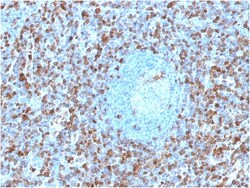
Biotium Annexin A1 / (Hairy Cell Leukemia Marker)(ANXA1/1671), 1mg/mL
Annexin A1 belongs to the annexin family. It plays a role in glucocorticoid-mediated down-regulation of the early phase of the inflammatory response. In resting conditions Annexin A1 is localized to the cytoplasm. Upon activation it is mobilized to the membrane and secreted. Annexin A1 and contains 4 annexin repeats. A pair of annexin repeats may form one binding site for calcium and a phospholipid. Expression of the ANXA1 gene is upregulated in hairy cell leukemia (HCL). Detection of ANXA1 provides a simple, highly sensitive and specific assay for diagnosing HCL. Annexin A1 has also been found to be protective against DNA damage induced by heat in breast cancer cells, suggesting it is involved in tumor suppressive and protective activities, and also is associated with treatment resistance. Primary antibodies are available purified, or with a selection of fluorescent CF Dyes and other labels. CF Dyes offer exceptional brightness and photostability. Note: Conjugates of blue
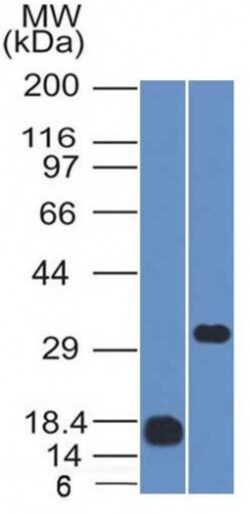
Biotium CD79b (B-Cell Marker)(IGB/1843), CF488A conjugate, 0.1mg/mL
CD79 (also designated Ig chains, designated CD79B or B29. The B cell antigen receptor complex (BCR) is formed by the association of CD79 with a membrane immunoglobulin, such as IgM or IgD. The membrane immunoglobulins IgM and IgD achieve surface expression and antigen presentation function in response to CD79 association. The cytoplasmic tails of both CD79A and CD79B contain an ITAM (immuno-receptor tyrosine-based activation) motif, which acts to initiate the BCR signaling reactions by binding to and activating tyrosine kinases. Primary antibodies are available purified, or with a selection of fluorescent CF Dyes and other labels. CF Dyes offer exceptional brightness and photostability. Note: Conjugates of blue fluorescent dyes like CF405S and CF405M are not recommended for detecting low abundance targets, because blue dyes have lower fluorescence and can give higher non-specific background than other dye colors.
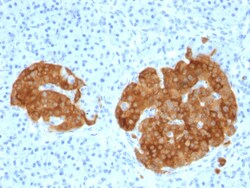
Biotium GAD2 / GAD65 (GABAergic Neuronal Marker) (GAD2/1960), CF594 conjugate, 0.1mg/mL
This MAb recognizes a protein of 65 kDa, which is identified as glutamic acid decarboxylase 2 (GDA2). It is responsible for catalyzing the production of gamma-aminobutyric acid from L-glutamic acid. There are two forms of glutamic acid decarboxylases (GAD s) that are found in the brain: GAD2 (also known as GAD65) and GAD1 (also known as GAD67). GAD1 and GAD2 are members of the group II decarboxylase family of proteins and are responsible for catalyzing the rate-limiting step in the production of GABA (ÃŽ³-aminobutyric acid) from L-glutamic acid. Although both GAD s are found in the brain, GAD2 localizes to synaptic vesicle membranes in nerve terminals, while GAD1 is distributed throughout the cell. A pathogenic role for GAD2 is identified in the human pancreas since it has been identified as an autoantibody and an auto-reactive T cell target in insulin-dependent diabetes.Primary antibodies are available purified, or with a selection of fluorescent CF Dyes and other label
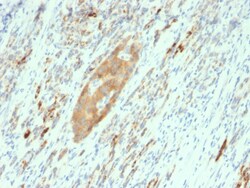
Biotium GAD2 / GAD65 (GABAergic Neuronal Marker)(GAD2/2362), CF594 conjugate, 0.1mg/mL
This MAb recognizes a protein of 65 kDa, which is identified as glutamic acid decarboxylase 2 (GDA2). It is responsible for catalyzing the production of gamma-aminobutyric acid from L-glutamic acid. There are two forms of glutamic acid decarboxylases (GAD's) that are found in the brain: GAD2 (also known as GAD65) and GAD1 (also known as GAD67). GAD1 and GAD2 are members of the group II decarboxylase family of proteins and are responsible for catalyzing the rate-limiting step in the production of GABA (-aminobutyric acid) from L-glutamic acid. Although both GAD's are found in the brain, GAD2 localizes to synaptic vesicle membranes in nerve terminals, while GAD1 is distributed throughout the cell. A pathogenic role for GAD2 is identified in the human pancreas since it has been identified as an autoantibody and an auto-reactive T cell target in insulin-dependent diabetes. Primary antibodies are available purified, or with a selection of fluorescent CF Dyes and other labels. CF Dyes