
Primary Antibody Matched Pairs


Human APOA1 ELISA Pair Set 5PP (Sino Biological)
Each vial contains 278 ng of recombinant Human Apolipoprotein A-I / ApoA1. Reconstitute with 1 mL dilution buffer. After reconstitution, store at -20℃ to -80℃ in a manual defrost freezer. A six-point standard curve using 2-fold serial dilutions in dilution buffer, and a high standard of 12000 pg/mL is recommended.


Biotium MMP3 (Marker of Metastasis and Rheumatoid Arthritis)(MMP3/2655), CF488A conjugate, 0.1mg/mL
The matrix metalloproteinases (MMP) are a family of peptidase enzymes responsible for the degradation of extracellular matrix components, including collagen, gelatin, fibronectin, laminin and proteoglycan. Transcription of MMP genes is differentially activated by phorbol ester, lipopolysaccharide (LPS) or staphylococcal enterotoxin B (SEB). MMP catalysis requires both calcium and zinc. MMP-3, MMP-10 and MMP-11 (also designated stromelysin-1, 2 and 3, respectively) activate procollagenase. MMP-3 activation of procollagenase can occur via two pathways. Direct activation by MMP-3 is slow and activation by MMP-3 in conjunction with tissue or plasma proteinases is rapid. MMP-10 is expressed in small intestine, and at lower levels in lung and heart. MMP-11 is specifically expressed in stromal cells of breast carcinomas and contributes to epithelial cell malignancies. Primary antibodies are available purified, or with a selection of fluorescent CF Dyes and other labels. CF Dyes of
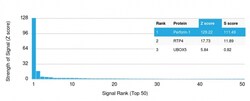
Biotium Perforin-1 (Pore Forming Protein) (Apoptosis Marker)(PRF1/2467), Biotin conjugate, 0.1mg/mL
Perforin is a pore-forming protein that leads to osmotic lysis of the target cells and subsequently enables granzymes to enter the target cells and activate apoptosis. Perforin has structural and functional similarities to complement component 9 (C9). Like C9, this protein creates transmembrane tubules and is capable of lysing non-specifically a variety of target cells. It is one of the main cytolytic proteins of cytolytic granules, and is known to be a key effector molecule for T-cell- and natural killer-cell-mediated cytolysis. Defects in this gene cause familial hemophagocytic lymphohistiocytosis type 2 (HPLH2), a rare and lethal autosomal recessive disorder of early childhood. The expression of perforin is reportedly upregulated in activated CD8 T-cells, natural killer cells and some CD4 T-cells. Primary antibodies are available purified, or with a selection of fluorescent CF Dyes and other labels. CF Dyes offer exceptional brightness and photostability. Note: Conjug
ABclonal Technology PE Rabbit anti- CD96/TACTILE

Acts upstream of or within negative regulation of interferon-gamma production negative regulation of natural killer cell cytokine production and response to lipopolysaccharide Predicted to be located in cytoplasm Is expressed in several structures including blood central nervous system ganglia heart and lung Human ortholog(s) of this gene implicated in C syndrome Orthologous to human CD96 (CD96 molecule)

Medchemexpress LLC S100A9 Human His 250ug
Recombinant human S100A9 (His) is a lyophilized, N-terminal 6xHis-tagged fragment of human S100A9 expressed in E. coli. Supplied with >95% purity and a defined amino acid sequence (T2-P114), it is suitable for biochemical characterization, receptor binding studies (TLR4/MD2, RAGE), structural analysis, and antibody development. Store frozen and follow reconstitution guidance to maintain activity.
- High purity (>95%) as determined by reducing SDS-PAGE.
- N-terminal 6xHis tag for affinity purification and detection.
- Expressed in E. coli for consistent, scalable production.
- Lyophilized formulation with stabilizers for long-term storage.
- Supplied with a defined amino acid sequence (T2-P114).
- Suitable for biochemical assays, receptor binding, and antibody generation.
- Manufacturer recommends reconstitution to ≥100 μg/mL and aliquot freezing for storage.
Biotium S100A9(S100A9/1075), CF568 conjugate, 0.1mg/mL
This MAb stains the cytoplasm of macrophages and histiocytes in hematopoietic organs, Kupffer's cells of the liver and Langerhan's cells of the skin. It also stains the mantle zone B-lymphocytes of the lymph node and spleen, spermatogonia, and chief cells of the stomach. S100A9 is expressed by macrophages in acutely inflamed tissues and in chronic inflammation. It is detected in peripheral blood leukocytes, in neutrophils and granulocytes. It is present at sites of vascular inflammation. S100A9 is also expressed in epithelial cells constitutively or induced during dermatoses. S100A9 is a Calcium-binding protein. It has antimicrobial activity towards bacteria and fungi. It is important for resistance to invasion by pathogenic bacteria. It up-regulates transcription of genes that are under the control of NF-kappa-B. S100A9 plays a role in the development of endotoxic shock in response to bacterial lipopolysaccharide (LPS). It promotes tubulin polymerization when unphosphorylate
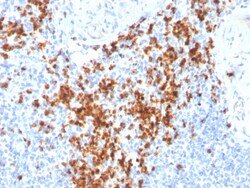
Biotium Granzyme B (NK/T-Cell Lymphoma Marker)(GZMB/3014), CF594 conjugate, 0.1mg/mL
Granzyme B is a member of the granule serine protease family stored specifically in NK cells or cytotoxic T cells. Cytolytic T lymphocytes (CTL) and natural killer (NK) cells share the ability to recognize, bind, and lyse specific target cells. They are thought to protect their host by lysing cells bearing on their surface 'nonself' antigens, usually peptides or proteins resulting from infection by intracellular pathogens. Granzyme B is crucial for the rapid induction of target cell apoptosis by CTLs in the cell-mediated immune response. Granzyme B is useful as a marker in the identification of NK/T-cell lymphomas. High percentages of cytotoxic T-cells have been shown to be an unfavorable prognostic indicator in Hodgkin's Disease. Primary antibodies are available purified, or with a selection of fluorescent CF Dyes and other labels. CF Dyes offer exceptional brightness and photostability. Note: Conjugates of blue fluorescent dyes like CF405S and CF405M are not recommende
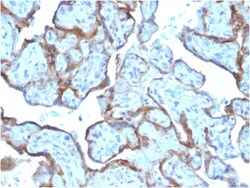
Biotium MMP3 (Marker of Metastasis and Rheumatoid Arthritis)(MMP3/2806), CF488A conjugate, 0.1mg/mL
The matrix metalloproteinases (MMP) are a family of peptidase enzymes responsible for the degradation of extracellular matrix components, including collagen, gelatin, fibronectin, laminin and proteoglycan. Transcription of MMP genes is differentially activated by phorbol ester, lipopolysaccharide (LPS) or staphylococcal enterotoxin B (SEB). MMP catalysis requires both calcium and zinc. MMP-3, MMP-10 and MMP-11 (also designated stromelysin-1, 2 and 3, respectively) activate procollagenase. MMP-3 activation of procollagenase can occur via two pathways. Direct activation by MMP-3 is slow and activation by MMP-3 in conjunction with tissue or plasma proteinases is rapid. MMP-10 is expressed in small intestine, and at lower levels in lung and heart. MMP-11 is specifically expressed in stromal cells of breast carcinomas and contributes to epithelial cell malignancies. Primary antibodies are available purified, or with a selection of fluorescent CF Dyes and other labels. CF Dyes of
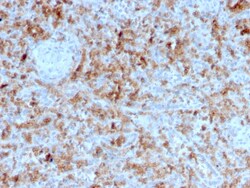
Biotium Granzyme B (NK/T-Cell Lymphoma Marker)(GZMB/3055), CF647 conjugate, 0.1mg/mL
Granzyme B is a member of the granule serine protease family stored specifically in NK cells or cytotoxic T cells. Cytolytic T lymphocytes (CTL) and natural killer (NK) cells share the ability to recognize, bind, and lyse specific target cells. They are thought to protect their host by lysing cells bearing on their surface 'nonself' antigens, usually peptides or proteins resulting from infection by intracellular pathogens. Granzyme B is crucial for the rapid induction of target cell apoptosis by CTLs in the cell-mediated immune response. Granzyme B is useful as a marker in the identification of NK/T-cell lymphomas. High percentages of cytotoxic T-cells have been shown to be an unfavorable prognostic indicator in Hodgkin's Disease. Primary antibodies are available purified, or with a selection of fluorescent CF Dyes and other labels. CF Dyes offer exceptional brightness and photostability. Note: Conjugates of blue fluorescent dyes like CF405S and CF405M are not recommende
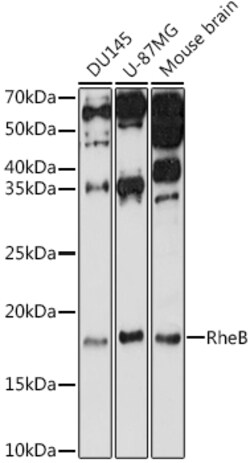
ABclonal Technology RheB Rabbit pAb
This gene is a member of the small GTPase superfamily and encodes a lipid-anchored, cell membrane protein with five repeats of the RAS-related GTP-binding region. This protein is vital in regulation of growth and cell cycle progression due to its role in the insulin/TOR/S6K signaling pathway. The protein has GTPase activity and shuttles between a GDP-bound form and a GTP-bound form, and farnesylation of the protein is required for this activity. Three pseudogenes have been mapped, two on chromosome 10 and one on chromosome 22.
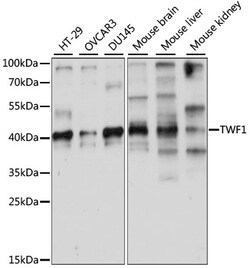
ABclonal Technology TWF1 Rabbit pAb
This gene encodes twinfilin, an actin monomer-binding protein conserved from yeast to mammals. Studies of the mouse counterpart suggest that this protein may be an actin monomer-binding protein, and its localization to cortical G-actin-rich structures may be regulated by the small GTPase RAC1.
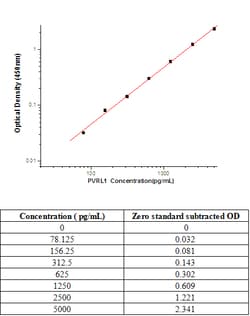
Sino Biological Human Nectin-1/PVRL1 Matched ELISA Antibody Pair Set
The Human CD111/Nectin-1/PVRL1 ELISA Pair Set is for the quantitative determination of Human CD111/Nectin-1/PVRL1.The Sino Biological ELISA Pair Set is a solid phase sandwich ELISA (Enzyme-Linked Immunosorbent Assay). It utilizes a monoclonal antibody specific for Human CD111/Nectin-1/PVRL1 coated on a 96-well plate. Standards and samples are added to the wells, and any Human CD111/Nectin-1/PVRL1 present binds to the immobilized antibody. The wells are washed and a horseradish peroxidase conjugated mouse anti-Human CD111/Nectin-1/PVRL1 monoclonal antibody is then added, producing an antibody-antigen-antibody "sandwich". The wells are again washed and TMB substrate solution is loaded, which produces color in proportion to the amount of Human CD111/Nectin-1/PVRL1 present in the sample. To end the enzyme reaction, the stop solution is added and absorbances of the microwell are read at 450 nm.
Genscript Corporation MSLN/Mesothelin 296-598 M593
Mesothelin also known as MSLN is a protein that in humans is encoded by the MSLN gene Cloning studies showed that the mesothelin gene encodes a precursor protein that is processed to yield mesothelin which is attached to the cell membrane by a glycophosphatidylinositol linkage and a 31-kDa shed fragment named megakaryocyte-potentiating factor (MPF) Although it has been proposed that mesothelin may be involved in cell adhesion its biological function is not known A knockout mouse line that lacks mesothelin reproduces and develops normally

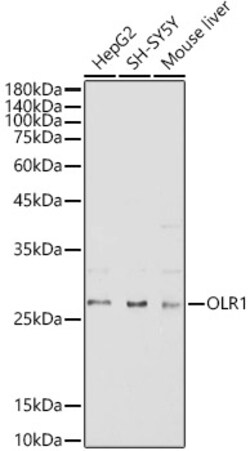
ABclonal Technology OLR1 Rabbit pAb
This gene encodes a low density lipoprotein receptor that belongs to the C-type lectin superfamily. This gene is regulated through the cyclic AMP signaling pathway. The encoded protein binds, internalizes and degrades oxidized low-density lipoprotein. This protein may be involved in the regulation of Fas-induced apoptosis. This protein may play a role as a scavenger receptor. Mutations of this gene have been associated with atherosclerosis, risk of myocardial infarction, and may modify the risk of Alzheimers disease. Alternate splicing results in multiple transcript variants.

Medchemexpress LLC CD70 Rat HEK293 H 50ug
CD70 is the ligand of CD27 in activated T and B lymphocytes is an important cytokine in CD70-CD27 pathway involving with the generation and maintenance of T cell immunity[1] CD70 is a surface antigen also shows antiviral activity and regulates viability of tumor cells and regulatory T cells[2][3] As for CD70 protein in rat contains TNF 2 domain (57-188 a a) and transmembrane helix belonging to the tumor necrosis factor (TNF) family CD70 Protein Rat (HEK293 His) is 150 amino acids in length (Q46-P195) and is expressed in the HEK293 cells with N terminal His-tag