
RNAi Controls


Genscript Corporation SLAMF7/CRACC/CD319 hFc Chimera
CD2-like receptor activating cytotoxic cells (CRACC) also known as CS1 novel Ly9 SLAMF7 and CD319 is a 65-75 kDa type I transmembrane glycoprotein in the SLAM subgroup of the CD2 family Self-ligand receptor of the signaling lymphocytic activation molecule (SLAM) family SLAM receptors triggered by homo- or heterotypic cell-cell interactions are modulating the activation and differentiation of a wide variety of immune cells and thus are involved in the regulation and interconnection of both innate and adaptive immune response

Genscript Corporation CD99/MIC2 hFc Chimera Human
CD99 is a cell surface protein with unique features and only partly defined mechanisms of action This molecule is involved in crucial biological processes including cell adhesion migration death differentiation and diapedesis and it influences processes associated with inflammation immune responses and cancer CD99 is frequently overexpressed in many types of tumors particularly pediatric tumors including Ewing sarcoma and specific subtypes of leukemia
Genscript Corporation PD-L1 Fc Chimera Human
Programmed death-ligand 1 (PD-L1) also known as cluster of differentiation 274 (CD274) or B7 homolog 1 (B7-H1) is a protein that in humans is encoded by the CD274 gene PD-L1 is a 40 kDa type 1 transmembrane protein that has been speculated to play a major role in suppressing the immune system during particular events such as pregnancy tissue allografts autoimmune disease and other disease states such as hepatitis Normally the immune system reacts to foreign antigens where there is some accumulation in the lymph nodes or spleen which triggers a proliferation of antigen-specific CD8 T cell The formation of PD-1 receptor / PD-L1 or B7 1 receptor /PD-L1 ligand complex transmits an inhibitory signal which reduces the proliferation of these CD8 T cells at the lymph nodes and supplementary to that PD-1 is also able to control the accumulation of foreign antigen specific T cells in the lymph nodes through apoptosis which is further mediated by a lower regulation of the gene Bcl-2 PD-L
Genscript Corporation FOLR1 hFc Chimera Human
Folate Receptor 1 (FOLR1) also known as Folate Receptor alpha and Folate Binding Protein (FBP) is a 37 - 42 kDa protein that mediates the cellular uptake of folic acid and reduced folates Dietary folates are required for many key metabolic processes including nucleotide and methionine synthesis the interconversion of glycine and serine and histidine breakdown FOLR1 binds to folate and reduced folic acid derivatives and mediates delivery of 5-methyltetrahydrofolate and folate analogs into the interior of cells Has high affinity for folate and folic acid analogs at neutral pH
Genscript Corporation CD47 hFc Chimera Human
CD47 (Cluster of Differentiation 47) also known as integrin associated protein (IAP) is a transmembrane protein that in humans is encoded by the CD47 gene CD47 belongs to the immunoglobulin superfamily and partners with membrane integrins and also binds the ligands thrombospondin-1 (TSP-1) and signal-regulatory protein alpha (SIRP ) CD-47 acts as a don t eat me signal to macrophages of the immune system which has made it a potential therapeutic target in some cancers
Genscript Corporation CD27/TNFRSF7 mFc Chimera Mous
CD27 also known as TNFRSF7 is an approximately 55 kDa transmembrane protein in the TNF receptor superfamily It functions as a co stimulatory molecule that supports lymphocyte activation and survival It binds to ligand CD70 and plays a key role in regulating B-cell activation and immunoglobulin synthesis
Genscript Corporation VEGF R3/FLT4 hFc Chimera Huma
Vascular endothelial growth factor (VEGF) and its receptors VEGF-R1 -R2 and -R3 play important roles in tumor angiogenesis and are associated with poor prognosis in several solid tumors VEGF-R1 -R2 and -R3 were highly expressed in CRC cells and stromal vessels VEGF-R1 strong positive staining correlated with shorter survival after CRC surgery
Genscript Corporation Siglec-15/CD33L3 hFc Chimera
Siglec-15 is a transmembrane glycoprotein in the Siglec family of sialic acid-binding immune regulatory molecules Mature human Siglec-15 consists of a 244 amino acid extracellular domain (ECD) with two Ig-like domains a 21 aa transmembrane segment and a 44 aa cytoplasmic domain Siglec-15 is a potential therapeutic target for osteoporosis and plays a conserved regulatory role in the immune system of vertebrates
Genscript Corporation CD3ECD3G hFc Chimera Biotin
T-cell surface glycoprotein CD3 epsilon CD3 gamma chain also known as CD3E CD3G are single-pass type I membrane proteins When antigen presenting cells (APCs) activate T-cell receptor (TCR) TCR-mediated signals are transmitted across the cell membrane by the CD3 chains CD3D CD3E CD3G and CD3Z All CD3 chains contain immunoreceptor tyrosine-based activation motifs (ITAMs) in their cytoplasmic domain
Genscript Corporation FGFR2 beta IIIb hFc Chimera
Four distinct genes encoding closely related FGF receptors FGFR1-4 are known All four genes for FGFRs encode proteins with an N-terminal signal peptide three immunoglobulin (Ig)-like domains an acid-box region containing a run of acidic residues between the IgI and IgII domains a transmembrane domain and the split tyrosine-kinase domain Multiple forms of FGFR1-3 are generated by alternative splicing of the mRNAs A frequent splicing event involving FGFR1 and 2 results in receptors containing all three Ig domains referred to as the alpha isoform or only IgII and IgIII referred to as the beta isoform
Genscript Corporation CD300LF hFc Chimera Human
Murine norovirus (MNoV) is an important model of human norovirus (HNoV) and mucosal virus infection more broadly CD300lf as a proteinaceous receptor for MNoV Interestingly its paralogue CD300ld was also sufficient for MNoV infection in vitro CD300lf is essential for both oral and parenteral MNoV infection and to elicit anti-MNoV humoral responses in vivo human CD300lf (huCD300lf) is not essential for HNoV infection nor does huCD300lf inhibit binding of HNoV virus-like particles to glycans
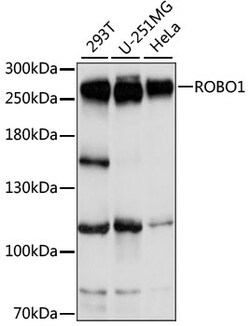
ABclonal Technology ROBO1 Rabbit pAb

Bilateral symmetric nervous systems have special midline structures that establish a partition between the two mirror image halves. Some axons project toward and across the midline in response to long-range chemoattractants emanating from the midline. The product of this gene is a member of the immunoglobulin gene superfamily and encodes an integral membrane protein that functions in axon guidance and neuronal precursor cell migration. This receptor is activated by SLIT-family proteins, resulting in a repulsive effect on glioma cell guidance in the developing brain. A related gene is located at an adjacent region on chromosome 3. Multiple transcript variants encoding different isoforms have been found for this gene.

Genscript Corporation PD-L1 Fc Chimera Mouse
Programmed death-ligand 1 (PD-L1) also known as cluster of differentiation 274 (CD274) or B7 homolog 1 (B7-H1) is a protein that in humans is encoded by the CD274 gene PD-L1 is a 40 kDa type 1 transmembrane protein that has been speculated to play a major role in suppressing the immune system during particular events such as pregnancy tissue allografts autoimmune disease and other disease states such as hepatitis Normally the immune system reacts to foreign antigens where there is some accumulation in the lymph nodes or spleen which triggers a proliferation of antigen-specific CD8 T cell The formation of PD-1 receptor / PD-L1 or B7 1 receptor /PD-L1 ligand complex transmits an inhibitory signal which reduces the proliferation of these CD8 T cells at the lymph nodes and supplementary to that PD-1 is also able to control the accumulation of foreign antigen specific T cells in the lymph nodes through apoptosis which is further mediated by a lower regulation of the gene Bcl-2 PD-L
Genscript Corporation PD-L1 Fc Chimera Mouse
Programmed death-ligand 1 (PD-L1) also known as cluster of differentiation 274 (CD274) or B7 homolog 1 (B7-H1) is a protein that in humans is encoded by the CD274 gene PD-L1 is a 40 kDa type 1 transmembrane protein that has been speculated to play a major role in suppressing the immune system during particular events such as pregnancy tissue allografts autoimmune disease and other disease states such as hepatitis Normally the immune system reacts to foreign antigens where there is some accumulation in the lymph nodes or spleen which triggers a proliferation of antigen-specific CD8 T cell The formation of PD-1 receptor / PD-L1 or B7 1 receptor /PD-L1 ligand complex transmits an inhibitory signal which reduces the proliferation of these CD8 T cells at the lymph nodes and supplementary to that PD-1 is also able to control the accumulation of foreign antigen specific T cells in the lymph nodes through apoptosis which is further mediated by a lower regulation of the gene Bcl-2 PD-L