
Protein Labeling Reagents

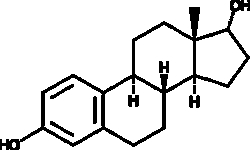
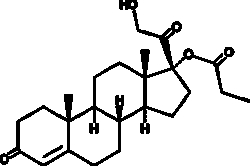
Cayman Chemical Cortexolon 17a-propIonate 25mg
A peripherally selective androgen receptor antagonist; binds to AR and inhibits AR-regulated transcription in a reporter cell line in vitro; inhibits androgen-regulated lipid synthesis in primary human sebocytes; inhibits inflammatory cytokine production from primary human sebocytes and scalp dermal papilla cells; inhibits testosterone propionate-induced flank organ enlargement in Syrian golden hamsters by 84% when administered topically at 400 μg/animal


Biotium Human Kappa Light Chain(KLC264), CF568 conjugate, 0.1mg/mL
This MAb is specific to kappa light chain of immunoglobulin and shows no cross-reaction with lambda light chain or any of the five heavy chains. In mammals, the two light chains in an antibody are always identical, with only one type of light chain, kappa or lambda. The ratio of Kappa to Lambda is 70:30. However, with the occurrence of multiple myeloma or other B-cell malignancies this ratio is disturbed. Antibody to the kappa light chain is reportedly useful in the identification of leukemias, plasmacytomas, and certain non-Hodgkin's lymphomas. Demonstration of clonality in lymphoid infiltrates indicates that the infiltrate is malignant.Primary antibodies are available purified, or with a selection of fluorescent CF Dyes and other labels. CF Dyes offer exceptional brightness and photostability. Note: Conjugates of blue fluorescent dyes like CF405S and CF405M are not recommended for detecting low abundance targets, because blue dyes have lower fluorescence and can gi
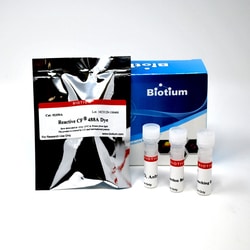
Biotium Mix-n-Stain™ CF488A Small Ligand Labeling Kit
Mix-n-Stain™ Small Ligand Labeling Kits are designed for rapid labeling of low molecular weight (MW 150 -5000) ligands without a purification step. Suitable ligands or substrates include SNAP-tag, CLIP-tag™ and HaloTag ligand derivatives that have an aliphatic amine. CF dyes are Biotium's line of next-generation fluorescent dyes with advantages in brightness, photostability, and conjugate specificity compared to other fluorescent dyes. Green fluorescent CF488A dye has excitation/emission at 490/515 nm. It is suitable for labeling ligands for cell surface staining.

Enzo Life Sciences Dihydrorhodamine 123 (ultra pure) (10mg). CAS: 109244-58-8
Dihydrorhodamine 123 is a widely utilized probe for detection of intracellular reactive oxygen species (ROS) such as peroxide, hypochlorous acid and peroxynitrite. It is readily oxidized into rhodamine 123, which exhibits a spectral profile similar to that of FITC. In combination with other fluorescent probes (such as surface receptor-targeted fluorescent antibodies, the cell viability probe propidium iodide, or fluorescent calcium indicators) dihydrorhodamine 123 can be used for multiparametric cell measurements. Wavelength Maxima: Excitation 507nm, Emission 529nm Alternative name: 2-(3,6-Diamino-9H-xanthene-9-yl)-benzoic acid methyl ester. Purity: ≥95% (HPLC). Solubility: Soluble in DMSO. Long Term Storage: -20°C.
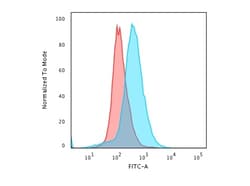
Biotium CD28(C28/76), CF488A conjugate, 0.1mg/mL
Recognizes a glycoprotein of 44-88 kDa, which is identified as CD28. It is the critical T-cell co-stimulatory receptor which provides to the cell the important second activation signal by binding CD80 and CD86 that are expressed by antigen presenting cells. Besides its co-stimulation role, CD28 functions in preventing T-cells from anergic hyporesponsive state or from undergoing premature apoptotic cell death. CD28 is also expressed on human fetal NK cells and some NK cell lines, whereas on murine NK cells the CD28 expression is much broader. Primary antibodies are available purified, or with a selection of fluorescent CF Dyes and other labels. CF Dyes offer exceptional brightness and photostability. Note: Conjugates of blue fluorescent dyes like CF405S and CF405M are not recommended for detecting low abundance targets, because blue dyes have lower fluorescence and can give higher non-specific background than other dye colors.

Sigma Aldrich Fine Chemicals Biosciences Rhodamine B isothiocyanate mixed isomers, BioReagent, suitable for protein labeling | 36877-69-7 | MFCD00136007 | 500MG
Rhodamine B isothiocyanate mixed isomers, BioReagent, suitable for protein labeling | Mol Wt: 536.08 | 36877-69-7 | MFCD00136007 | 500MG

Echelon Biosciences Research Labs GloPIPs BODIPY TMR PI(3)P 100 ug
Phosphoinositides (PIPns) are minor components of cellular membranes but are integral signaling molecules for cellular communication. Phosphatidylinositol 3-phosphate (PI(3)P) is enriched in early endosomes having roles in endosome fusion and receptor sorting and internalization in multivesicular bodies. PI(3)P has also been found at the plasma membrane and is involved in the translocation of the glucose transport protein GLUT4.GloPIPs are labeled at the sn-1 position with BODIPY-FL (505/513), BODIPY-TMR (544/574), or biotin. The sn-1 linkage in these labeled PIPs has been changed to a more stable amide from an ester. Results from experiments conducted at Echelon indicated that this minor chemical change did not have a significant effect in any of the applications tested. This item is non returnable
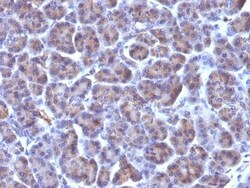
Biotium CMV-p65(CMV100), CF568 conjugate, 0.1mg/mL
Ten to forty percent of the patients with acquired immunodeficiency syndrome (AIDS) develop cytomegalovirus (CMV) infections. In some patients with AIDS, CMV is detected in the bronchoalveolar lavage fluid (BALF), urine, and other specimens, even when there are no symptoms of CMV disease. An indicator of active CMV infection is needed to facilitate the diagnosis of CMV disease in patients with AIDS or HIV infection. CMV p65 antigen was detected in the leukocytes of both the peripheral blood and BALF during the early phase of CMV disease.Primary antibodies are available purified, or with a selection of fluorescent CF Dyes and other labels. CF Dyes offer exceptional brightness and photostability. Note: Conjugates of blue fluorescent dyes like CF405S and CF405M are not recommended for detecting low abundance targets, because blue dyes have lower fluorescence and can give higher non-specific background than other dye colors.
Biotium NKX2.2(NX2/294), CF568 conjugate, 0.1mg/mL
Expression of NKX2.2 has been found in neuroendocrine tumors of the gut, making it a potential marker for the study of gastrointestinal neuroendocrine tumors. More recently, NKX2.2 protein was identified as a target of EWS-FLI-1, the fusion protein specific to Ewing sarcoma, and was shown to be differentially upregulated in Ewing sarcoma on the basis of array-based gene expression analysis. It acts as a valuable marker for Ewing sarcoma, with a sensitivity of 93% and a specificity of 89%, and aids in the differential diagnosis of small round cell tumors.Primary antibodies are available purified, or with a selection of fluorescent CF Dyes and other labels. CF Dyes offer exceptional brightness and photostability. Note: Conjugates of blue fluorescent dyes like CF405S and CF405M are not recommended for detecting low abundance targets, because blue dyes have lower fluorescence and can give higher non-specific background than other dye colors.
Biotium bcl-2(8C8), CF568 conjugate, 0.1mg/mL
This antibody recognizes a protein of 25-26 kDa, identified as Bcl-2. This antibody shows no cross-reaction with Bcl-x or Bax proteins. Bcl-2 suppresses apoptosis in a variety of cell systems including factor-dependent lymphohematopoietic and neural cells. It regulates cell death by controlling the mitochondrial membrane permeability. Bcl-2 appears to function in a feedback loop system with caspases. It inhibits caspase activity either by preventing the release of cytochrome c from the mitochondria and/or by binding to the apoptosis-activating factor (APAF-1). Expression of Bcl-2 inhibits programmed cell death (apoptosis). In most follicular lymphomas, neoplastic germinal centers express high levels of Bcl-2 protein, whereas the normal or hyperplastic germinal centers are negative. Consequently, this antibody is valuable when distinguishing between reactive and neoplastic follicular proliferation in lymph node biopsies. It may also be used in distinguishing between those foll

Biotium Phalloidin, CF568, 300 U
Phalloidin conjugates are actin filament stains for fixed and permeabilized cells. CF dyes are Biotium's line of next-generation fluorescent dyes with advantages in brightness, photostability, and conjugate specificity compared to other fluorescent dyes. Red fluorescent CF568 has excitation/emission at 562/583 nm.
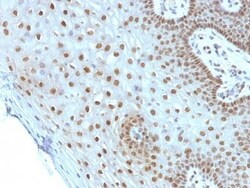
Biotium c-Myc(MYC275), CF488A conjugate, 0.1mg/mL
The c-Myc protein is a transcription factor, which is encoded by the c-Myc gene on human chromosome 8q24. c-Myc is commonly activated in a variety of tumor cells and plays an important role in cellular proliferation, differentiation, apoptosis and cell cycle progression. The phosphorylation of c-Myc has been investigated and previous studies have suggested a functional association between phosphorylation at Thr58/Ser62 by glycogen synthase kinase 3, cyclin dependent kinase, ERK2 and C-Jun N terminal Kinase (JNK) in cell proliferation and cell cycle regulation. Studies also have shown that c-Myc is essential for tumor cell development in vasculogenesis and angiogenesis that distribute blood throughout the cells, and which brought extensive attention in the development of new therapeutic approach for cancer treatment.Primary antibodies are available purified, or with a selection of fluorescent CF Dyes and other labels. CF Dyes offer exceptional brightness and photostability.
Biotium Fascin-1(FSCN1/417), CF488A conjugate, 0.1mg/mL
Recognizes a protein of 55 kDa, which is identified as fascin-1. Its actin binding ability is regulated by phosphorylation. Antibody to fascin-1 is a very sensitive marker for Reed-Sternberg cells and variants in nodular sclerosis, mixed cellularity, and lymphocyte depletion Hodgkin's disease. It is uniformly negative in lymphoid cells, plasma cells, and myeloid cells. Fascin-1 is also expressed in dendritic cells. This marker may be helpful to distinguish between Hodgkin lymphoma and non-Hodgkin lymphoma in difficult cases. Also, the lack of expression of fascin-1 in the neoplastic follicles in follicular lymphoma may be helpful in distinguishing these lymphomas from reactive follicular hyperplasia in which the number of follicular dendritic cells is normal or increased. Antibody to fascin-1 has been suggested as a prognostic marker in neuroendocrine neoplasms of the lung as well as in ovarian cancer. Fascin-1 expression may be induced by Epstein-Barr virus (EBV) infection o