
Protein Labeling Reagents

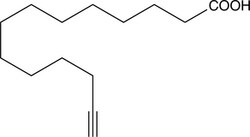
Cayman Chemical MyrIstIc AcId Alkyn 500ug
A form of the 14-carbon myristic acid with an ω-terminal alkyne group; can be used in linking reactions utilizing click chemistry

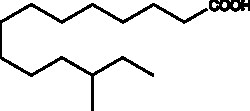
Cayman Chemical 12-methyl MyrIstIc AcId 1mg
A methylated fatty acid; has been found in bacteria, dairy products, wild-caught and farm-raised saltwater fish, and mouse subcutaneous adipose tissue; reduces larval settlement of H. elegans in a concentration-dependent manner (0.625-40 μg/ml); levels are decreased in mice fed a high-fat diet

Cayman Chemical 13mthyl MyrIstIc ACD mthy 20mg
A methylated bacterial fatty acid methyl ester; has been used as a marker of bacteria in sewage sludges and of bacterial contaminants in pharmaceutical manufacturing by GC-MS
Cayman Chemical 2-hydroxy MyrIstIc AcId 50mg
A hydroxy fatty acid; inhibits cleavage between the enterovirus capsid proteins VP4 and VP2; inhibits Junin and Tacaribe viral replication (IC50s = 20.1 and 14.2 μM, respectively); previously characterized as a weak inhibitor of peptide myristoylation (Ki = 200 μM) but has been shown to be inactive in ARL1 cells when used at 100 μM
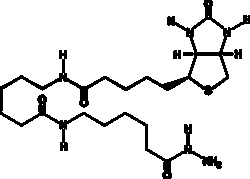
Cayman Chemical BIotIn-XX hydrazIde 10mg
A biotinylating reagent that contains two aminohexanoic spacers to increase the efficiency of avidin-binding by alleviating steric hindrance
Medchemexpress LLC Dde Biotin-PEG4-azide | 1802907-93-2 | 99.44% | C32H53N7O8S | 25 MG

Dde Biotin-PEG4-azide is a PEG-based PROTAC linker utilized in the synthesis of PROTACs. It functions as a click chemistry reagent, containing an Azide group, enabling it to participate in copper-catalyzed azide-alkyne cycloaddition (CuAAc) reactions with Alkyne groups and strain-promoted alkyne-azide cycloaddition (SPAAC) reactions with DBCO or BCN groups.
- PEG-based PROTAC linker
- Click chemistry reagent with Azide group
- Undergoes CuAAc reactions with Alkyne groups
- Participates in SPAAC reactions with DBCO or BCN groups
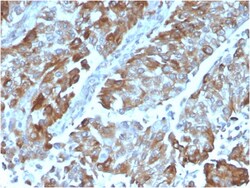
Biotium OX40 / CD134/ TNFRSF4 (Immuno-Oncology Target)(OX40/3108), Biotin conjugate, 0.1mg/mL
ThisMAb recognizes a protein of 43 kDa, identified as OX40, which is also known as CD134. OX40 is a type I integral membrane glycoprotein and member of the tumor necrosis factor/nerve growth factor receptor (TNFR/NGFR) family. It is expressed on activated T lymphocytes, hematopoietic precursor cells and fibroblasts. It functions as a T cell co-stimulatory receptor when bound by OX40 Ligand/TNFSF4 that is expressed by antigen presenting cells. OX40 thereby plays roles in T-cell activation as well as the regulation of differentiation, proliferation or apoptosis of normal and malignant lymphoid cells. OX40 is upregulated at the sites of inflammation, especially in case of multiple sclerosis and psoriatic lesions. Primary antibodies are available purified, or with a selection of fluorescent CF Dyes and other labels. CF Dyes offer exceptional brightness and photostability. Note: Conjugates of blue fluorescent dyes like CF405S and CF405M are not recommended for detecting low a

Medchemexpress LLC FAM azide, 6-isomer | 1386385-76-7 | MFCD29912889 | 99.8% | 10 MG
FAM azide, 6-isomer is a fluorescein-derived azide labeling reagent used for fluorescent tagging and bioconjugation via click chemistry. It offers a bright fluorescein signal and an azide functional group for efficient conjugation to alkyne-containing molecules.
- Fluorescent fluorescein-based dye with azide functional group.
- Compatible with copper-catalyzed azide-alkyne cycloaddition (CuAAC).
- Compatible with strain-promoted azide-alkyne cycloaddition (SPAAC) with DBCO/BCN reagents.
- Supplied as a solid; solution variants in DMSO are also available from some suppliers.
- Molecular weight 458.42 and CAS 1386385-76-7; high purity for labeling applications.
- Available in small pack sizes suitable for research-scale labeling.
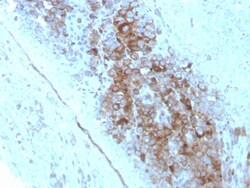
Biotium CD63 (Late Endosomes Marker)(LAMP3/2789), Biotin conjugate, 0.1mg/mL
This MAb recognizes protein of 26 kDa-60 kDa, which is identified as CD63. Its epitope is different from that of MAb LAMP3/529. The tetraspanins are integral membrane proteins expressed on cell surface and granular membranes of hematopoietic cells and are components of multi-molecular complexes with specific integrins. The tetraspanin CD63 is a lysosomal membrane glycoprotein that translocates to the plasma membrane after platelet activation. CD63 is expressed on activated platelets, monocytes and macrophages, and is weakly expressed on granulocytes, T cell and B cells. It is located on the basophilic granule membranes and on the plasma membranes of lymphocytes and granulocytes. CD63 is a member of the TM4 superfamily of leukocyte glycoproteins that includes CD9, CD37 and CD53, which contain four transmembrane regions. CD63 may play a role in phagocytic and intracellular lysosome-phagosome fusion events. CD63 deficiency is associated with Hermansky-Pudlak syndrome and is stro
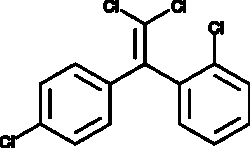
Cayman Chemical ANTIBODY o p-DDE 50mg
A metabolite and degradation product of the pesticide DDT; accumulates in various fish and sediment surrounding a DDT manufacturing plant; inhibits estrogen binding to rtERs (IC50 = 3.2 μM); induces concentration-dependent secretion of estradiol by granulosa and theca cell co-cultures isolated from porcine ovarian follicles; induces concentration-dependent secretion of estradiol by granulosa and theca cell co-cultures isolated from porcine ovarian follicles; increases degeneration of ovarian follicles and reduces testicular size in Japanese medaka (O. latipes)

Medchemexpress LLC Biotin-PEG4-dialkoxydiphenylsilane-picolyl azide | 2599839-59-3 | 95.0% | 978.24 | C47H67N9O10SSi | 5 MG
Biotin-PEG4-dialkoxydiphenylsilane-picolyl azide is a clickable, acid-cleavable biotin-picolyl azide reagent designed for labeling and enrichment of cell-surface glycoproteins. It contains an azide functionality for bioorthogonal conjugation and is compatible with both copper-catalyzed azide-alkyne cycloaddition (CuAAC) and strain-promoted alkyne-azide cycloaddition (SPAAC), supplied as a solid for research applications.
- Clickable azide functional group for CuAAC and SPAAC reactions.
- Acid-cleavable dialkoxydiphenylsilane linker enables controlled release after enrichment.
- Biotin tag enables affinity enrichment using streptavidin or avidin systems.
- PEG4 spacer improves solubility and reduces steric hindrance during conjugation.
- High purity (95.0%) for consistent labeling performance.
- Suitable for proteomics workflows targeting cell-surface glycoproteins.
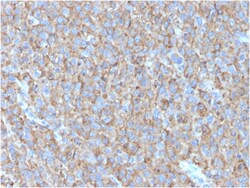
Biotium CD63 (Late Endosomes Marker)(LAMP3/2790), Biotin conjugate, 0.1mg/mL
This MAb recognizes protein of 26 kDa-60 kDa, which is identified as CD63. Its epitope is different from that of MAb LAMP3/529. The tetraspanins are integral membrane proteins expressed on cell surface and granular membranes of hematopoietic cells and are components of multi-molecular complexes with specific integrins. The tetraspanin CD63 is a lysosomal membrane glycoprotein that translocates to the plasma membrane after platelet activation. CD63 is expressed on activated platelets, monocytes and macrophages, and is weakly expressed on granulocytes, T cell and B cells. It is located on the basophilic granule membranes and on the plasma membranes of lymphocytes and granulocytes. CD63 is a member of the TM4 superfamily of leukocyte glycoproteins that includes CD9, CD37 and CD53, which contain four transmembrane regions. CD63 may play a role in phagocytic and intracellular lysosome-phagosome fusion events. CD63 deficiency is associated with Hermansky-Pudlak syndrome and is stro

Biotium CF570 Succinimidyl Ester
CF Dye Succinimidyl Esters (SE, also known as NHS esters) are amine-reactive fluorescent dyes. SE dyes are commonly used to label antibodies and other proteins on free amine groups, such as lysine residues. CF dyes are Biotium's line of next-generation fluorescent dyes with advantages in brightness, photostability, and conjugate specificity compared to other fluorescent dyes. Red fluorescent CF570 dye has excitation/emission at 568/591 nm.
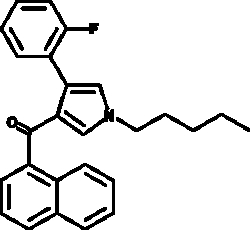
Cayman Chemical JWH 307 3-Isomer 1mg
An isomer of JWH 307 which differs by having the fluorophenyl group at the 3' position, rather than the 2' position, of the pyrrole group; intended for forensic and research purposes