
Immunohistochemistry Kits and Reagents



Meso Scale Discovery R-PLEX Mouse CD14 ASY

The R-PLEX Mouse CD14 Assay Kit from Meso Scale Discovery is a multiplex immunoassay that measures CD14 in mouse biological samples such as serum plasma and cell culture supernatants The assay utilizes MSD s electrochemiluminescence detection technology and provides high sensitivity up to a 7-log dynamic range and low sample volume requirements This 5-plex assay kit includes a CD14-specific antibody coated plate and calibrator diluent that allow for the accurate quantification of CD14 The assay takes approximately 4 hours to complete and is suitable for measuring CD14 levels during immunology and inflammation studies in mice

ASSAY BIOTECH COMPANY INC Phospho-p38 (T180/Y182) Polyclonal Antibody detects endogenous levels of p38 protein only when phosphorylated at T180/Y182.
The protein encoded by this gene is a member of the MAP kinase family. MAP kinases act as an integration point for multiple biochemical signals, and are involved in a wide variety of cellular processes such as proliferation, differentiation, transcription regulation and development. This kinase is activated by various environmental stresses and proinflammatory cytokines. The activation requires its phosphorylation by MAP kinase kinases (MKKs), or its autophosphorylation triggered by the interaction of MAP3K7IP1/TAB1 protein with this kinase. The substrates of this kinase include transcription regulator ATF2, MEF2C, and MAX, cell cycle regulator CDC25B, and tumor suppressor p53, which suggest the roles of this kinase in stress related transcription and cell cycle regulation, as well as in genotoxic stress response. Four alternatively spliced transcript variants of this gene encoding d

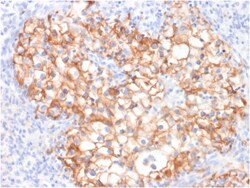
Biotium Ksp-Cadherin / CDH16 (Renal Cell Marker)(CDH16/2125), Biotin conjugate, 0.1mg/mL
This MAb recognizes a protein of 130 kDa, identified as Ksp-cadherin. Cadherins form a superfamily of related glycoproteins that mediate calcium-dependent cell adhesion and transmit signals from the extracellular matrix to the cytoplasm. Cadherins have been implicated in embryogenesis, tissue morphogenesis, tissue structure maintenance, cell polarization, neoplastic invasiveness and metastasis, and membrane transport. It is suggested that Ksp-cadherin is a marker for terminal differentiation of the basolateral membranes of renal tubular epithelial cells. Within the kidney, Ksp-Cadherin is found exclusively in the basolateral membrane of renal tubular epithelial cells and collecting duct cells, and not in glomeruli, renal interstitial cells, or blood vessels. Ksp-Cadherin has been suggested to distinguish Chromophobe Renal-Cell Carcinoma from Oncocytoma. Primary antibodies are available purified, or with a selection of fluorescent CF Dyes and other labels. CF Dyes offer exception
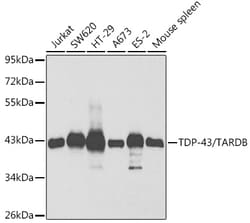
ABclonal Technology TDP-43/TARDBP Rabbit pAb
HIV-1, the causative agent of acquired immunodeficiency syndrome (AIDS), contains an RNA genome that produces a chromosomally integrated DNA during the replicative cycle. Activation of HIV-1 gene expression by the transactivator Tat is dependent on an RNA regulatory element (TAR) located downstream of the transcription initiation site. The protein encoded by this gene is a transcriptional repressor that binds to chromosomally integrated TAR DNA and represses HIV-1 transcription. In addition, this protein regulates alternate splicing of the CFTR gene. A similar pseudogene is present on chromosome 20.
American Research Products Inc Mouse Protein S100 A4 S100A4
Mouse Protein S100-A4 (S100A4) ELISA kit from CUSABIO Detection Range 62 5 pg/mL-4000 pg/mL Sensitivity 15 6 pg/mL Sample serum plasma cell culture supernates tissue homogenates Method Sandwich
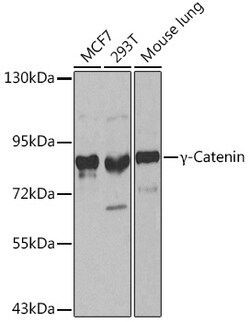
ABclonal Technology γ-Catenin Rabbit pAb
This gene encodes a major cytoplasmic protein which is the only known constituent common to submembranous plaques of both desmosomes and intermediate junctions. This protein forms distinct complexes with cadherins and desmosomal cadherins and is a member of the catenin family since it contains a distinct repeating amino acid motif called the armadillo repeat. Mutation in this gene has been associated with Naxos disease. Alternative splicing occurs in this gene, however, not all transcripts have been fully described.
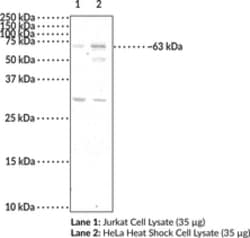
Cayman Chemical YTHDF2 PolycLNal ANTIBDY 500uL
A flavonoid with anti-inflammatory and anxiolytic activities inhibits LPS-induced nitric oxide production in RAW 264 7 cells from 0 16-10 M reduces pulmonary edema and lung inflammation in a mouse model of LPS-induced acute lung injury at 10 mg/kg increases the number of entries and the time spent in the open arms of the elevated plus maze in rats
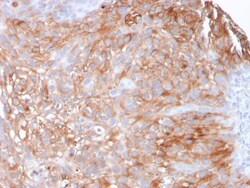
Biotium Uroplakin 1A (Urothelial Differentiation Marker)(UPK1A/2925), Biotin conjugate, 0.1mg/mL
The protein encoded by this gene is a member of the transmembrane 4 superfamily, also known as the tetraspanin family. Most of these members are cell-surface proteins that are characterized by the presence of four hydrophobic domains. The proteins mediate signal transduction events that play a role in the regulation of cell development, activation, growth and motility. This encoded protein is found in the asymmetrical unit membrane (AUM) where it can complex with other transmembrane 4 superfamily proteins. It may play a role in normal bladder epithelial physiology, possibly in regulating membrane permeability of superficial umbrella cells or in stabilizing the apical membrane through AUM/cytoskeletal interactions. The protein may also play a role in tumor suppression. Primary antibodies are available purified, or with a selection of fluorescent CF Dyes and other labels. CF Dyes offer exceptional brightness and photostability. Note: Conjugates of blue fluorescent dyes like
Biotium Ksp-Cadherin / CDH16 (Renal Cell Marker)(CDH16/2448), CF740 conjugate, 0.1mg/mL
This MAb recognizes a protein of 130 kDa, identified as Ksp-cadherin. Cadherins form a superfamily of related glycoproteins that mediate calcium-dependent cell adhesion and transmit signals from the extracellular matrix to the cytoplasm. Cadherins have been implicated in embryogenesis, tissue morphogenesis, tissue structure maintenance, cell polarization, neoplastic invasiveness and metastasis, and membrane transport. It is suggested that Ksp-cadherin is a marker for terminal differentiation of the basolateral membranes of renal tubular epithelial cells. Within the kidney, Ksp-Cadherin is found exclusively in the basolateral membrane of renal tubular epithelial cells and collecting duct cells, and not in glomeruli, renal interstitial cells, or blood vessels. Ksp-Cadherin has been suggested to distinguish Chromophobe Renal-Cell Carcinoma from Oncocytoma. Primary antibodies are available purified, or with a selection of fluorescent CF Dyes and other labels. CF Dyes offer exce
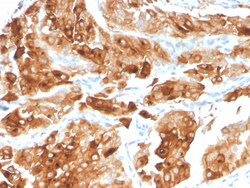
Biotium Uroplakin 1A (Urothelial Differentiation Marker)(UPK1A/2922), Biotin conjugate, 0.1mg/mL
The protein encoded by this gene is a member of the transmembrane 4 superfamily, also known as the tetraspanin family. Most of these members are cell-surface proteins that are characterized by the presence of four hydrophobic domains. The proteins mediate signal transduction events that play a role in the regulation of cell development, activation, growth and motility. This encoded protein is found in the asymmetrical unit membrane (AUM) where it can complex with other transmembrane 4 superfamily proteins. It may play a role in normal bladder epithelial physiology, possibly in regulating membrane permeability of superficial umbrella cells or in stabilizing the apical membrane through AUM/cytoskeletal interactions. The protein may also play a role in tumor suppression. Primary antibodies are available purified, or with a selection of fluorescent CF Dyes and other labels. CF Dyes offer exceptional brightness and photostability. Note: Conjugates of blue fluorescent dyes like
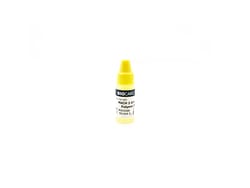
Biocare Medical, LLC MACH 2 Universal HRP-Polymer Detection - 6.0 ml
The conjugated goat anti-mouse and anti-rabbit polymer-horseradish peroxidase secondary antibody reacts with heavy and light chains on mouse and rabbit IgG. It reacts with all mouse and rabbit IgG subclasses and with mouse and rabbit IgM. The new and innovative HRP-polymerization technology provides a significant increase in staining sensitivity when compared to other conventional HRP-conjugated secondary antibodies. Avidin-biotin blocking procedures are not necessary when using the MACH 2 conjugated secondary antibodies. The overall staining procedure uses one less reagent (streptavidin peroxidase) and rinsing step, eliminates avidin-biotin blocking procedures, and may reduce overall staining time. It can be used manually and on automated stainers.

Revvity Health Sciences Inc HTRF Human Total ADAR1 Detection Kit, 50,000 Assay Points
HTRF Human Total ADAR1 Detection Kit, 50,000 Assay Points
Biotium Cytokeratin 8 (KRT8)(B22.1), Biotin conjugate, 0.1mg/mL
Cytokeratin 8 (CK8) belongs to the type II (or B or basic) subfamily of high molecular weight cytokeratins and exists in combination with cytokeratin 18 (CK18). CK8 is primarily found in the non-squamous epithelia and is present in majority of adenocarcinomas and ductal carcinomas. It is absent in squamous cell carcinomas. Hepatocellular carcinomas are defined by the use of antibodies that recognize only cytokeratin 8 and 18. CK8 exists on several types of normal and neoplastic epithelia, including many ductal and glandular epithelia such as colon, stomach, small intestine, trachea, and esophagus as well as in transitional epithelium. Anti-CK8 does not react with skeletal muscle or nerve cells. Epithelioid sarcoma, chordoma, and adamantinoma show strong positivity corresponding to that of simple epithelia (with antibodies against CK8, CK18 and CK19). Reportedly, anti-CK8 is useful for the differentiation of lobular ('ring-like, perinuclear') from ductal ('peripheral-predomina