Promotional price valid on web orders only. Your contract pricing may differ. Interested in signing up for a dedicated account number?
Learn More
Learn More
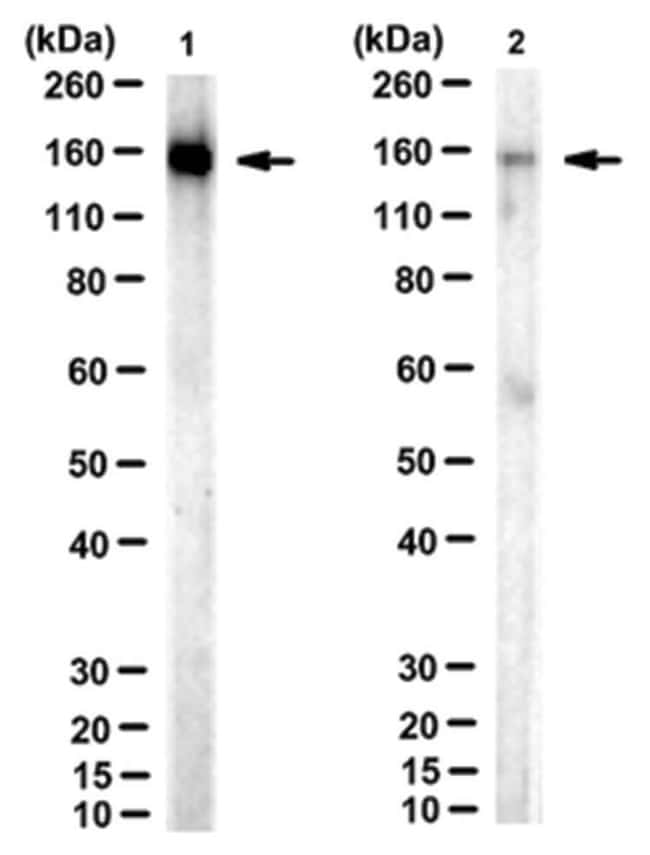
MilliporeSigma™ acetyl SMC3 (Lys105/106), Mouse, Unlabeled, Clone: 21A7,
Shop All MilliporeSigma ProductsDescription
Structural maintenance of chromosomes protein 3 (UniProt Q9UQE7; also known as Bamacan, Basement membrane-associated chondroitin proteoglycan, Chondroitin sulfate proteoglycan 6, Chromosome-associated polypeptide, hCAP, SMC protein 3, SMC-3) is encoded by the SMC3 (also known as BAM, BMH, CDLS3, CSPG6, SMC3L1) gene (Gene ID 9126) in human. Cohesion is a nuclear tripartite complex composed of Rad21 and two structural maintenance of chromosomes proteins, SMC1 and SMC3. Cohesin plays an important role in sister chromatid cohesion, as well as in DNA repair and gene expression regulation. To establish sister chromatid cohesion during S phase, SMC3 is acetylated (on K105 and K106 in human) by two cohesin acetyltransferases (CoATs), ESCO1 and ESCO2, that differ in their N-terminal domains and expression during development and across the cell cycle. ChIP-seq analysis reveals that ESCO1 is recruited by cohesin to over 11,000 chromatin sites occupied by cohesin and CTCF that mediate long-range chromatin interactions and regulate transcription globally. On ther other hand, ESCO2 is infrequently enriched at sites targeted by REST/NRSF (RE1-silencing transcription factor/neuron-restrictive silencer factor) that represses transcription of neuron-specific genes. SMC3 acetylation is thought to induce conformational changes of the dimeric hinge structure during S phase and to allow dimer opening and loading of DNA.

Specifications
Specifications
| Antigen | acetyl SMC3 (Lys105/106) |
| Applications | ChIP Assay, ELISA, Western Blot |
| Classification | Monoclonal |
| Clone | 21A7 |
| Concentration | Please refer to lot specific datasheet. |
| Conjugate | Unconjugated |
| Formulation | Purified mouse IgG2b in buffer containing 0.1M Tris-Glycine (pH 7.4), 150mM NaCl with 0.05% Sodium Azide. |
| Gene | SMC3, BAM, BMH, CDLS3, CSPG6, SMC3L1 |
| Gene Accession No. | Q9UQE7 |
| Host Species | Mouse |
| Show More |
For Research Use Only. Not for use in diagnostic procedures.
Product Title
By clicking Submit, you acknowledge that you may be contacted by Fisher Scientific in regards to the feedback you have provided in this form. We will not share your information for any other purposes. All contact information provided shall also be maintained in accordance with our Privacy Policy.
Spot an opportunity for improvement?