Promotional price valid on web orders only. Your contract pricing may differ. Interested in signing up for a dedicated account number?
Learn More
Learn More
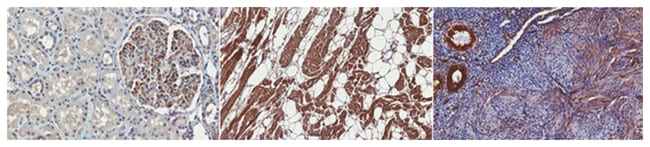
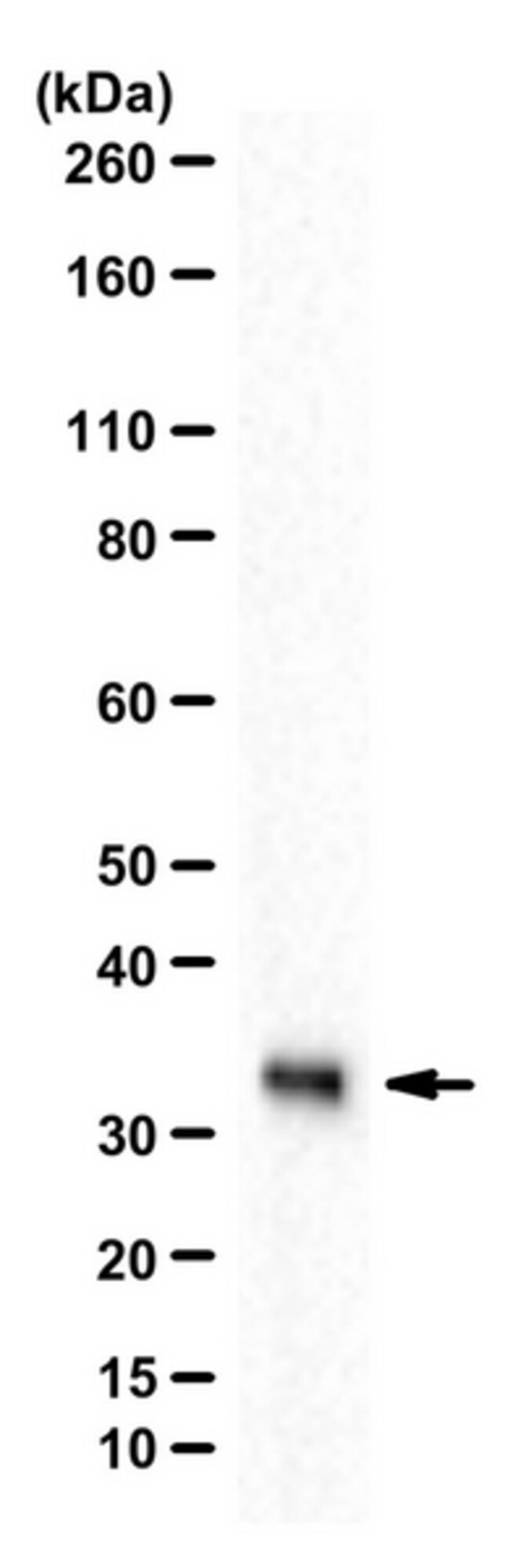
Description
Adiponectin (UniProt Q15848; also known as 30kDa adipocyte complement-related protein, ACRP30, Adipocyte complement-related 30kDa protein, Adipocyte, C1q and collagen domain-containing protein, Adipose most abundant gene transcript 1 protein, apM-1, Gelatin-binding protein) is encoded by the ADIPOQ (also known as ACDC, ACRP30, ADPND, APM1, GBP28) gene (Gene ID 9370) in human. Adipokines are adipose tissue-secreted factors that are involved in vascular function and metabolic disease. While most adipokines are proinflammatory and directly responsible for the development of the chronic inflammatory state in obesity, adiponectin is an adipokine with anti-inflammatory and insulin-sensitizing properties. Adiponectin mediates its biological activity via adiponection receptor proteins 1 and 2 (AdipoR1 and AdipoR2). Both AdipoR1 and AdipoR2 are reported to be ubiquitously expressed with the highest expression in skeletal muscle and liver, respectively. Circulating adiponectin levels are reduced in obesity and type II diabetes, whereas weight loss elevates serum levels of adiponectin. Likewise, adiponectin overexpression is reported to alleviate metabolic dysfunction independent of weight loss in both genetic and diet-induced animal models of obesity. Aadiponectin deficiency is associated with various clinical cardiovascular disorders including myocardial infarction, peripheral artery disease, and endothelial dysfunction. Adiponectin is produced with a signal peptide sequence (a.a. 1-18 in human and rat sequence; a.a. 1-17 in mouse), which is removed postranslationally to yield the mature protein with a collagen-like domain (a.a. 42-107 in human and rat, a.a. 45-110 in mouse) and a C1q domain (a.a. 108-244 in human and rat, a.a. 111-247 in mouse).

Specifications
Specifications
| Antigen | Adiponectin |
| Applications | Western Blot |
| Classification | Polyclonal |
| Concentration | Please refer to lot specific datasheet. |
| Conjugate | Unconjugated |
| Formulation | Purified rabbit polyclonal antibody in buffer containing 0.1M Tris-Glycine (pH 7.4), 150mM NaCl with 0.05% Sodium Azide. |
| Gene | ADIPOQ, ACDC, ACRP30, ADPND, APM1, GBP28 |
| Gene Accession No. | Q15848 |
| Host Species | Rabbit |
| Immunogen | GST-tagged recombinant human adiponectin C1q domain (globular domain) fragment. |
| Show More |
For Research Use Only. Not for use in diagnostic procedures.
Product Title
By clicking Submit, you acknowledge that you may be contacted by Fisher Scientific in regards to the feedback you have provided in this form. We will not share your information for any other purposes. All contact information provided shall also be maintained in accordance with our Privacy Policy.
Spot an opportunity for improvement?