Learn More
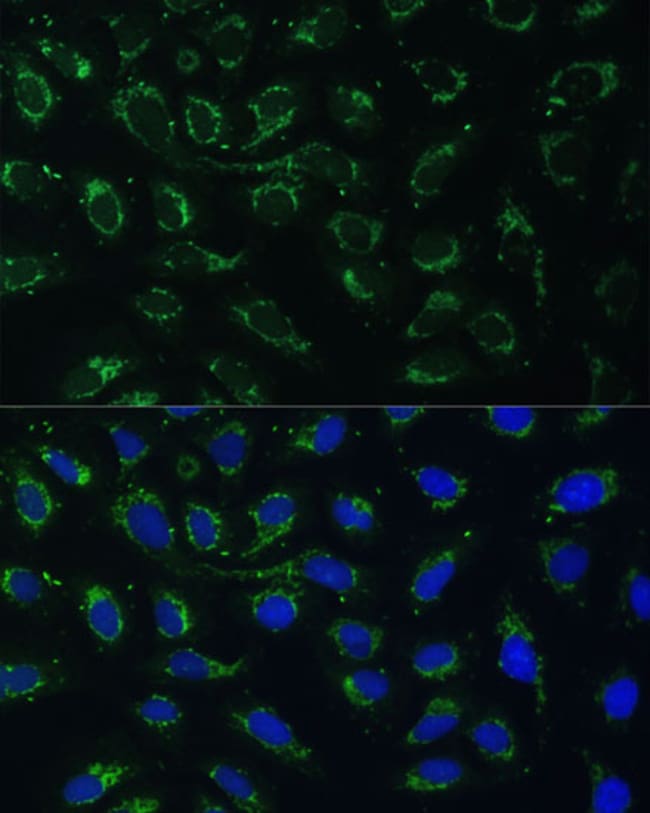
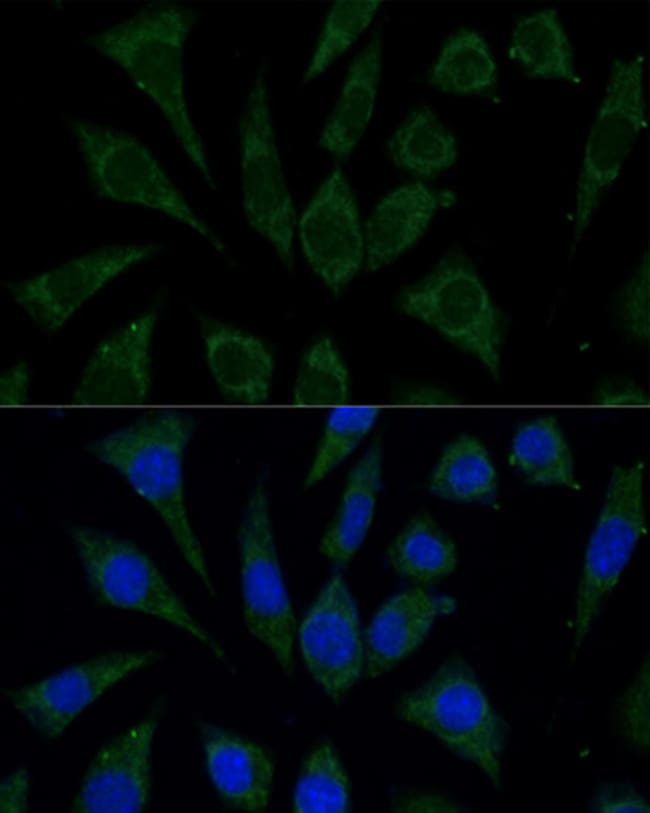
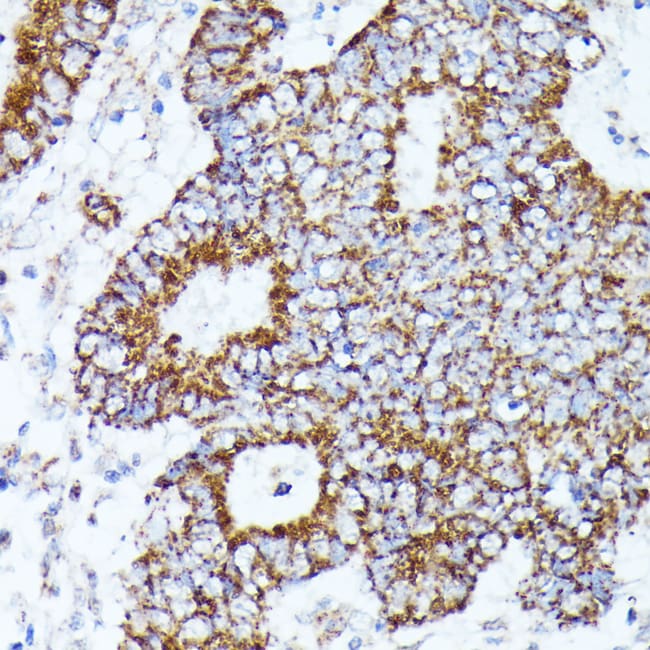
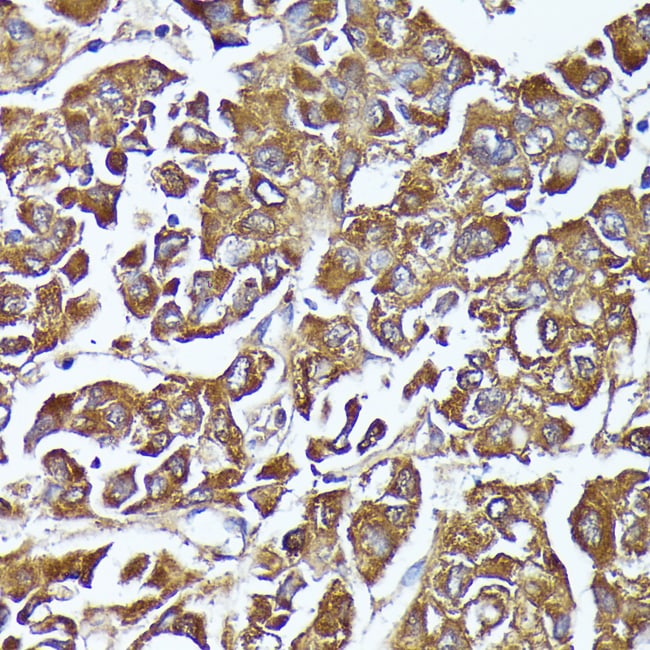
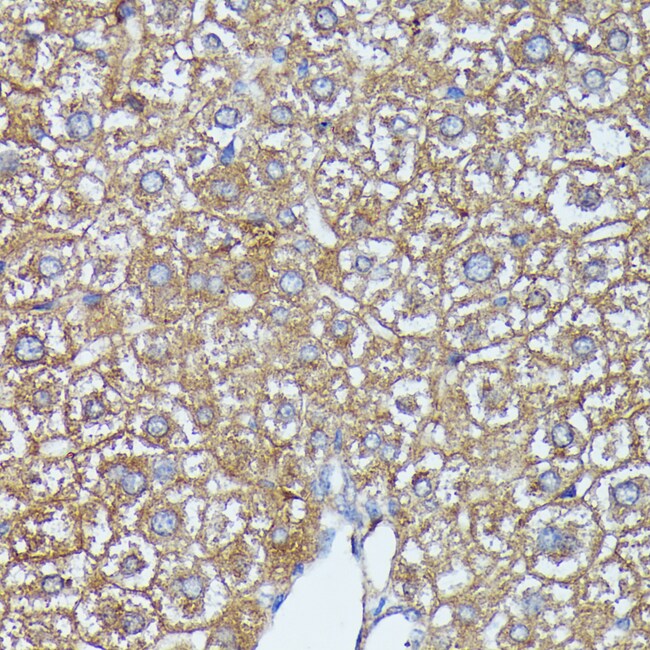
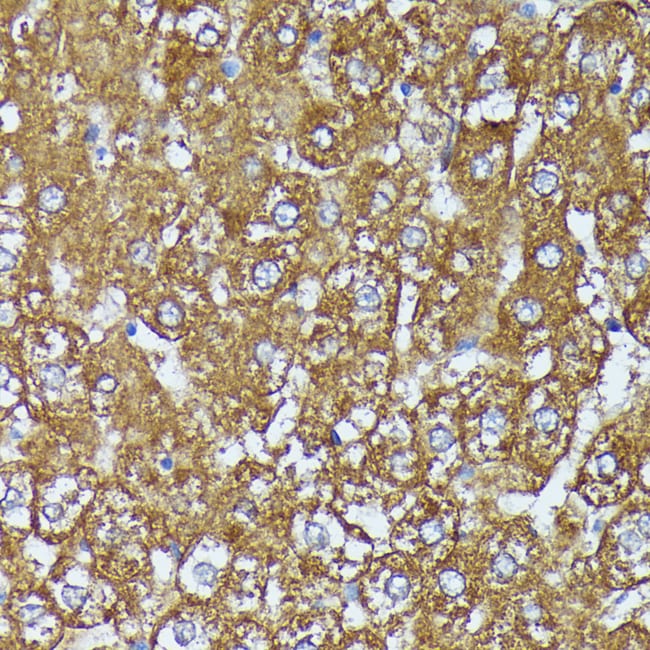
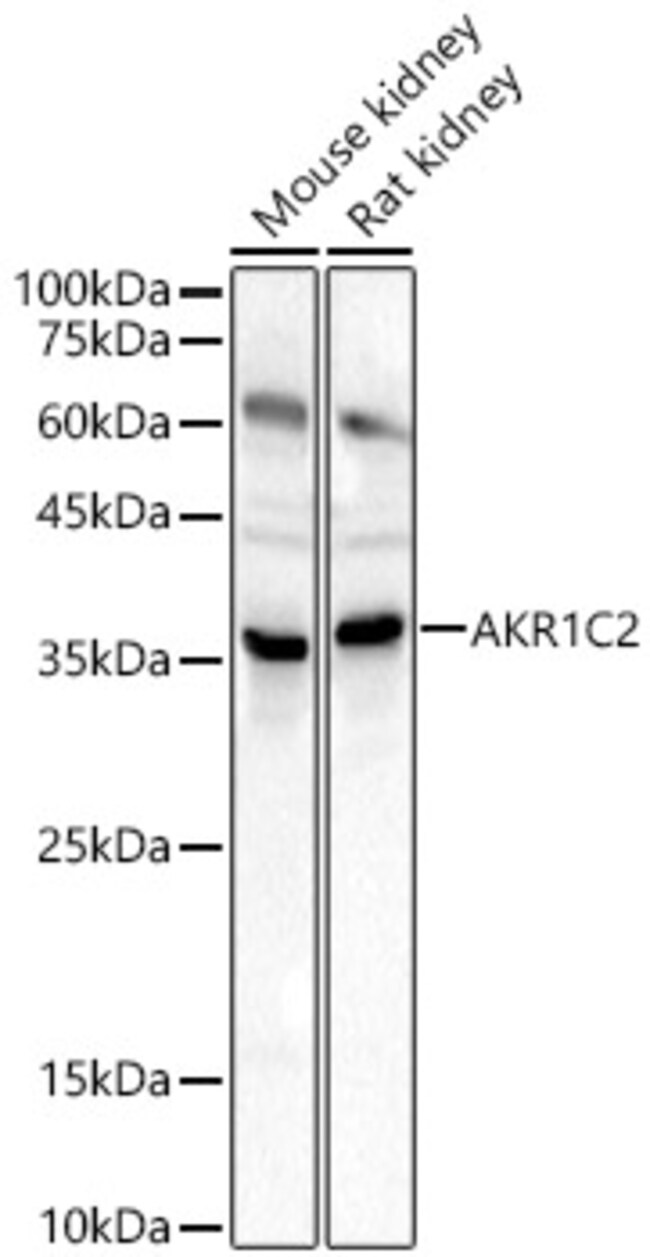
Invitrogen™ AKR1C2 Polyclonal Antibody

Description
Immunogen sequence: MDSKYQCVKL NDGHFMPVLG FGTYAPAEVP KSKALEAVKL AIEAGFHHID SAHVYNNEEQ VGLAIRSKIA DGSVKREDIF YTSKLWSNSH RPELVRPALE RSLKNLQLDY VDLYLIHFPV SVKPGEEVIP KDENGKILFD TVDLCATWEA MEKCKDAGLA KSIGVSNFNH RLLEMILNKP GLKYKPVCNQ VECHPYFNQR KLLDFCKSKD IVLVAYSALG SHREEPWVDP NSPVLLEDPV LCALAKKHKR TPALIALRYQ LQRGVVVLAK SYNEQRIRQN VQVFEFQLTS EEMKAIDGLN RNVRYLTLDI FAGPPNYPFS DEY; Positive Samples: HT-29, A549, Mouse liver; Cellular Location: Cytoplasm.

Specifications
Specifications
| Antigen | AKR1C2 |
| Applications | ELISA, Immunohistochemistry (Paraffin), Western Blot, Immunocytochemistry |
| Classification | Polyclonal |
| Concentration | 2.92 mg/mL |
| Conjugate | Unconjugated |
| Formulation | PBS with 50% glycerol and 0.05% ProClin 300; pH 7.3 |
| Gene | AKR1C2 |
| Gene Accession No. | P52895, Q6AYQ2, Q91WR5 |
| Gene Alias | 17-alpha-HSD; 17-alpha-hydroxysteroid dehydrogenase; 3 alpha-HSD3; 3(17)alpha-hydroxysteroid dehydrogenase; 3(or 17)-alpha-hydroxysteroid dehydrogenase; 3-alpha-HSD3; 3-alpha-hydroxysteroid dehydrogenase; 9430025F20Rik; AI315367; AKR1C2; Akr1c21; AKR1C-pseudo; Aldo-keto reductase family 1 member C2; aldo-keto reductase family 1 member C21; aldo-keto reductase family 1, member C2; aldo-keto reductase family 1, member C21; BABP; Chlordecone reductase homolog HAKRD; DD; DD/BABP; DD1; DD2; DD-2; DD3; DDH2; Dihydrodiol dehydrogenase 2; dihydrodiol dehydrogenase 2; bile acid binding protein; 3-alpha hydroxysteroid dehydrogenase, type III; dihydrodiol dehydrogenase type 1; Dihydrodiol dehydrogenase type 3; Dihydrodiol dehydrogenase/bile acid-binding protein; HAKRD; HBAB; HSD3-3 alpha; HSD3-alpha3; MCDR2; pseudo-chlordecone reductase; SRXY8; TDD; testicular 17,20-desmolase deficiency; trans-1,2-dihydrobenzene-1,2-diol dehydrogenase; type II dihydrodiol dehydrogenase; Type III 3-alpha-hydroxysteroid dehydrogenase |
| Gene Symbols | AKR1C2, Akr1c21 |
| Show More |
By clicking Submit, you acknowledge that you may be contacted by Fisher Scientific in regards to the feedback you have provided in this form. We will not share your information for any other purposes. All contact information provided shall also be maintained in accordance with our Privacy Policy.