Learn More
Description
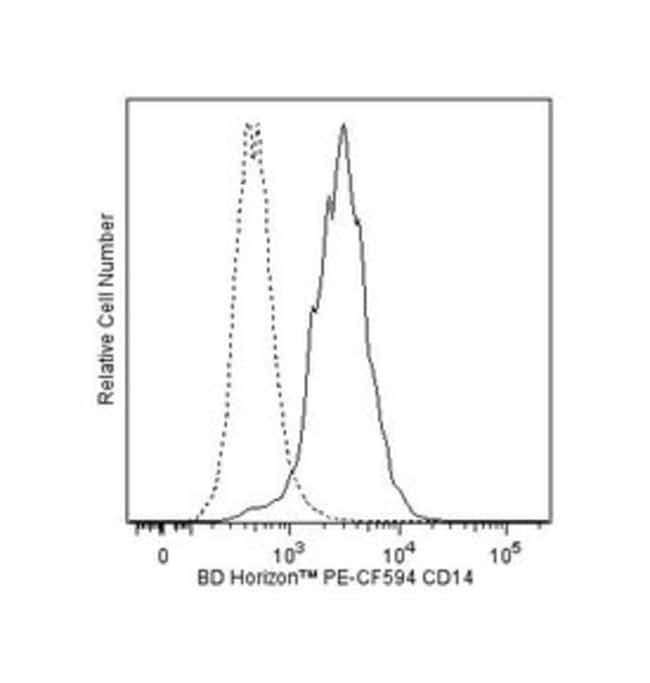
The rmC5-3 monoclonal antibody specifically binds to residues 308-322 of the hydrophilic region of mouse CD14. CD14 is a 53-55 kDa glycophosphatidylinositol (GPI)-linked glycoprotein belonging to the leucine-rich glycoprotein repeat superfamily of cell-surface proteins. It is a receptor for the complex of lipopolysaccharide (LPS or endotoxin, from gram-negative bacteria) with LPS-binding protein (LBP, a plasma protein). CD14 serves as a receptor for LPS that can play a role in the cellular production of proinflammatory cytokines such as IL-1 and TNF. CD14 can be involved in the development of endotoxic shock and LPS-stimulated bone resorption, and promotes, possibly indirectly, bacterial dissemination. Flow cytometric analysis demonstrates that rmC5-3 antibody stains J774A.1 (mouse macrophage line), WEHI-265.1 (mouse monocytic line), peritoneal resident macrophages, Kupffer cells, and cultured bone marrow-derived macrophages and dendritic cells, but not unstimulated splenic macrophages, dendritic cells, neutrophils, or blood monocytes. This staining pattern is similar to that of the alternate anti-mouse CD14 mAb 4C1/CD14, which recognizes a different CD14 epitope, and differs from that of the human, where CD14 expression is characteristic of circulating monocytes and neutrophils. Therefore, data suggests that CD14 expression by leukocyte populations may differ in mice and humans. Peritoneal cells from naive mice, 3-day thioglycollate-elicited peritoneal exudate, as well as 4-hour LPS-activated peritoneal cells, contain a population of Mac-1 (CD11b)-high cells which double-stain with rmC5-3 antibody. Levels of CD14 expression on Kupffer cells and bone marrow-derived macrophages and dendritic cells of LPS-sensitive mice are increased by in vivo and in vitro LPS treatments, an effect which may be mediated by TNF. Preliminary evidence suggests that CD14 may be up-regulated on mouse blood neutrophils. In agreement with the observations that CD14 is shed from activated human and mouse monocytes, rmC5-3 mAb detects soluble CD14 in the serum of LPS-treated mice in a time-dependent manner.
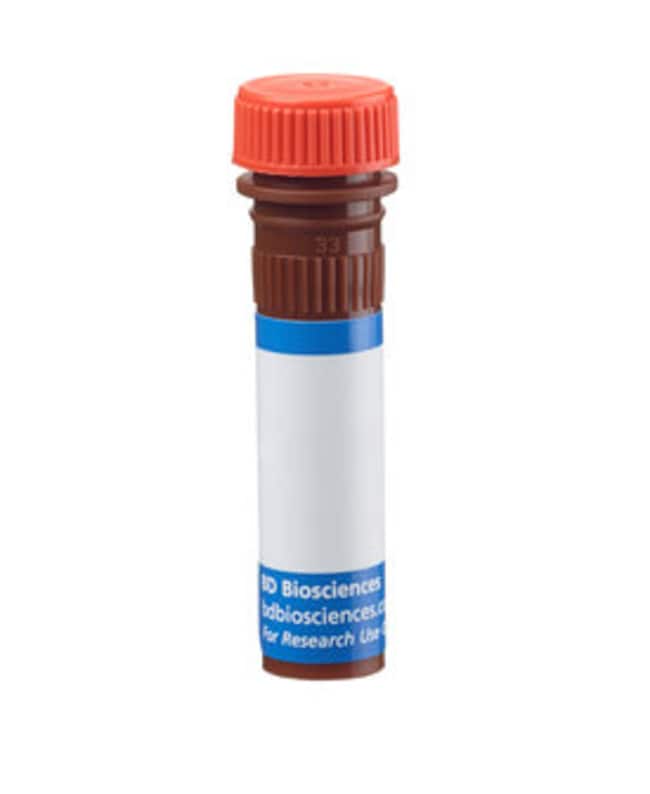
This antibody is conjugated to BD Horizon™ PE-CF594, which has been developed exclusively by BD Biosciences as a better alternative to PE-Texas Red™. PE-CF594 excites and emits at similar wavelengths to PE-Texas Red™ yet exhibits improved brightness and spectral characteristics. Due to PE having maximal absorption peaks at 496nm and 564nm, PE-CF594 can be excited by the blue (488-nm), green (532-nm) and yellow-green (561-nm) lasers and can be detected with the same filter set as PE-Texas Red™ (eg 610/20-nm filter).

Specifications
Specifications
| Antigen | CD14 |
| Applications | Flow Cytometry |
| Classification | Monoclonal |
| Clone | rmC5-3 |
| Concentration | 0.2mg/mL |
| Conjugate | PE-CF594 |
| Description | Cd14; CD14 antigen; Myeloid cell-specific leucine-rich glycoprotein |
| Formulation | Aqueous buffered solution containing BSA and ≤0.09% sodium azide. |
| Host Species | Rat |
| Immunogen | Recombinant Mouse CD14 |
| Show More |
Safety and Handling
By clicking Submit, you acknowledge that you may be contacted by Fisher Scientific in regards to the feedback you have provided in this form. We will not share your information for any other purposes. All contact information provided shall also be maintained in accordance with our Privacy Policy.