Learn More
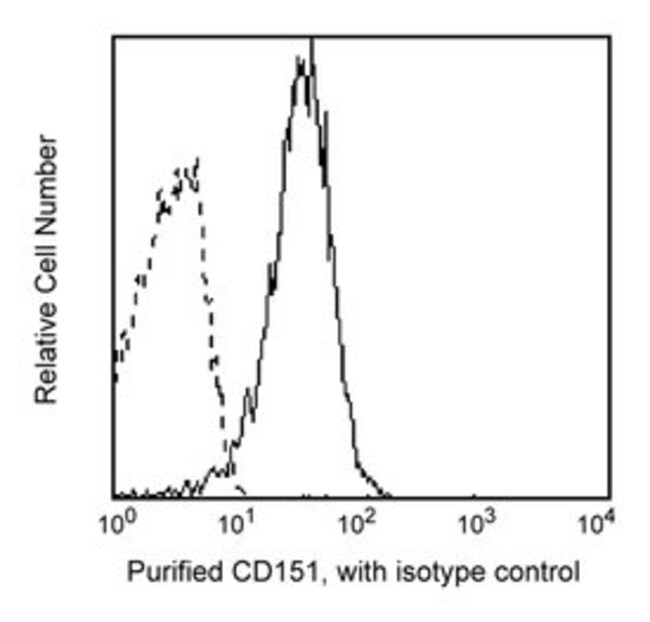
Description
Reacts with platelet-endothelial cell tetraspan antigen-3 (PETA-3), a 27 kD membrane glycoprotein, expressed on platelets, megakaryocytes, lymphocytes (weak), monocytes, endothelial cells and epithelial cells. PETA-3 (CD151) associates with β1 integrin in certain tissues. This has also been shown with other tetraspan superfamily members, like CD9, CD63 and α5β1. Reports indicate that this association or colocalization of CD151 with β1 integrin in tissues suggests a functional role of this molecule, however, this role has not been elucidated yet. It has also been reported that antibody 14A2.H1 is capable of platelet activation in vitro. Studies showed that different clones of CD151 monoclonal antibodies display strikingly different patterns of binding to human haemopoietic cells and tissue sections, and that this is due at least in part to the presence of the protein in complexes with different integrins.

Specifications
Specifications
| Antigen | CD151 |
| Applications | Flow Cytometry |
| Classification | Monoclonal |
| Clone | 14A2.H1 |
| Concentration | 0.5mg/mL |
| Conjugate | Unconjugated |
| Description | PETA-3 |
| Formulation | Aqueous buffered solution containing ≤0.09% sodium azide. |
| Host Species | Mouse |
| Purification Method | Affinity Purified |
| Show More |
For Research Use Only.
By clicking Submit, you acknowledge that you may be contacted by Fisher Scientific in regards to the feedback you have provided in this form. We will not share your information for any other purposes. All contact information provided shall also be maintained in accordance with our Privacy Policy.