Learn More
Description
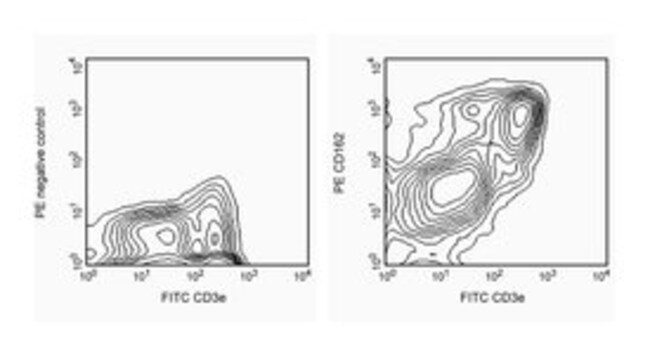
The 2PH1 monoclonal antibody specifically binds to the N-terminus of CD162 (P-selectin glycoprotein ligand-1, PSGL-1), encoded by the Selplg gene. PSGL-1 is expressed on the cell surface as a homodimer of approximately 230 kDa. In the mouse, Selpl mRNA is detected in most tissues, with high levels found in hematopoietic cells, brain, and adipose tissue. Flow cytometric analyses have revealed CD162 expression on bone marrow-derived mast and dendritic cells, splenic leukocytes, platelets, peripheral blood neutrophils, and neutrophil and T-cell lines. PSGL-1 is a ligand for P-selectin (CD62P) and is involved in leukocyte rolling, the migration of leukocytes into inflamed tissues, and responses to vascular injury. It is a sialomucin that must be specifically sialylated, fucosylated, and sulfated to bind P-selectin. There is also evidence that other ligands for PSGL-1 and CD62P may exist. The 2PH1 antibody is reported to block binding of mouse leukocytes to CD62P, but the 4RA10 antibody (Cat. No. 557787) has significantly greater blocking activity.

Specifications
Specifications
| Antigen | CD162 |
| Applications | Flow Cytometry |
| Classification | Monoclonal |
| Clone | 2PH1 |
| Concentration | 0.2mg/mL |
| Conjugate | PE |
| Description | Selplg; PSGL-1; Psgl1; Selp1; Selpl; P-selectin glycoprotein ligand 1 |
| Formulation | Aqueous buffered solution containing ≤0.09% sodium azide. |
| Host Species | Rat |
| Immunogen | Ovalbumin-conjugated peptide covering amino acids 42 to 60 of mouse PSGL-1 |
| Show More |
For Research Use Only.
By clicking Submit, you acknowledge that you may be contacted by Fisher Scientific in regards to the feedback you have provided in this form. We will not share your information for any other purposes. All contact information provided shall also be maintained in accordance with our Privacy Policy.