Learn More
Description
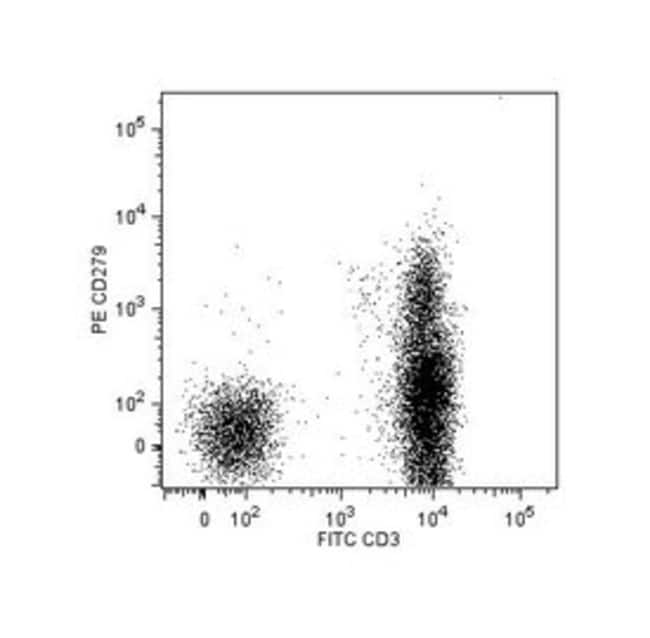
The EH12.1 monoclonal antibody specifically binds to CD279. CD279 is an immunoregulatory receptor that is expressed on activated T cells, B cells and myeloid cells and contains an immunoreceptor tyrosine-based inhibitory motif (ITIM) in the cytoplasmic region. Mice deficient in CD279 show a breakdown of peripheral tolerance and manifest multiple autoimmune symptoms. PD-L1 and PD-L2 are ligands of CD279 and are members of the B7 gene family. Interaction of CD279:PD-Ligands results in inhibition of T cell proliferation and cytokine secretion. Reports suggest that the B7/CTLA-4 pathway functions primarily to attenuate, limit, and/or terminate naοve T-cell activation in secondary lymphoid organs. The PD-ligand:CD279 pathway, on the other hand, may primarily attenuate, limit, and/or terminate T-, B-, and myeloid cell activation/effector function at sites of inflammation in the periphery.

Specifications
Specifications
| Antigen | CD279 |
| Applications | Flow Cytometry |
| Classification | Monoclonal |
| Clone | EH12.1 (also known as EH12) |
| Conjugate | PE |
| Description | hPD-1; PD1; PDCD1; Programmed cell death 1; SLEB2 |
| Formulation | Aqueous buffered solution containing BSA and ≤0.09% sodium azide. |
| Host Species | Mouse |
| Immunogen | Human PD-1 Recombinant Protein |
| Purification Method | Affinity Purified |
| Show More |
By clicking Submit, you acknowledge that you may be contacted by Fisher Scientific in regards to the feedback you have provided in this form. We will not share your information for any other purposes. All contact information provided shall also be maintained in accordance with our Privacy Policy.