Learn More
Description
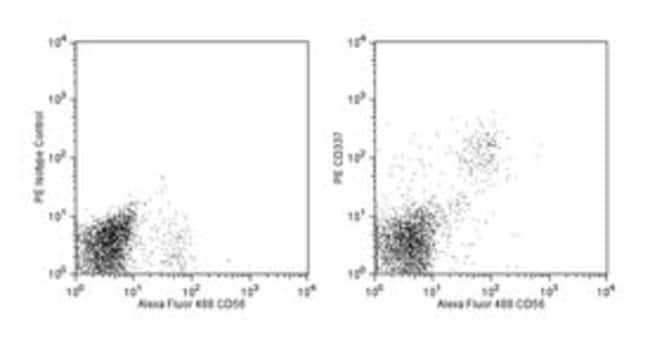
The monoclonal antibody clone p30-15 reacts with CD337, also known as NKp30, a receptor found on the surface of natural killer (NK) cells. NK cells are large lymphoid cells discovered because of their ability to recognize and kill abnormal cells such as tumor and virally infected cells. NK cell immune responses are regulated by a balance of activating and inhibitory signals generated by cell surface receptors. Inhibitory receptors recognize MHC class I molecules on normal cells producing a negative signal to the NK cell. Loss of MHC class I expression in infected or transformed cells results in the loss of this negative signal leading to NK cell activation. In concert with the loss of inhibitory signals, activation signals via NK receptors such as NKp30, NKp44, NKp46, NKG2D, and NKp80 mediate the activation of NK cells. NKp30 cooperates with NKp46 and/or NKp44 in the induction of NK cell-mediated cytotoxicity against the majority of target cells.

Specifications
Specifications
| Antigen | CD337 |
| Applications | Flow Cytometry |
| Classification | Monoclonal |
| Clone | P30-15 |
| Concentration | 0.2mg/mL |
| Conjugate | PE |
| Description | NCR3; Natural cytotoxicity triggering receptor 3; NKp30; MALS; LY117; 1C7 |
| Formulation | Aqueous buffered solution containing ≤0.09% sodium azide. |
| Host Species | Mouse |
| Immunogen | Human NKp30 e tracellular domain Transfected Cell Line |
| Show More |
For Research Use Only.
By clicking Submit, you acknowledge that you may be contacted by Fisher Scientific in regards to the feedback you have provided in this form. We will not share your information for any other purposes. All contact information provided shall also be maintained in accordance with our Privacy Policy.