Learn More
Description
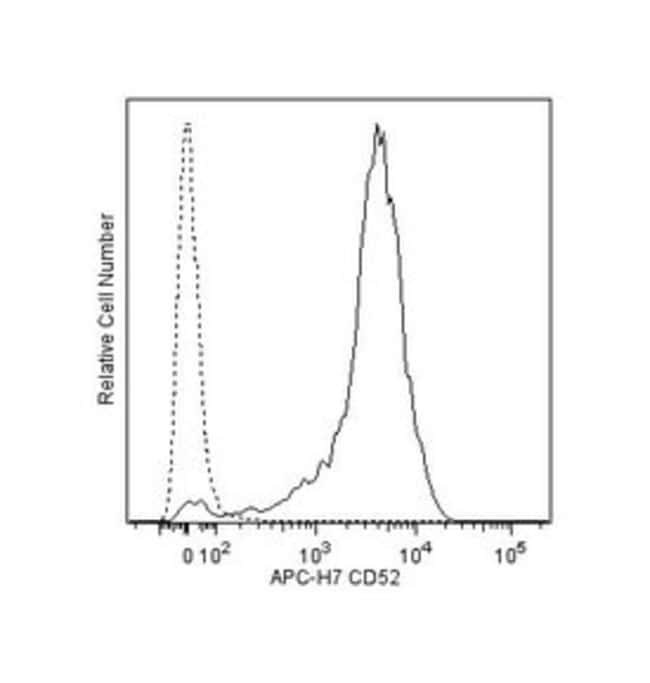
The 4C8 monoclonal antibody specifically binds to CD52 which is also known as Cambridge pathology 1 antigen (CAMPATH-1) or Human epididymis-specific protein 5 (HE5). CD52 is a highly N-glycosylated, 25-29 kDa protein whose C-terminus is glycophosphatidylinositol anchored in the membrane. It is highly expressed on the surface of thymocytes and mature lymphocytes but not on their stem cell precursors. It is also expressed on monocytes, dendritic cells, eosinophils and epithelial cells of the epididymis and seminal vesicles but not on neutrophils, plasma cells, platelets or erythrocytes. Although its functional role is not well characterized, the CD52 antigen serves as an exquisitely sensitive target antigen for antibody and complement-mediated lysis of CD52-positive cells. Anti-CD52 antibodies are being used clinically to remove lymphocytes from transplanted bone marrow cell preparations and in the treatment of some malignant diseases.

Specifications
Specifications
| Antigen | CD52 |
| Applications | Flow Cytometry |
| Classification | Monoclonal |
| Clone | 4C8 |
| Conjugate | APC-H7 |
| Description | Cambridge pathology 1 Ag; CAMPATH-1; Epididymal secretory protein E5; HE5 |
| Formulation | Aqueous buffered solution containing BSA, protein stabilizer, and ≤0.09% sodium azide. |
| Host Species | Mouse |
| Immunogen | Human T lymphocytes |
| Purification Method | Affinity Purified |
| Show More |
Safety and Handling
By clicking Submit, you acknowledge that you may be contacted by Fisher Scientific in regards to the feedback you have provided in this form. We will not share your information for any other purposes. All contact information provided shall also be maintained in accordance with our Privacy Policy.