Learn More

Description
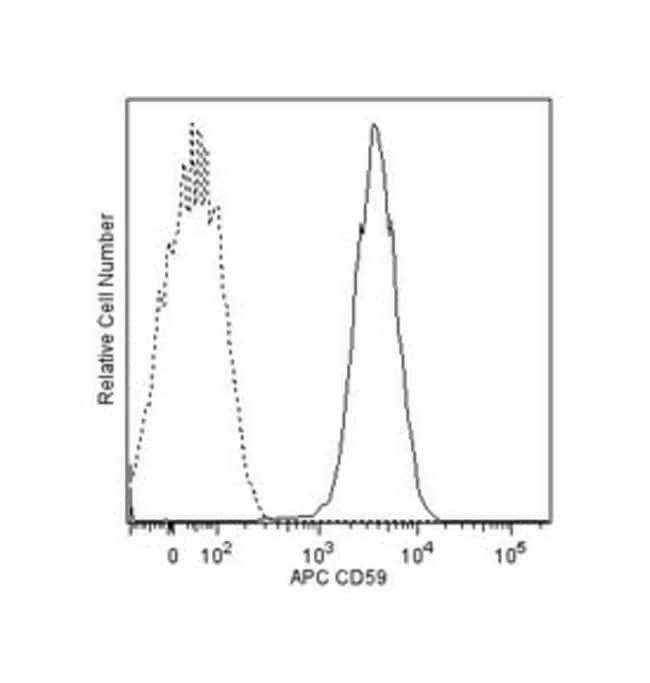
The TH9 antibody monoclonal antibody specifically binds to CD59, a 21 kDa glycosyl-phosphatidyl inositol-anchored cell-surface glycoprotein of the Ly-6 superfamily. CD59 is expressed by many types of non-hematopoietic cells. In the rat hematopoietic system, CD59 has been detected on erythrocytes, monocytes, and some lymphocytes, but not on platelets. Soluble CD59 is found in body fluids and urine. CD59 is a complement regulatory protein that acts late in the complement cascade to prevent formation of the membrane attack complex (MAC). Therefore, CD59 is one of several proteins whose function is to protect host tissue from complement attack. Rat CD59 binds rat and human complement components and inhibits cytolysis mediated by complement from multiple species. CD59 has also been suggested to be a ligand for CD2 and to participate in T-cell costimulation.

Specifications
Specifications
| Antigen | CD59 |
| Applications | Flow Cytometry |
| Classification | Monoclonal |
| Clone | TH9 |
| Concentration | 0.2mg/mL |
| Conjugate | APC |
| Description | MACIF; Membrane attack complex inhibition factor; Protectin |
| Formulation | Aqueous buffered solution containing ≤0.09% sodium azide. |
| Host Species | Mouse |
| Immunogen | Membrane attack complex-inhibitory proteins from Rat erythrocyte membranes |
| Show More |
By clicking Submit, you acknowledge that you may be contacted by Fisher Scientific in regards to the feedback you have provided in this form. We will not share your information for any other purposes. All contact information provided shall also be maintained in accordance with our Privacy Policy.