Learn More
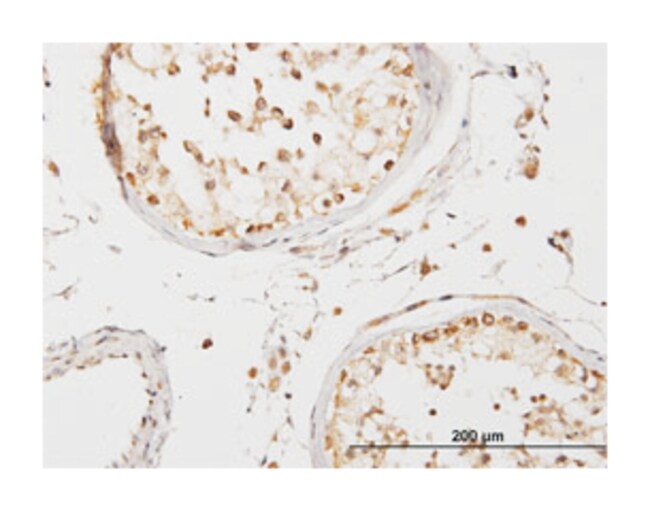


coenzyme Q3 homolog, methyltransferase (S. cerevisiae), Mouse, Purified MaxPab™ Polyclonal Antibody, Abnova™
Shop All Abnova Corporation ProductsDescription
Ubiquinone, also known as coenzyme Q, or Q, is a critical component of the electron transport pathways of both eukaryotes and prokaryotes (Jonassen and Clarke, 2000 [PubMed 10777520]). This lipid consists of a hydrophobic isoprenoid tail and a quinone head group. The tail varies in length depending on the organism, but its purpose is to anchor coenzyme Q to the membrane. The quinone head group is responsible for the activity of coenzyme Q in the respiratory chain. The S. cerevisiae COQ3 gene encodes an O-methyltransferase required for 2 steps in the biosynthetic pathway of coenzyme Q. This enzyme methylates an early coenzyme Q intermediate, 3,4-dihydroxy-5-polyprenylbenzoic acid, as well as the final intermediate in the pathway, converting demethyl-ubiquinone to coenzyme Q. The COQ3 gene product is also capable of methylating the distinct prokaryotic early intermediate 2-hydroxy-6-polyprenyl phenol.[supplied by OMIM
Specifications
Specifications
| Antigen | coenzyme Q3 homolog, methyltransferase (S. cerevisiae) |
| Applications | Immunohistochemistry (PFA fixed), Western Blot |
| Classification | Polyclonal |
| Conjugate | Unconjugated |
| Description | Mouse polyclonal antibody raised against a full-length human COQ3 protein. |
| Formulation | PBS with no preservative; pH 7.4 |
| Gene | COQ3 |
| Gene Accession No. | BC063463.1 |
| Gene Alias | UG0215E05/bA9819.1 |
| Gene Symbols | COQ3 |
| Show More |
By clicking Submit, you acknowledge that you may be contacted by Fisher Scientific in regards to the feedback you have provided in this form. We will not share your information for any other purposes. All contact information provided shall also be maintained in accordance with our Privacy Policy.