Learn More
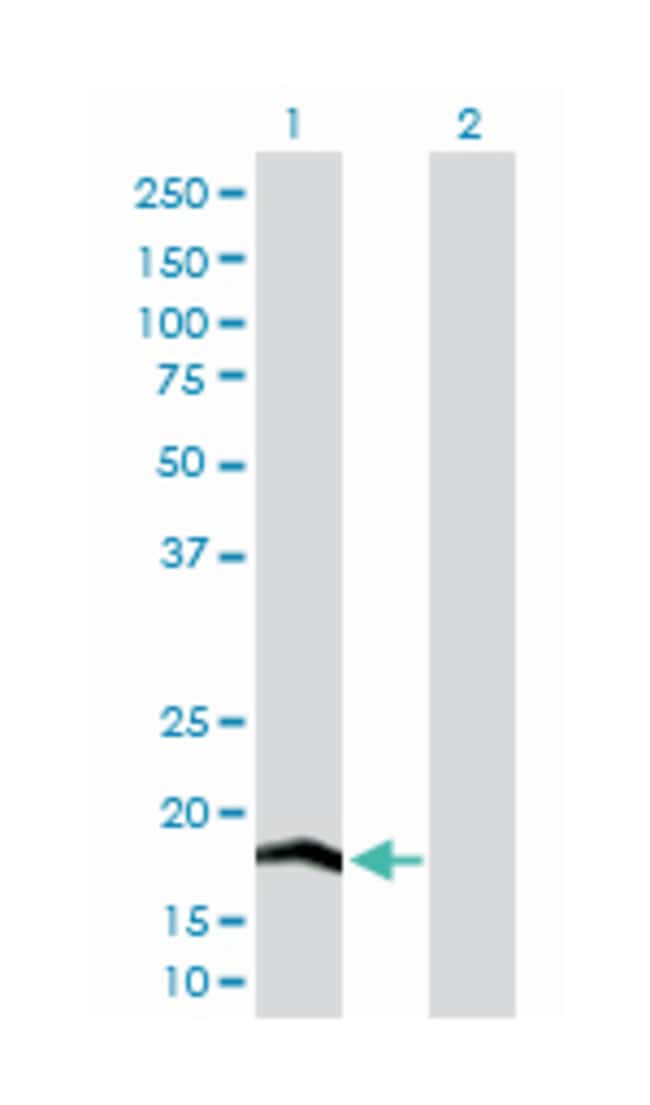
Description
Cytochrome c oxidase (COX), the terminal enzyme of the mitochondrial respiratory chain, catalyzes the electron transfer from reduced cytochrome c to oxygen. It is a heteromeric complex consisting of 3 catalytic subunits encoded by mitochondrial genes and multiple structural subunits encoded by nuclear genes. The mitochondrially-encoded subunits function in electron transfer, and the nuclear-encoded subunits may be involved in the regulation and assembly of the complex. This nuclear gene encodes isoform 2 of subunit IV. Isoform 1 of subunit IV is encoded by a different gene, however, the two genes show a similar structural organization. Subunit IV is the largest nuclear encoded subunit which plays a pivotal role in COX regulation. [provided by RefSeq
Specifications
Specifications
| Antigen | COX4I2 |
| Applications | Western Blot |
| Classification | Polyclonal |
| Conjugate | Unconjugated |
| Description | Rabbit polyclonal antibody raised against a full-length human COX4I2 protein. |
| Formulation | PBS with no preservative; pH 7.4 |
| Gene | COX4I2 |
| Gene Accession No. | NM_032609.2 |
| Gene Alias | COX4/COX4-2/COX4B/COX4L2/COXIV-2/dJ857M17.2 |
| Gene Symbols | COX4I2 |
| Show More |
By clicking Submit, you acknowledge that you may be contacted by Fisher Scientific in regards to the feedback you have provided in this form. We will not share your information for any other purposes. All contact information provided shall also be maintained in accordance with our Privacy Policy.