Learn More
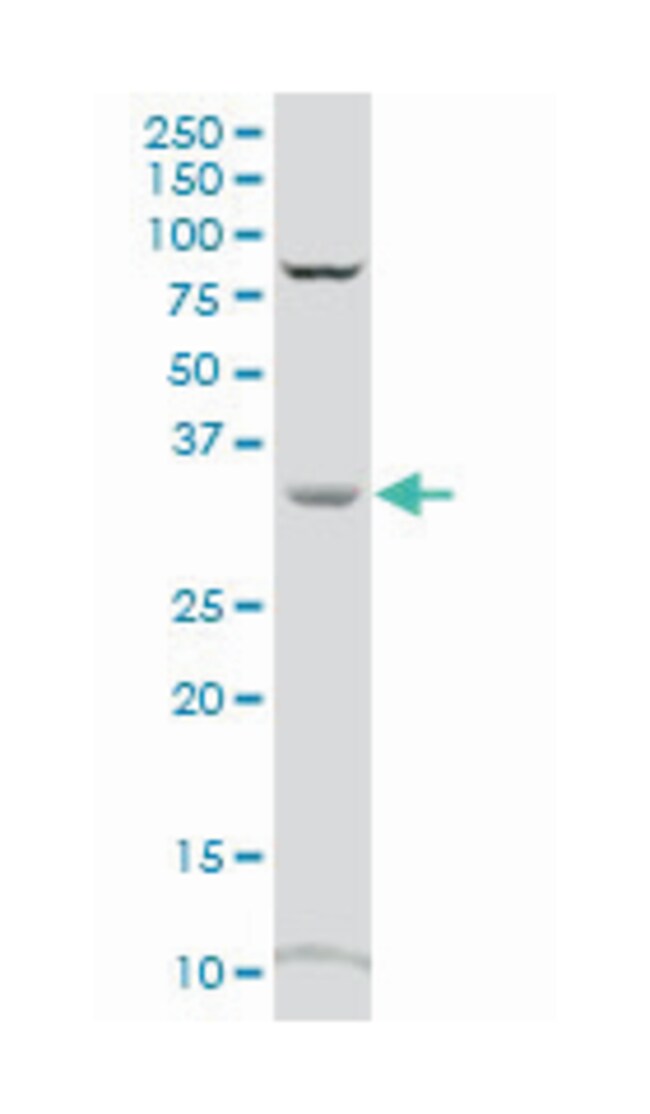
crystallin, zeta (quinone reductase), Mouse, Polyclonal Antibody, Abnova™
Shop All Abnova Corporation ProductsDescription
Crystallins are separated into two classes: taxon-specific, or enzyme, and ubiquitous. The latter class constitutes the major proteins of vertebrate eye lens and maintains the transparency and refractive index of the lens. The former class is also called phylogenetically-restricted crystallins. This gene encodes a taxon-specific crystallin protein which has NADPH-dependent quinone reductase activity distinct from other known quinone reductases. It lacks alcohol dehydrogenase activity although by similarity it is considered a member of the zinc-containing alcohol dehydrogenase family. Unlike other mammalian species, in humans, lens expression is low. Alternatively spliced transcript variants encoding different isoforms have been found for this gene. One pseudogene is known to exist. [provided by RefSeq
Specifications
Specifications
| Antigen | crystallin, zeta (quinone reductase) |
| Applications | ELISA, Western Blot |
| Classification | Polyclonal |
| Conjugate | Unconjugated |
| Description | Mouse polyclonal antibody raised against a partial recombinant CRYZ. |
| Formulation | 50% glycerol |
| Gene | CRYZ |
| Gene Accession No. | NM_001889 |
| Gene Alias | DKFZp779E0834/FLJ41475 |
| Gene Symbols | CRYZ |
| Show More |
By clicking Submit, you acknowledge that you may be contacted by Fisher Scientific in regards to the feedback you have provided in this form. We will not share your information for any other purposes. All contact information provided shall also be maintained in accordance with our Privacy Policy.