Learn More
Description
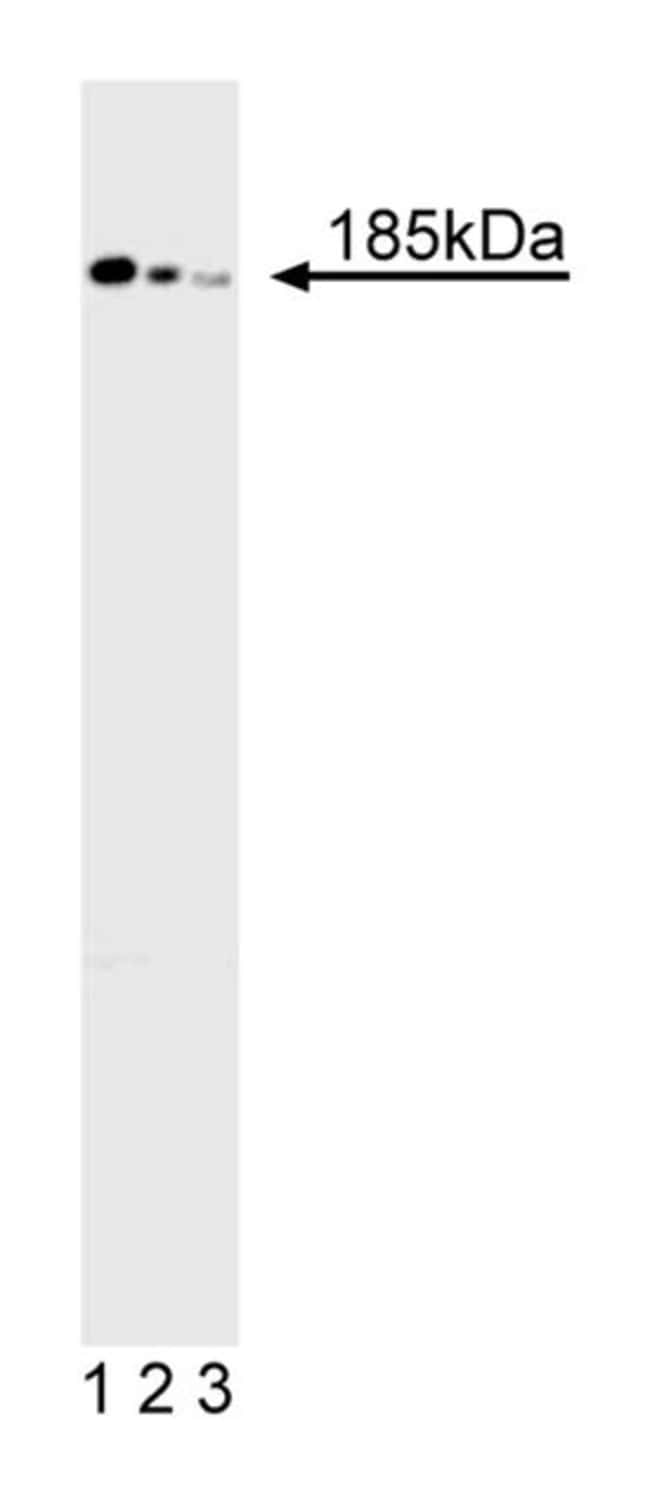
One of the most common regions of allelic loss in colorectal tumors is chromosome 18, which is lost in more than 70% of carcinomas, and in almost 50% of late adenomas. This region of loss has been mapped to chromosome 18q and a gene called Deleted in Colorectal Cancer (DCC). DCC encodes an ∽185kDa glycoprotein with significant homology to the neural cell adhesion molecule and other related cell surface glycoproteins. The predicted amino acid sequence of DCC cDNA consists of a 1448 amino acid (aa) long transmembrane phosphoprotein. The extracellular domain consists of 1098 amino acids and has 42% sequence homology to cell adhesion proteins of the neural cell adhesion molecule (N-CAM) family. DCC mRNA is found to be expressed in normal colonic mucosa, but its expression is reduced or absent in the majority of colorectal carcinomas. The loss of heterozygosity and subsequent alteration of DCC expression has also been observed in tumors of non-colorectal origin. Clone G97-449 recognizes human DCC. A truncated recombinant protein containing the intracellular domain of the human DCC was used as immunogen.
Host Species: Mouse
Clone: G97-449
Isotype: IgG1
Species Reactivity: Human
Immunogen: Recombinant Human DCC
Formula Weight [Chemical]: 175-190kDa
Flow Cytometry, Immunohistochemistry, Western Blotting

Specifications
Specifications
| Antigen | DCC |
| Applications | Western Blot |
| Classification | Monoclonal |
| Clone | G97-449 |
| Concentration | 0.5mg/mL |
| Conjugate | Unconjugated |
| Formulation | Aqueous buffered solution containing ≤0.09% sodium azide. |
| Host Species | Mouse |
| Immunogen | Recombinant Human DCC |
| Purification Method | Affinity Purified |
| Show More |
Safety and Handling
For Research Use Only.
By clicking Submit, you acknowledge that you may be contacted by Fisher Scientific in regards to the feedback you have provided in this form. We will not share your information for any other purposes. All contact information provided shall also be maintained in accordance with our Privacy Policy.