Learn More
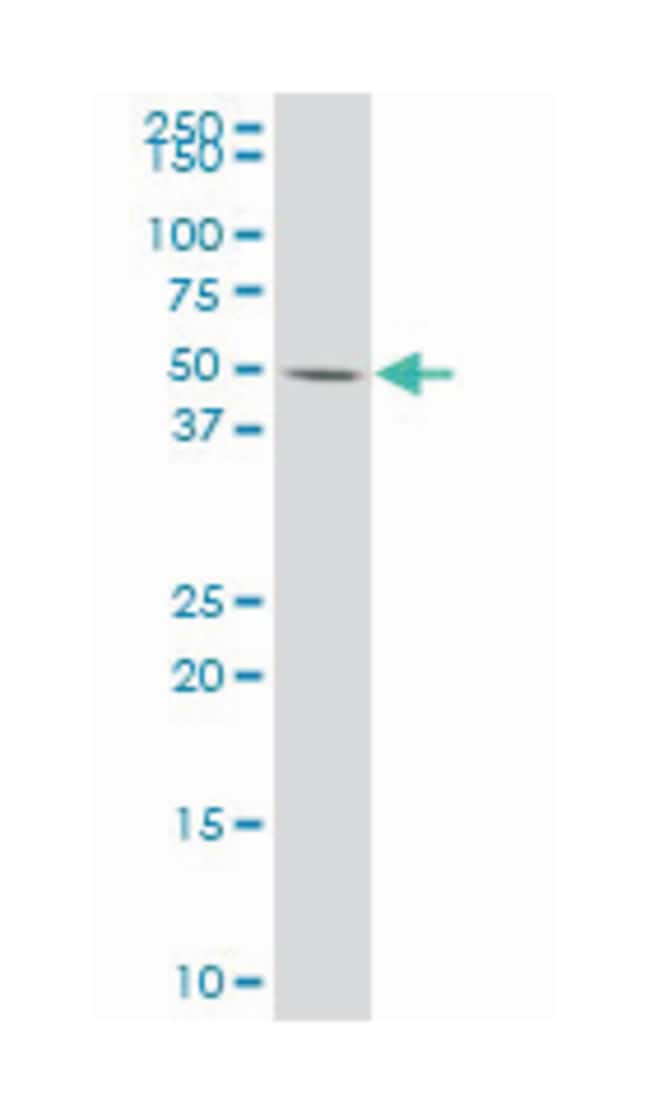
dual specificity phosphatase 10, Mouse, Polyclonal Antibody, Abnova™
Shop All Abnova Corporation ProductsDescription
Dual specificity protein phosphatases inactivate their target kinases by dephosphorylating both the phosphoserine/threonine and phosphotyrosine residues. They negatively regulate members of the MAPK superfamily (MAPK/ERK, SAPK/JNK, p38), which is associated with cellular proliferation and differentiation. Different members of this family of dual specificity phosphatases show distinct substrate specificities for MAPKs, different tissue distribution and subcellular localization, and different modes of inducibility of their expression by extracellular stimuli. This gene product binds to and inactivates p38 and SAPK/JNK, but not MAPK/ERK. Its subcellular localization is unique; it is evenly distributed in both the cytoplasm and the nucleus. This gene is widely expressed in various tissues and organs, and its expression is elevated by stress stimuli. Three transcript variants encoding two different isoforms have been found for this gene. [provided by RefSeq
Specifications
Specifications
| Antigen | dual specificity phosphatase 10 |
| Applications | ELISA, Western Blot |
| Classification | Polyclonal |
| Conjugate | Unconjugated |
| Description | Mouse polyclonal antibody raised against a full-length recombinant DUSP10. |
| Formulation | 50% glycerol |
| Gene | DUSP10 |
| Gene Accession No. | BC020608 |
| Gene Alias | MKP-5/MKP5 |
| Gene Symbols | DUSP10 |
| Show More |
By clicking Submit, you acknowledge that you may be contacted by Fisher Scientific in regards to the feedback you have provided in this form. We will not share your information for any other purposes. All contact information provided shall also be maintained in accordance with our Privacy Policy.