Learn More

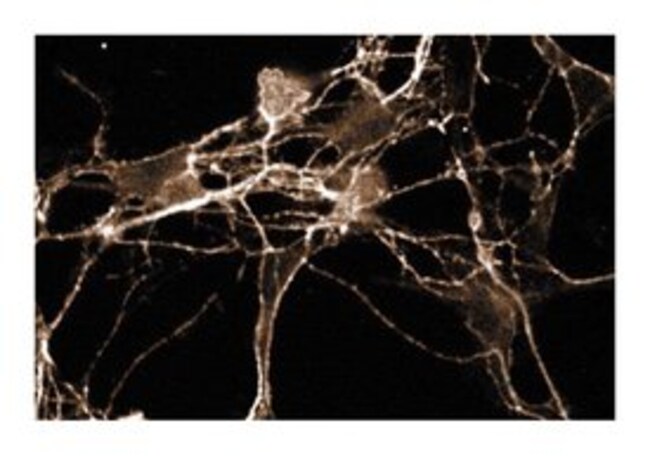
Description
The GTP binding regulatory proteins (G proteins) consist of three subunits: α, β, and γ. These heterotrimeric proteins function at membranes to relay signals from cell surface receptors to intracellular effectors. The α subunit is unique for each G protein and contains the site of GTP binding and hydrolysis, as well as sites for receptor and effector interactions. The βγ subunit complex interacts directly with receptors and the α subunit. The Gα protein transducin (Gαt) contains 350 amino acids and has been extensively studied as a model for G protein function. Gαt requires GTP in order to bind to its effectors. In the process of effector-Gαt binding, GTP is hydrolyzed and the βγ subunits are displaced. The free Gαt-GDP then reassociates with the βγ subunits and re-loads GTP to repeat the cycle.
Immunofluorescence, Immunohistochemistry, Immunoprecipitation, Western Blotting

Specifications
Specifications
| Antigen | Gαt |
| Applications | Western Blot |
| Classification | Monoclonal |
| Clone | 3 |
| Concentration | 250μg/mL |
| Conjugate | Unconjugated |
| Description | Gα protein transducin |
| Formulation | Aqueous buffered solution containing BSA, glycerol, and ≤0.09% sodium azide. |
| Host Species | Mouse |
| Immunogen | Bovine Gαt aa. 282-300 |
| Show More |
By clicking Submit, you acknowledge that you may be contacted by Fisher Scientific in regards to the feedback you have provided in this form. We will not share your information for any other purposes. All contact information provided shall also be maintained in accordance with our Privacy Policy.