Learn More
Description
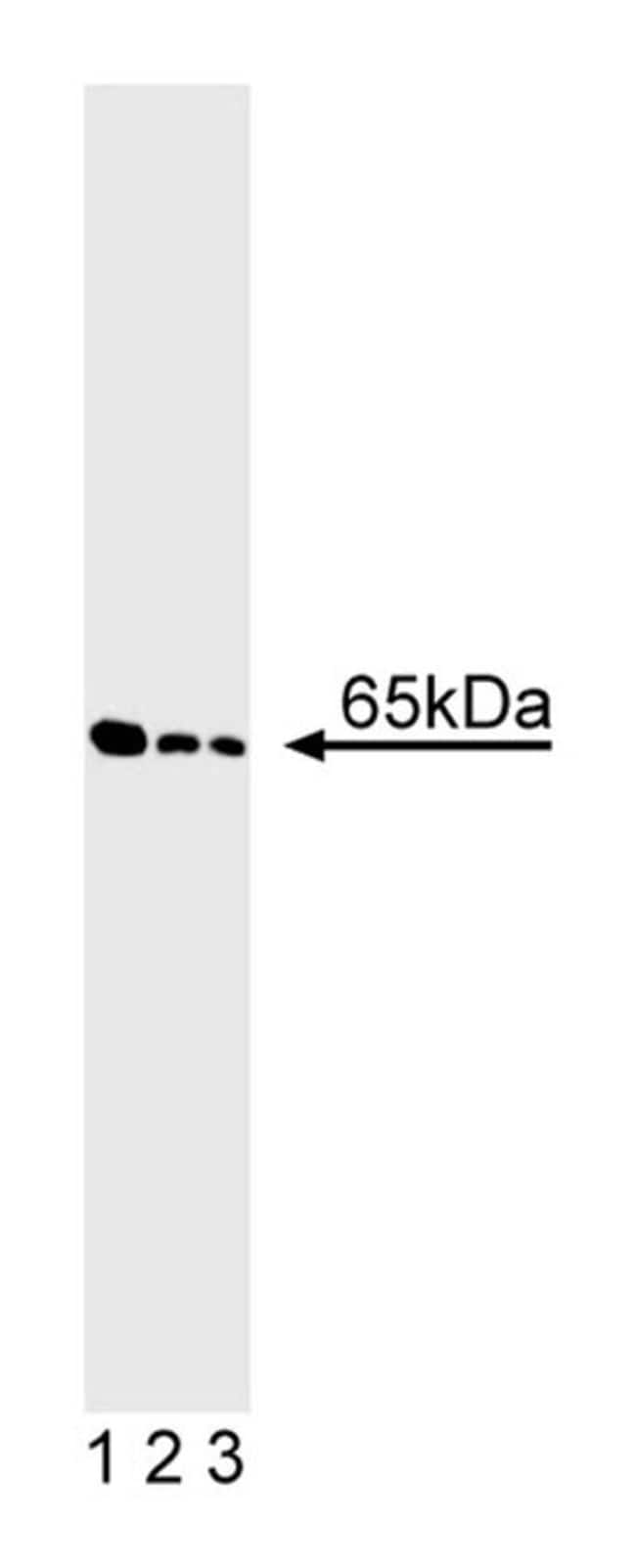
γ-aminobutyric acid (GABA) is an amino acid neurotransmitter that is considered to be the major inhibitory neurotransmitter in the mammalian central nervous system. The highest concentrations of GABA are found in the brain, where it is synthesized from glutamic acid to GABA by an enzyme called glutamic acid decarboxylase (GAD). GAD is also expressed in the insulin-producing β cells of the islets of Langerhans. Two isoforms of GAD are present in rat brain, GAD65 and GAD67, based on their relative molecular weight in kDa. Both isoforms have significant levels of homology in the catalytic portion of the molecule, but differ greatly in the first 95 amino acids in the N-terminal region. GAD65 migrates at ∽65 kDa in SDS/PAGE. The antibody is reported to recognize rat, human, mouse, and pig GAD65. Purified GAD65 from rat brain was used as the immunogen. The specific epitope recognized by this clone is a linear epitope localized in the last 41 amino acids of GAD65.

Specifications
Specifications
| Antigen | GAD65 |
| Applications | Western Blot |
| Classification | Monoclonal |
| Clone | GAD-6 |
| Concentration | 0.5mg/mL |
| Conjugate | Unconjugated |
| Description | Glutamic acid decarboxylase |
| Formulation | Aqueous buffered solution containing ≤0.09% sodium azide. |
| Host Species | Mouse |
| Immunogen | Purified Rat GAD65 |
| Show More |
Safety and Handling
By clicking Submit, you acknowledge that you may be contacted by Fisher Scientific in regards to the feedback you have provided in this form. We will not share your information for any other purposes. All contact information provided shall also be maintained in accordance with our Privacy Policy.